Oral vs Topical vs IV Glutathione: Which Is Actually Safe?
Oral vs Topical vs IV Glutathione: Which Is Actually Safe and Effective?
A Clear-Eyed Comparison of the Three Delivery Methods
Glutathione is sold in three fundamentally different ways — oral capsules, topical creams or serums, and IV or injectable administration — and they are frequently discussed as if they're interchangeable versions of the same product. They aren't. Each delivery method has a different absorption pathway, a different evidence base, and — most importantly — a genuinely different safety profile. This guide walks through all three side by side, so you can understand not just which might work best for your goals, but which carries meaningfully more risk than the others.
Quick Summary
- Oral glutathione has faced historical bioavailability questions but has a reasonably reassuring short-to-medium-term safety record in clinical research at studied doses (250–500 mg/day).
- Topical glutathione delivers the compound directly to skin cells, avoiding digestion entirely, but has a smaller and less mature research base than oral supplementation.
- IV glutathione bypasses both digestion and skin absorption, delivering the compound directly into the bloodstream — and carries a meaningfully more serious risk profile, especially outside licensed medical supervision.
- None of the three is a guaranteed, dramatic fix for skin tone or pigmentation; realistic expectations differ by method, but modesty and gradual timelines apply across all three.
- The safest, most evidence-supported starting point for most people is oral supplementation at a standardized, studied dose — IV administration in particular should only ever be considered through a licensed medical provider.

Quick Comparison
| Factor | Oral | Topical | IV / Injectable |
|---|---|---|---|
| How it's delivered | Swallowed capsule; digested and absorbed systemically | Applied to skin; absorbed locally | Injected directly into the bloodstream |
| Bioavailability concern | Historically debated; newer forms (liposomal) aim to improve it | Depends on formulation's ability to penetrate skin barrier | Not a concern — delivered directly, bypassing absorption barriers |
| Evidence base | Moderate — several human trials on skin pigmentation outcomes | Smaller, less mature body of research | Limited rigorous clinical trial data; more anecdotal/clinical-observation based |
| Typical timeline | Several weeks to a few months | Several weeks to a few months | Sometimes marketed as faster; not well substantiated by rigorous trials |
| Safety profile | Generally well tolerated at studied doses; mild digestive effects most common | Generally low risk; rare skin irritation | Meaningfully higher risk; documented safety concerns, especially unsupervised |
| Regulatory stance | Widely available as a standard oral supplement | Widely available as a cosmetic product | Multiple health authorities have issued warnings against unsupervised cosmetic use |
Oral Glutathione: What It Is and How Well It Works
How It's Absorbed
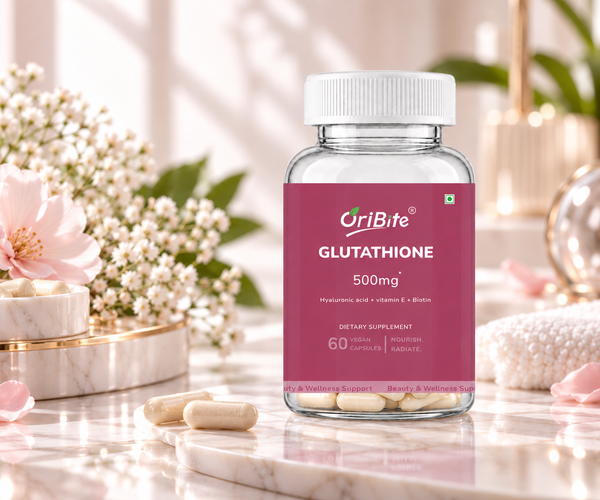
Oral glutathione is swallowed as a capsule and must survive digestion before being absorbed into the bloodstream. This has historically been a point of scientific debate — standard oral glutathione may be broken down significantly during digestion, raising questions about how much intact, active compound actually reaches your system. Newer formulations, particularly liposomal glutathione, are designed specifically to address this by encapsulating the compound in a way intended to improve absorption.
What the Evidence Shows
Human clinical trials on oral glutathione and skin pigmentation generally use doses of 250–500 mg/day over several weeks to a few months, with modest but measurable improvements in skin lightness reported using instrumental skin-tone measurement in some studies. This is a real, if modest and still-developing, evidence base — genuinely stronger than what exists for topical or IV glutathione specifically.
Safety Profile
At studied doses, oral glutathione has a reassuring safety record, with mild digestive upset (nausea, bloating) being the most commonly reported issue, occurring at a low overall rate. Long-term safety data beyond several months is more limited, which matters for anyone considering extended use.
Topical Glutathione: What It Is and How Well It Works
How It's Absorbed
Topical glutathione — in creams, serums, or lotions — is applied directly to the skin, bypassing digestion entirely. Whether it actually penetrates the skin barrier in meaningful amounts depends heavily on the specific formulation, since glutathione is a relatively large, water-soluble molecule that doesn't naturally cross skin easily without specific delivery technology designed to help it do so.
What the Evidence Shows
Topical glutathione's research base for skin brightening is smaller and less mature than oral supplementation's. Some formulations have shown modest results in limited studies, but this is a less established area overall compared to oral glutathione research, and formulation quality varies significantly across products — a topical product's actual delivery technology matters more here than with many other topical actives, since glutathione isn't inherently well-suited to skin penetration without specific formulation support.
Safety Profile
Topical glutathione is generally considered low risk, with occasional mild skin irritation or sensitivity being the main reported concern — a profile similar to many other topical cosmetic actives. It doesn't carry the more serious risk considerations associated with IV administration.
IV/Injectable Glutathione: What It Is and Why It's Different
How It's Administered
IV glutathione is injected directly into the bloodstream, bypassing both digestion and skin absorption entirely. This is marketed as delivering "100% bioavailability" and, in some marketing, faster or more dramatic skin-lightening results compared to oral or topical options.
What the Evidence Actually Shows
Despite the marketing emphasis on IV glutathione for cosmetic skin lightening, the rigorous, well-controlled clinical trial evidence specifically supporting this use is more limited than what exists for oral supplementation. Much of what circulates about IV glutathione's cosmetic effectiveness is based on clinical observation and anecdotal reporting rather than the kind of randomized, placebo-controlled trials that back oral glutathione's skin research.
Why the Safety Profile Is Meaningfully Different
This is the most important distinction in this entire comparison. IV glutathione administration carries documented risks that don't apply to oral or topical use, including allergic and skin reactions, and — particularly in non-medically-supervised settings — risks tied to improper administration, unverified product sourcing and sterility, and lack of clinical oversight during and after the infusion. Multiple national health and regulatory authorities have specifically issued public warnings against unsupervised IV glutathione use for cosmetic skin-lightening purposes, given reports of adverse events in unregulated settings.
This doesn't mean IV glutathione is never used safely — it's used in various legitimate medical contexts under proper supervision. It means that using it specifically for cosmetic skin lightening, especially through unregulated med spas, clinics without proper medical oversight, or self-administration, carries a real and documented risk that simply doesn't apply to swallowing a capsule or applying a cream.
Side-by-Side: Why the Safety Gap Matters
It's tempting to treat "oral vs topical vs IV" as purely a question of which works fastest or best. But the honest picture is that these three methods don't sit on a single spectrum of "more effective, more risk" — IV's added risk isn't clearly offset by proportionally stronger evidence of effectiveness for cosmetic use. In fact, oral glutathione currently has the more established human trial evidence of the three specifically for skin pigmentation outcomes, while carrying meaningfully lower risk than IV administration.
This reframes the comparison in an important way: choosing IV administration isn't simply "paying more for a stronger version of the same thing" — it's accepting a different and more serious risk category in exchange for cosmetic effects that aren't as rigorously demonstrated as the oral route's more modest, but better-evidenced, results.
Which Should You Actually Choose?
- For most people interested in general skin-brightening support, oral glutathione at a studied dose (250–500 mg/day), from a standardized, third-party-tested product, currently offers the most reasonable balance of evidence and safety among the three options.
- If you want to add a topical option, choosing a well-formulated product designed specifically for skin penetration (rather than assuming any topical glutathione product will absorb effectively) is a reasonable complement to oral use, with a low overall risk profile.
- IV glutathione should not be pursued outside a licensed medical setting, and even within one, it's worth having a direct conversation with the administering provider about the actual evidence for cosmetic use versus the medical contexts where IV glutathione is more established, plus a clear understanding of sourcing, sterility, and monitoring protocols.
Can You Combine Methods?
Combining oral and topical glutathione is a reasonable, low-risk approach — one working systemically, one working locally at the skin's surface — and there's no known problematic interaction between the two. Adding IV administration into that mix introduces the more serious risk considerations discussed above, and shouldn't be treated as simply "adding a third layer" without separately and seriously weighing that added risk against the added — and less rigorously proven — cosmetic benefit.
Frequently Asked Questions
Is IV glutathione more effective than oral glutathione for skin lightening?
Despite marketing claims, the rigorous clinical trial evidence for IV glutathione's cosmetic effectiveness is more limited than what exists for oral glutathione. Oral supplementation currently has a more established human trial evidence base for skin pigmentation outcomes.
Is IV glutathione safe?
IV glutathione carries documented risks not present with oral or topical use, particularly in unsupervised or unregulated settings. Multiple health authorities have specifically warned against unsupervised IV glutathione use for cosmetic skin-lightening. It should only be administered through a licensed medical provider.
Does topical glutathione actually absorb into the skin?
This depends heavily on the specific product's formulation, since glutathione is a relatively large molecule that doesn't naturally penetrate skin easily. Topical glutathione's research base is smaller and less mature than oral supplementation's.
Which form of glutathione should I start with?
For most people, a standardized, third-party-tested oral glutathione supplement at a studied dose (250–500 mg/day) offers the most reasonable balance of evidence and safety among the three delivery methods.
Can I combine oral and topical glutathione?
Yes — this is a reasonable, low-risk combination, since one works systemically and the other locally at the skin's surface, with no known problematic interaction between them.
References & Scientific Sources
Clinical Studies
- Randomized, placebo-controlled trials on oral glutathione and skin pigmentation outcomes (PMC)
- Studies on oral glutathione bioavailability across standard and liposomal formulations (PMC, ScienceDirect)
Safety & Regulatory Sources
- Regulatory advisories on unsupervised IV/injectable glutathione use for cosmetic purposes (national health authority publications)
Review Articles
- Literature reviews on topical antioxidant delivery and skin-barrier penetration considerations (ScienceDirect, ResearchGate)
Note: This section summarizes categories of supporting literature. Full citations with direct links should be added by the content/legal team prior to publish, per your site's standard sourcing process.
The Bottom Line
Oral, topical, and IV glutathione are not three versions of the same product — they're three different delivery methods with three different evidence bases and three genuinely different risk profiles. Oral glutathione currently offers the best-documented balance of modest, real evidence and low risk. Topical glutathione is a reasonable, low-risk complement, though its evidence base is thinner and more formulation-dependent. IV glutathione carries a meaningfully higher risk profile that isn't clearly justified by stronger cosmetic evidence, and should never be pursued outside licensed medical supervision. When comparing the three, effectiveness and safety need to be weighed together — not treated as if a "stronger" delivery method is automatically the better choice.
For general information only. Talk to your doctor before starting any supplement.