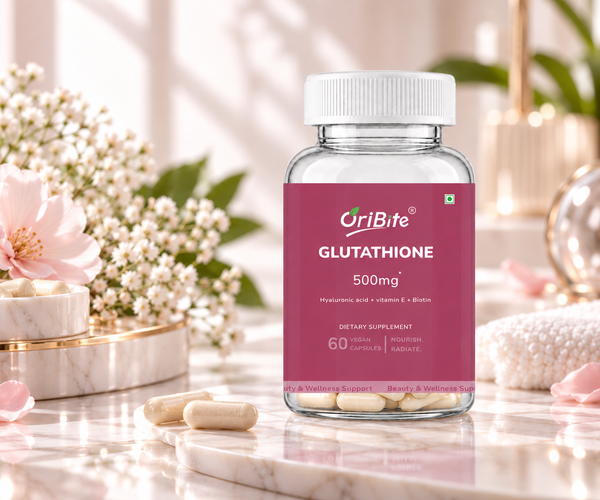
Glutathione vs Alpha Arbutin for Dark Spots
Dark spots and hyperpigmentation get targeted by two very different categories of product: oral antioxidant supplements like glutathione, and targeted topical actives like alpha arbutin. They're often discussed as competing options, but they work through different mechanisms, at different sites in the body, with different evidence bases. This article compares the two directly — what each actually does, how strong the evidence is for dark spots specifically, and how to think about whether one, the other, or both make sense for your goals.
Quick Comparison
| Factor | Glutathione (Oral) | Alpha Arbutin (Topical) |
|---|---|---|
| Delivery method | Oral capsule, systemic | Applied directly to skin, localized |
| Proposed mechanism | Tyrosinase inhibition (systemic), general antioxidant support | Tyrosinase inhibition (localized, at the site of application) |
| Target | Overall skin tone evenness | Specific, targeted dark spots or patches |
| Evidence base | Smaller number of oral human trials | Reasonably established topical dermatology research, including comparisons to hydroquinone |
| Typical timeline | Several weeks to a few months | Several weeks to a few months, often applied twice daily |
How Glutathione Works for Dark Spots
Oral glutathione's proposed effect on pigmentation is systemic — it works throughout the body rather than being applied to a specific spot. Its mechanism centers on tyrosinase inhibition (an enzyme involved in melanin production) and general antioxidant support. Because it's taken orally and distributed systemically, its studied effect tends to be described in terms of overall skin tone evenness or lightness, rather than targeting one specific dark spot or patch.
Human research on oral glutathione for pigmentation is real but comparatively modest — a smaller number of trials, generally with modest, gradual results measured over weeks to months.
How Alpha Arbutin Works for Dark Spots
Alpha arbutin is a compound derived from the bearberry plant that also works through tyrosinase inhibition, but it's applied topically, directly to the skin, giving it a localized rather than systemic effect. Because it's delivered right to the site where pigmentation is occurring, it's generally positioned as a more targeted approach for specific dark spots, sun spots, or areas of hyperpigmentation, rather than an overall-tone product.
Alpha arbutin has a reasonably well-established position in topical dermatology research as a gentler alternative to stronger pigmentation-targeting ingredients like hydroquinone, with several studies examining its effectiveness and comparing it to other topical actives.
Comparing the Evidence for Dark Spots Specifically
This is where the comparison becomes more clear-cut than some ingredient matchups. For targeted dark spots specifically, topical ingredients — including alpha arbutin — generally have a more direct and established evidence base, since they're delivered exactly where the pigmentation concern is and have been studied specifically for that localized application. Oral glutathione's evidence is centered on overall skin tone rather than resolving specific, isolated dark spots, and it hasn't been as directly studied for targeted spot-lightening the way topical actives like alpha arbutin have.
In practical terms: if your primary concern is a specific dark spot or a cluster of hyperpigmented areas, a topical approach like alpha arbutin has a more directly applicable evidence base. If your concern is a more general sense of dullness or unevenness across your overall skin tone, oral glutathione's systemic mechanism is more aligned with that broader goal, even though its specific evidence base is comparatively smaller.
Oral vs. Topical: Why the Delivery Method Matters
This distinction matters more than it might initially seem. Topical products act directly at the skin's surface and don't depend on digestion or systemic absorption to reach their target — a genuine practical advantage for localized concerns. Oral supplements have to survive digestion, enter the bloodstream, and reach skin cells throughout the body, which is a longer, less direct path and part of why oral glutathione's dosing and bioavailability questions are a more significant consideration than they are for a topical product applied directly where it's needed.
Can You Use Both Together?
There's no known problematic interaction between oral glutathione and topical alpha arbutin, and because they work through different delivery routes — one systemic, one localized — combining them is a reasonable approach for someone targeting both overall tone and specific dark spots simultaneously. This combination hasn't been extensively studied as a specific pairing in clinical trials, but the underlying mechanisms (both tyrosinase inhibition, at different sites) don't present an obvious conflict.
Which Should You Choose First?
- If you have specific, well-defined dark spots (sun spots, post-acne marks, melasma patches), a topical approach like alpha arbutin has a more directly relevant evidence base and delivers the active ingredient right where it's needed.
- If your concern is more general dullness or overall tone evenness rather than specific spots, oral glutathione's systemic mechanism is more aligned with that broader goal.
-
If you want to address both, there's no known conflict in using a topical targeted treatment alongside an oral antioxidant approach, though always introduce new topical actives gradually and patch-test to check for skin sensitivity.

Frequently Asked Questions
Is alpha arbutin more effective than glutathione for dark spots?
For specific, targeted dark spots, topical alpha arbutin generally has a more directly established evidence base, since it's applied right at the site of pigmentation. Oral glutathione's evidence centers more on overall skin tone rather than resolving specific isolated spots.
Can I use glutathione supplements and alpha arbutin cream together?
There's no known problematic interaction, and because they work through different delivery routes — one oral and systemic, one topical and localized — combining them is a reasonable approach if you're targeting both overall tone and specific spots.
Why would I choose an oral supplement over a targeted topical for dark spots?
If your concern is broader overall skin tone or dullness rather than specific, isolated spots, an oral, systemic approach like glutathione may be more aligned with that general goal than a topical product designed for localized application.
Does alpha arbutin work the same way as glutathione?
Both are believed to work partly through tyrosinase inhibition, but alpha arbutin acts locally at the site of topical application, while glutathione works systemically throughout the body after oral consumption.
The Bottom Line
Glutathione and alpha arbutin aren't really direct competitors — they're different tools for different scopes of the same general concern. Alpha arbutin, applied topically, has a more established, targeted evidence base for specific dark spots, while oral glutathione works systemically and is better supported for broader, overall tone-evening goals rather than resolving one isolated spot. For most people dealing with both diffuse dullness and specific dark spots, there's no evidence-based reason not to use both, addressing each concern with the tool more directly suited to it.