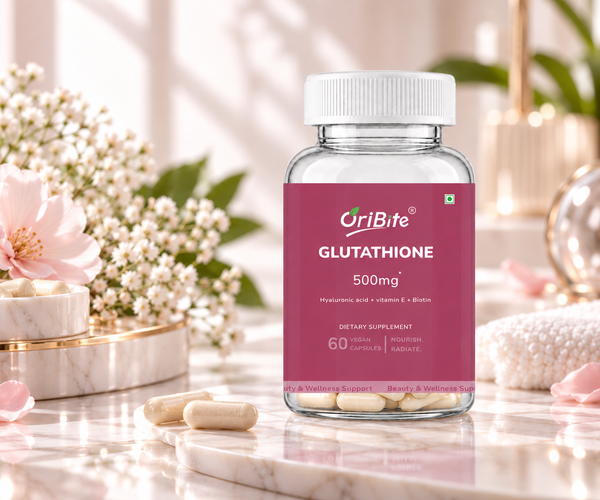
Glutathione Ingredients & Formulation Explained

Glutathione Ingredients & Formulation Explained: L-Glutathione, Liposomal Forms & What's in Your Capsule
Before deciding whether a glutathione supplement is worth taking, it helps to actually understand what's in the capsule. This guide answers what is glutathione at the molecular level, breaks down liposomal glutathione vs regular forms, explains why vitamin C so often shows up alongside it, and walks through everything else in the capsule — from the standardized extract to the excipients holding it together.
Quick Answer
- What it is: A tripeptide (glutamine, cysteine, glycine) — the body's own primary antioxidant, available as L-glutathione, liposomal glutathione, or S-acetyl glutathione in supplement form.
- Liposomal vs regular: Liposomal wraps glutathione in a fat-based delivery system intended to improve stability and absorption; it's a formulation approach, not a proven bioavailability guarantee.
- Why vitamin C matters: It helps regenerate oxidized glutathione back to its active form — a genuine, documented biochemical relationship, not just a marketing pairing.
-
Excipients: Most capsules also contain microcrystalline cellulose (filler), magnesium stearate (flow agent), and a capsule shell (HPMC or gelatin).

What Is Glutathione? L-Glutathione, GSH, and the Skin Science Explained
A Molecule Your Body Already Makes
Glutathione is a tripeptide — a small chain of three amino acids: glutamine, cysteine, and glycine. Unlike most supplement ingredients that come only from diet or plants, glutathione is something your body produces on its own, primarily in the liver, as its central intracellular antioxidant.
L-Glutathione (Reduced Glutathione / GSH)
"L-glutathione," "reduced glutathione," and "GSH" all refer to the same active, biologically functional form of the molecule — the form your cells actually use for antioxidant activity. This is the standard, most-researched form found in most oral supplements.
The Skin-Related Science, Briefly
Glutathione's proposed role in skin comes down to its interaction with tyrosinase, the enzyme responsible for melanin production, and its broader antioxidant activity protecting skin cells from oxidative stress. The full mechanism is covered in more depth in this site's dedicated mechanism-of-action guide, but understanding the base molecule here is the starting point for everything else on this page.
Liposomal vs Regular Glutathione: What's the Difference?
Why Delivery Format Became a Focus
Because standard L-glutathione is a fragile molecule that can be broken down by digestive enzymes before absorption, manufacturers have developed alternative delivery formats specifically aimed at improving stability and absorption — liposomal glutathione is the most common of these.
How Liposomal Glutathione Works
Liposomal formulations encase the glutathione molecule inside a small sphere made of phospholipids (fat molecules similar to those in cell membranes), the idea being that this coating can help protect the glutathione from digestive breakdown and improve its passage into the bloodstream.
Does Liposomal Actually Absorb Better?
This is a reasonable, biologically plausible formulation strategy, but it's worth being honest: liposomal glutathione doesn't yet have the same volume of independent, peer-reviewed clinical research behind it as standard L-glutathione does. The core bioavailability trials discussed elsewhere on this site (including the well-known 6-month Penn State trial) used standard, non-liposomal glutathione.
S-Acetyl Glutathione: Another Formulation Approach
S-acetyl glutathione is a chemically modified form, with an acetyl group attached specifically to improve stability. Like liposomal glutathione, it represents the industry's attempt to solve the bioavailability question through formulation rather than dose alone — again, with less independent research volume than standard L-glutathione.
Why Glutathione Is Often Combined With Vitamin C
The Recycling Mechanism
This is a genuine, documented biochemical relationship, not just a common retail pairing. When glutathione neutralizes a free radical, it becomes "oxidized" — temporarily used up, in a sense. Vitamin C plays a direct role in regenerating that oxidized glutathione back into its active, reduced form, effectively recycling it so it can continue working as an antioxidant.
Why This Matters for Supplementation
Because of this recycling relationship, pairing glutathione supplementation with adequate vitamin C — whether through diet or a co-formulated supplement — is more consistent with how these two nutrients actually function together in the body than taking glutathione in isolation.
Reflected in the Clinical Research
This pairing isn't just theoretical — several of the strongest skin-brightening clinical trials specifically combined oral glutathione with ascorbic acid (vitamin C), which is part of why this combination shows up so consistently across both research and retail formulations.
What's Inside Your Glutathione Capsule? Understanding Excipients
Microcrystalline Cellulose (MCC)
A refined, plant-derived form of cellulose used as a bulking agent, bringing the capsule to a consistent, fillable volume. It's inert and not therapeutically active — its role is purely functional, helping ensure each capsule is filled accurately and consistently.
Magnesium Stearate
Used during manufacturing to prevent ingredients from sticking to equipment, helping capsules fill smoothly and consistently. It's available from either vegetable or animal sources; vegetable-source magnesium stearate is the standard choice for a vegetarian-labeled product.
Capsule Shell Material
Capsule shells are made from either gelatin (animal-derived) or HPMC — hydroxypropyl methylcellulose, a plant-derived, non-gelatin alternative that performs the same functional role.
Is Magnesium Stearate Safe? Debunking the Myth
Where the Concern Comes From
Online concern about magnesium stearate largely traces back to a misreading of narrow in-vitro (test tube) research using much higher concentrations than what's actually present in a real capsule, combined with a general suspicion of unfamiliar, chemical-sounding ingredient names.
What the Evidence Actually Shows
Magnesium stearate is classified as Generally Recognized As Safe (GRAS) and is used at trace levels — typically well under 1% of a capsule's total content — purely as a manufacturing flow agent. At these amounts, it hasn't been shown to meaningfully interfere with the absorption of a product's active ingredients, including glutathione.
A Reasonable Way to Think About It
If minimizing non-essential additives generally matters to you, that's a reasonable personal preference — but it's worth basing that choice on accurate information rather than the toxicity claims that circulate around this specific ingredient, which don't hold up against the available safety data.
Vegetarian \& Vegan Glutathione Capsules
Why the Capsule Shell Matters
A supplement can only be accurately called vegetarian or vegan if every component is free of animal-derived material — including the capsule shell itself. A standardized, plant-based glutathione supplement inside a gelatin shell wouldn't meet that standard, regardless of how the active ingredient is marketed.
What to Look For
Check the label for "HPMC," "hydroxypropyl methylcellulose," "vegetable capsule," or "vegetarian capsule," and confirm any magnesium stearate used is from a vegetable source. Many products also carry a vegetarian certification mark, which offers additional, independently verified confirmation.
Why This Matters More in India
In India, a large share of health-conscious consumers follow vegetarian diets rooted in religious or cultural practice, where consuming any animal-derived product, including gelatin, is not acceptable — making the capsule shell a genuine dietary compliance concern, not just a minor preference.
Frequently Asked Questions About Glutathione Ingredients and Formulation
What is glutathione made of?
Glutathione is a tripeptide made from three amino acids: glutamine, cysteine, and glycine, and it's produced naturally by the body as its primary intracellular antioxidant.
Is liposomal glutathione better than regular glutathione?
It's designed to theoretically improve stability and absorption, but it doesn't yet have the same volume of independent clinical research behind it as standard L-glutathione.
Why is vitamin C often paired with glutathione?
Vitamin C plays a documented role in regenerating oxidized glutathione back to its active form — a genuine biochemical synergy reflected in several clinical trials that combined the two.
Is magnesium stearate in glutathione capsules safe?
Yes, at the trace amounts used in supplements it's classified as Generally Recognized As Safe (GRAS) and hasn't been shown to meaningfully affect absorption.
How can I tell if my glutathione capsule is vegetarian?
Check the ingredient list for "HPMC" or "vegetable capsule" rather than gelatin, and look for a vegetarian certification mark on the packaging.
Related Reading
- Glutathione Capsules for Skin Brightening: The Complete Guide (full pillar guide)
- Is Oral Glutathione Safe? What the Bioavailability Debate Means for You
- Glutathione vs Vitamin C for Skin Brightening: Which Is Better?
- How Glutathione Affects Skin at the Cellular Level
Know Exactly What's in Your Glutathione Capsule
Explore Oribite Glutathione Capsules — standardized L-glutathione, full ingredient transparency, and vegetarian HPMC capsules throughout.
For general information only. Talk to your doctor before starting any supplement.