Glucosamine for Cartilage Repair: Benefits, Dosage & Safety
Glucosamine for Cartilage Repair: What Science Really Says
Knee pain on the stairs. Stiff fingers in the morning. A hip that aches after a short walk. If you live with joint pain, you have probably seen supplement ads promising to “rebuild” your cartilage. Glucosamine for cartilage repair is one of the most searched joint health topics in the world, yet the claims often run ahead of the research.
This guide separates evidence from marketing. You will learn what glucosamine is, how it works, what trials show, how much people take, who should avoid it, and how to choose a quality product. This article is educational and does not replace advice from your doctor.
What Is Glucosamine and Why Do People Use It for Joints?
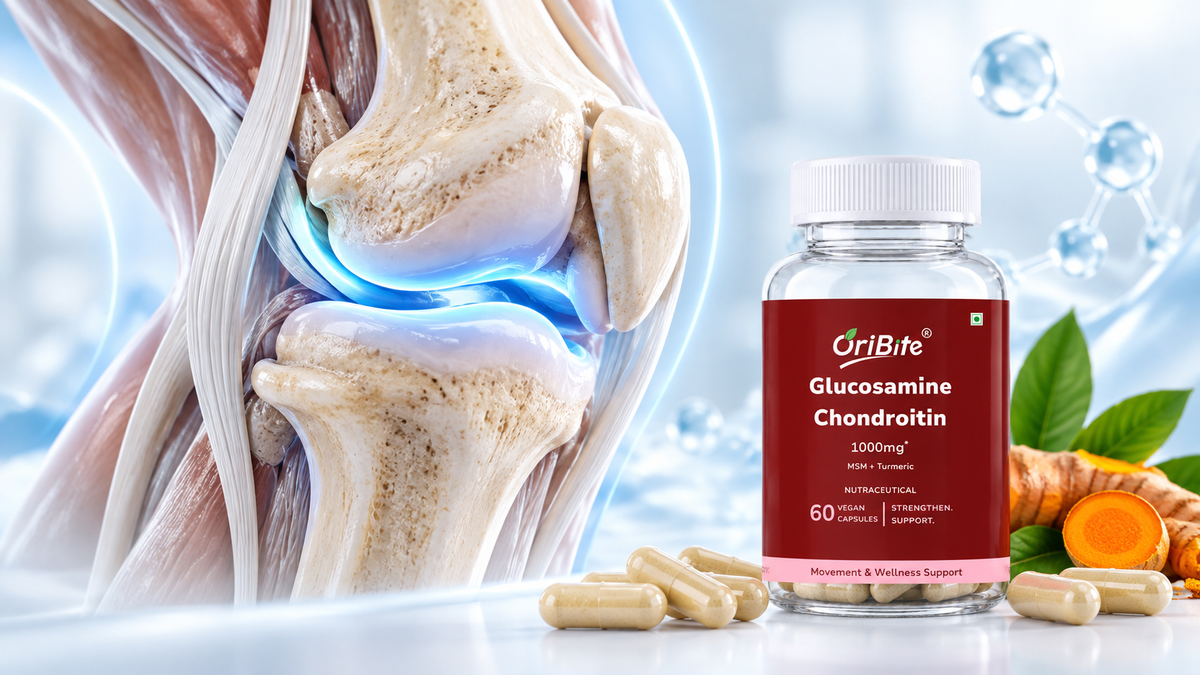
Glucosamine is an amino sugar your body makes naturally. It is a building block for glycosaminoglycans, long molecules that help form proteoglycans, the “sponge” in articular cartilage. Cartilage is the smooth, rubbery tissue that covers bone ends and lets joints glide and absorb shock.
Supplements usually come from shellfish shells or from fungal fermentation. They are sold in two main forms:
- Glucosamine sulfate: the form used in most positive European trials.
- Glucosamine hydrochloride: common in U.S. products, with less consistent trial results.
Many products also add chondroitin, another cartilage component. Chondroitin is a related but separate compound, and the two are often compared.
How Does Glucosamine for Cartilage Repair Work?
Healthy cartilage is in constant balance between building and breakdown. In osteoarthritis (OA), breakdown wins. Enzymes and inflammatory signals degrade the cartilage matrix faster than cells can replace it.
Laboratory studies suggest glucosamine may:
- Supply raw material for glycosaminoglycan production in cartilage cells.
- Lower some inflammatory signals in joint tissue.
- Reduce activity of enzymes that break down cartilage.
These findings are promising, but they come mostly from cell and animal studies. A key question remains: does an oral capsule deliver enough glucosamine to cartilage to matter? Absorption is real, but only a small share reaches joint fluid, and the effective level is still debated.
It also helps to separate two ideas. Cartilage maintenance means slowing breakdown. Cartilage regeneration means growing new tissue. Current evidence does not show that glucosamine regrows cartilage in people.
Can Glucosamine Actually Regenerate Cartilage? The Evidence
Here is what the major research shows.
The NIH-funded GAIT trial (published in the New England Journal of Medicine) tested glucosamine, chondroitin, and both together in about 1,500 people with knee OA. Overall, the supplements did not beat placebo for pain. A smaller subgroup with moderate-to-severe pain showed a possible benefit with the combination, but that was a secondary finding and needs confirmation.
Long-term glucosamine sulfate trials from the early 2000s suggested less joint-space narrowing on X-rays over three years. Joint-space narrowing is an indirect marker of cartilage loss. Critics note that these studies were funded by the manufacturer and that results were not consistently repeated with other brands.
Systematic reviews paint a mixed picture. Cochrane reviews found that a specific prescription glucosamine sulfate product showed some benefit for pain and function, while other brands often did not. Quality varied widely between studies.
Official guidance also disagrees:
- The U.S. National Center for Complementary and Integrative Health (NCCIH) says effects on OA symptoms and joint structure remain uncertain, with little evidence that glucosamine alone improves joint structure.
- The American College of Rheumatology (2019) conditionally recommends against glucosamine for knee, hip, and hand OA.
- OARSI (2019) also does not recommend it.
- The European group ESCEO still supports prescription-grade crystalline glucosamine sulfate as a first-step treatment for knee OA.
The bottom line: cartilage regeneration from glucosamine is not scientifically proven. Some people report modest pain relief, and the benefit seems more likely with specific high-quality sulfate products. No guideline supports claims that it reverses OA.
Potential Benefits of Glucosamine for Joint Health
Even without proven regeneration, some people find value in glucosamine. Possible benefits include:
- Mild pain reduction in knee OA, especially with prescription-grade glucosamine sulfate.
- Improved stiffness and function in some trials, with effects that are small to moderate.
- A favorable tolerability profile compared with long-term use of some pain medicines.
- Possible added effect with chondroitin. The MOVES trial reported that glucosamine plus chondroitin was comparable to celecoxib for knee pain over six months, though the study design had limits.
What glucosamine cannot be expected to do: restore lost cartilage, cure OA, replace a damaged joint, or work fast. Anyone promising these results is overselling.
Glucosamine Dosage: What Studies Used
The most common glucosamine dosage in clinical research is 1,500 mg per day. People take it either as a single dose or split into three doses of 500 mg. Trials often paired it with 800 to 1,200 mg of chondroitin daily.
Key points about dosing:
- Sulfate vs. hydrochloride: Dosing is often listed by the glucosamine amount, but sulfate products are frequently stabilized with salt. Check the label to see how much actual glucosamine you receive.
- With food: Taking it with a meal may reduce stomach upset.
- Timeline: Studies usually run 4 to 12 weeks before symptoms are judged, and some people need up to three months. If you see no change after about three months, discuss alternatives with your doctor.
- Missed dose: Take it when you remember, but skip it if the next dose is near. Do not double up.
- Long-term use: Trials up to three years reported acceptable safety, but you should review ongoing use with a healthcare professional.
Your own glucosamine dosage should be personalized. Age, kidney function, medicines, and other conditions all matter, so ask your doctor or pharmacist before starting.
Glucosamine Side Effects and Safety
For most healthy adults, glucosamine is generally well tolerated. Still, you should know the possible glucosamine side effects:
- Nausea, heartburn, or stomach discomfort
- Diarrhea or constipation
- Headache or drowsiness
- Skin reactions or rash (uncommon)
If you notice swelling of the face or throat, trouble breathing, or severe rash, stop taking it and seek urgent medical care.
Shellfish allergy: Many products are shellfish-derived. The allergen in shellfish is usually in the meat, not the shell, and evidence of true reactions is limited. Even so, people with shellfish allergy should use caution or choose a vegetarian-sourced product, after medical advice.
Blood sugar: Early concerns that glucosamine raises glucose have not been strongly supported in human studies. People with diabetes should still monitor their levels closely when starting it.
Product quality: Supplements are not approved by regulators the way drugs are. Some products contain less glucosamine than the label says, and some contain unlisted ingredients.
Drug Interactions and Who Should Be Careful
Talk with a healthcare professional first if any of these apply to you:
- Warfarin or other blood thinners: Reports describe increased INR and bleeding risk. Close monitoring is essential.
- Diabetes medicines: Blood sugar may need extra checks.
- Pregnancy or breastfeeding: There is not enough safety data, so most experts advise avoiding it.
- Kidney, liver, or heart conditions: Seek personalized advice.
- Upcoming surgery: Many clinicians suggest stopping supplements ahead of procedures.
- Other joint supplements or pain medicines: Review combinations to avoid duplication or interactions.
Joint pain that is severe, sudden, comes with fever, or follows an injury needs medical evaluation, not supplements.
How to Choose a Glucosamine Supplement
If you and your doctor decide to try glucosamine, use this checklist to avoid wasted money:
- Form: Prefer glucosamine sulfate, since it has the stronger research base. Check whether it is stabilized with potassium or sodium chloride, which matters if you restrict sodium.
- Dose per serving: Compare the actual milligrams per serving to the 1,500 mg daily amount used in studies.
- Third-party testing: Look for seals from independent labs such as USP, NSF, or ConsumerLab.
- Clean label: Avoid proprietary blends that hide amounts, and watch for unnecessary fillers or sweeteners.
- Source: Choose vegetarian-derived options if you have a shellfish allergy.
- Price per effective dose: Divide the cost by the number of days of therapy, not by the number of capsules.
- Claim red flags: Walk away from words like “regrow cartilage,” “cure arthritis,” or “better than surgery.”
Be sure to give any product a fair trial of about three months, and track your pain and mobility in a simple journal so you can judge honestly whether it helps.
Ways to Support Cartilage Beyond Supplements
The strongest evidence for OA does not come from capsules. It comes from lifestyle and medical care:
- Exercise: Strengthening and low-impact aerobic exercise reduce pain and improve function.
- Weight management: Every pound lost can take about four pounds of pressure off the knee while walking.
- Physical therapy: A therapist can address movement patterns and strength.
- Medical treatments: Topical or oral anti-inflammatory medicines, injections, and in advanced cases surgery.
- Heat, cold, and supportive footwear: Simple tools that help day-to-day comfort.
Glucosamine, if used, works best as one small piece of a bigger plan.
Frequently Asked Questions
Can glucosamine regenerate damaged cartilage?
No human trial has proven that it does. Some evidence suggests it may slow loss in specific cases, but regeneration is unproven.
Is glucosamine sulfate better than hydrochloride?
Sulfate has more supportive research, especially prescription-grade crystalline products. Evidence for hydrochloride is weaker.
How long does it take to work?
Often 4 to 12 weeks. Stop and reassess if nothing changes after about three months.
Can glucosamine and chondroitin be taken together?
Yes, they are commonly combined. Benefits over glucosamine alone are not firmly established.
Is it safe long term?
Studies up to three years show good tolerability in most adults, but you should review it periodically with your doctor.
Does it interact with blood thinners?
It may, especially with warfarin. Get medical supervision first.
Is it safe for people with diabetes?
Human data are generally reassuring, but monitor blood sugar and consult your care team.
Are there alternatives?
Exercise, weight loss, physical therapy, and prescribed medicines have stronger evidence. Collagen, MSM, and chondroitin have mixed or limited support.
Take the Next Step for Healthier Joints
Glucosamine is not a cartilage-regrowing miracle, but for some adults with knee OA it may offer modest relief with few side effects. The honest approach is to set realistic expectations, choose a quality product, and track results.
Your next steps:
- Book a visit with your doctor or pharmacist to review your medicines and joint symptoms.
- Compare supplements using the quality checklist above.
- Pair any supplement with exercise and weight management.
- Read our related guides on chondroitin, collagen, and osteoarthritis treatment.
Speak with a healthcare professional before starting any new supplement, so you get a plan that fits your body and your goals.
References and Sources
- National Center for Complementary and Integrative Health (NCCIH): Glucosamine and Chondroitin for Osteoarthritis; Osteoarthritis: In Depth
- Clegg DO et al. GAIT trial, New England Journal of Medicine, 2006
- Cochrane Reviews on glucosamine for osteoarthritis
- Hochberg MC et al. MOVES trial, Annals of the Rheumatic Diseases, 2016
- American College of Rheumatology / Arthritis Foundation OA guideline, 2019
- OARSI guidelines for knee, hip, and polyarticular OA, 2019
- ESCEO recommendations for knee OA management
Disclaimer: This content is for information only and is not medical advice.
For general information only. Talk to your doctor before starting any supplement.