How to Choose a High-Quality Shilajit Supplement: Checklist
How to Choose a High-Quality Shilajit Supplement: A Buyer's Quality Checklist
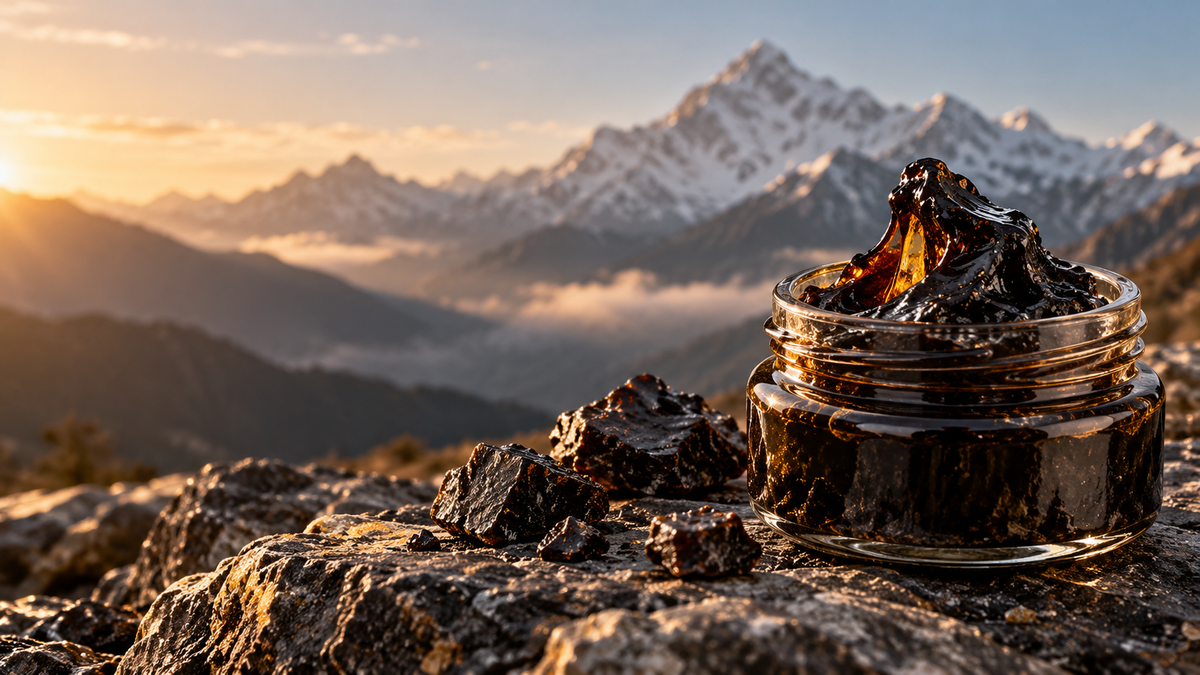
Shilajit is a sticky, tar-like substance that seeps from rock layers in high mountain ranges, and it has been used in Ayurvedic practice for centuries. Today it is sold as resin, powder, capsules and gummies, often with bold promises about vitality and purity. The trouble is that one name can cover very different products: an unprocessed mountain exudate, a carefully purified extract or a diluted blend with unclear contents.
This guide shows you how to judge quality with evidence instead of marketing. You will learn what to check on a label, how to read a batch report and which tests matter most, so you can compare products with confidence.
Why it matters: raw material gathered from mountain rock can carry heavy metals, microbes and debris, and a published safety review recommends using only properly purified material (Stohs, 2014). Quality is the first question to ask, before price or brand.
Quick Checklist for Shilajit Supplement Quality
Use this list before you compare prices or read reviews. If a product fails several points, choose another.
- Material form is stated: raw, purified or processed extract, and whether it is resin, powder or capsule.
- Purification is described: the method is explained, not just the word “purified.”
- Origin is specific: a named region and a traceable batch, not just “Himalayan.”
- Dose is in milligrams: with any standardised markers and the test method named.
- Batch-specific certificate of analysis: issued by an independent, accredited laboratory.
- Heavy metals reported as numbers: lead, arsenic, cadmium and mercury, with limits.
- Microbial results shown: counts and absence of key pathogens.
- Solvents and pesticides tested where relevant to the process or other ingredients.
- Manufacturer details and licence numbers appear on the pack.
- Honest claims: no cure promises or guaranteed-purity language.
Correct Identity and Material Form: Raw, Purified and Processed Shilajit
Shilajit is best described as a mineral-botanical substance. It forms over very long periods as plant matter decomposes within rock layers, producing humic substances (including fulvic acid), organic acids, trace minerals and bioactive dibenzo-α-pyrones (Wilson et al., 2011). Because composition depends on geology and processing, the form you buy matters as much as the name on the pack.
|
Form |
What it is |
Main quality concern |
|---|---|---|
|
Raw |
Material collected from rock with little or no refining |
Rock fragments, plant debris, microbes and metals |
|
Purified |
Dissolved, filtered, concentrated and dried under a documented process |
Whether purification was verified by final-product testing |
|
Processed or standardised |
Extract adjusted to a marker, often spray-dried with carriers, or fortified |
Hidden fillers, unclear markers and added ingredients |
The traditional Latin name Asphaltum punjabianum causes confusion, because it is not petroleum asphalt or bitumen. Dark, tarry look-alikes can be adulterated or mislabelled, so identity should be confirmed by laboratory testing rather than appearance. In short, “purified” should describe a documented process, not a marketing adjective.
Source and Geographic Origin of High-Quality Shilajit
Material sold under this name is collected from rock crevices in mountain ranges such as the Himalayas, Altai and Caucasus, usually at high altitude (Wilson et al., 2011). Geology influences mineral and metal content, so origin affects both composition and contaminant risk.
Ask the brand for the collection region, the supplier and a record linking your batch code to the raw material lot. Phrases such as “premium Himalayan” are not traceability. Also confirm that collection is lawful and responsible. Remember that a famous origin does not prove purity: only testing of your specific batch can do that.
Standardization and Potency
There is no single global standard for potency. Composition varies with source, and brands report different markers, including fulvic acid, humic substances, dibenzo-α-pyrones, moisture, ash and mineral content. Fulvic acid is measured by several methods, such as acid–base fractionation, spectrophotometry and chromatography, so percentages from different companies are not comparable unless the method is stated. Unusually high percentages deserve a closer look at how they were measured.
Potency is also not the same as efficacy. The best-known human study tested 250 mg of purified Shilajit twice daily for 90 days in 96 healthy men and reported higher total testosterone (Pandit et al., 2016). It was a single, small trial, and it cannot be assumed to apply to every product, dose or user. Look for a milligram dose on the label. Descriptions such as “pea-sized” are imprecise, especially for sticky resin.
Purification and Processing Method
Traditional Ayurvedic purification (shodhana) involves dissolving the material in warm water or herbal decoctions, filtering away insoluble matter and drying the solution. Modern manufacturers use similar steps with industrial filtration, concentration and drying.
Questions worth asking:
- Was water or an organic solvent used, and how was the solvent removed?
- What filtration was applied, and how was the product dried (sun, vacuum or spray)?
- Are carriers, preservatives or flavours added?
Purification removes insoluble debris and can reduce some contamination, but it does not guarantee low heavy metals, because soluble metals may remain. That is why the finished batch must be tested, not just the process described.
Shilajit Certificate of Analysis: What a Batch Report Should Show
A certificate of analysis (COA) is a laboratory report on a specific batch. It is the most useful document a buyer can request, but only if it is complete and verifiable. A COA must not be read as a guarantee of efficacy or complete safety. It describes only what was tested, in that sample, by that method.
Certificate-of-analysis checklist
- Product name, form and batch or lot number that matches your pack
- Manufacturing and expiry dates, and the sample receipt and test dates
- Laboratory name, address, report number and signature
- Accreditation (for example ISO/IEC 17025, or NABL in India) and whether the tests fall within its scope
- Methods named for each test (for example ICP-MS for metals)
- Numerical results with units, not just “pass” or “complies”
- Limits of quantification and acceptance limits next to each result
- Identity, heavy metals, microbiology and, where relevant, solvents and pesticides
- A way to verify the report with the laboratory
Be cautious of undated, generic or edited PDFs. If the batch number does not match, the document says little about what is in your jar.
Identity Testing
Identity testing confirms that the material is genuine and not a substitute. No single test is definitive, so laboratories combine several:
- Physical and chemical checks: colour, odour, solubility, pH, loss on drying and ash
- Fingerprinting: HPTLC or HPLC profiles, FTIR and UV–visible spectra compared with a reference
- Marker assays: fulvic acid and dibenzo-α-pyrone content by a stated method
- Adulterant screening: tests for added sugars, starches, dyes or unrelated dark materials
Home tests, such as seeing whether it sinks in water, burns or dissolves, cannot confirm identity or safety.
Shilajit Heavy Metals: Lead, Arsenic, Cadmium and Mercury
Lead, arsenic, cadmium and mercury are the priority contaminants, because the material is formed in and collected from geological sources. Safety reviews have flagged heavy metal contamination as a concern for unpurified material (Stohs, 2014).
Methods. Laboratories usually digest the sample in acid, often with microwave heating, and measure metals by ICP-MS, a sensitive technique that detects trace levels. Mercury may be measured by cold-vapour atomic absorption or a direct mercury analyser. Because inorganic arsenic is more toxic than organic forms, some labs separate the species. Good reports show recovery and quantification limits, in line with USP chapters <233> and <2232>.
Limits. Judge results per daily dose. The ICH Q3D guideline sets oral daily exposure limits of roughly 5 µg for lead and cadmium, 15 µg for arsenic and 30 µg for mercury for medicines, and USP <2232> sets stricter limits for supplements. As an example, 1 mg/kg of lead in a 300 mg serving gives only 0.3 µg, but a few servings a day from a heavily contaminated batch add up quickly. A trustworthy report states the ppm result and the dose-based conclusion. “Heavy-metal free” is not a measurable claim, because trace amounts occur naturally.
Microbiology
Natural, moist resins and powders can harbour bacteria, yeasts and moulds. Standard tests include total aerobic microbial count, total yeast and mould count, and absence of E. coli, Salmonella and Staphylococcus aureus, following approaches such as USP <2023>. Because fungal growth can produce mycotoxins, some labs also test for aflatoxins. Resins with high moisture are more vulnerable, so moisture and storage conditions matter as much as the initial result.
Pesticides and Residual Solvents Where Relevant
Pesticide testing is not usually relevant to a rock-derived exudate, but it is relevant if the formula includes botanical ingredients such as herbal extracts. Residual solvents matter if an organic solvent such as ethanol was used in extraction. They are measured by headspace gas chromatography against limits in ICH Q3C and USP <467>. If a brand says water was the only solvent, a COA should still state what was tested, or the brand should explain why those tests do not apply.
Third-Party Testing and GMP Context
Third-party testing means an independent laboratory, ideally accredited to ISO/IEC 17025, tested the batch. It adds objectivity and reduces the chance that results were chosen to flatter the product. Check that the method and analyte are within the laboratory’s accredited scope.
GMP (good manufacturing practice) covers how a facility controls materials, hygiene, documentation and testing. Relevant frameworks include 21 CFR Part 111 in the United States, WHO GMP, FSSAI requirements for health supplements and Schedule T for Ayurvedic products in India. Which regulations apply depends on how the product is categorised, so check the licence number and category on the pack.
What these can and cannot establish:
- They can show that a facility follows documented controls and that a tested sample met stated limits for the tested parameters.
- They cannot show that every other batch is clean, that the product is safe for every person or that it will deliver a health benefit.
- A GMP certificate describes the facility, not the contents of your bottle.
Red Flags
Pause, or ask hard questions, if you see any of these:
- Unsupported purity claims: “100% pure,” “heavy-metal free” or “lab tested” with no report
- Missing batch information: no lot number, manufacturing date or expiry date
- Vague ingredient descriptions: “Himalayan mineral complex” or “proprietary resin blend” without amounts
- Unverifiable laboratory reports: no lab name, no accreditation, edited-looking PDFs or non-matching batches
- Raw material sold with no testing, or purity promised through appearance alone
- Claims to treat or cure disease, or statements such as “FDA approved” for a supplement
- No manufacturer address or licence number
- Extremely low prices for a resin marketed as premium
One red flag justifies a question. Several together justify choosing another product.
How to Read a Shilajit Label
- Name and form: look for “purified Shilajit (resin or powder)” and the quantity per serving in milligrams.
- Standardisation: note any marker (such as fulvic acid) and whether the method is named.
- Other ingredients: check carriers, sweeteners, preservatives and capsule materials.
- Servings: confirm serving size and number of servings per container.
- Origin and manufacturer: look for a named region, the company address and licence numbers.
- Batch and dates: match the lot number and expiry to your COA.
- Warnings and storage: note advice for pregnancy, medication use and moisture protection.
- Claims: supportive wording is acceptable; treatment claims are not.
Because it contains minerals, including iron, people with iron overload conditions, pregnant or breastfeeding women and anyone taking medication should check with a clinician first.
Choosing the Best Shilajit Supplement Without Trusting Brand Claims
No article can honestly name the best Shilajit supplement for everyone, and no brand should be called safe or superior without product-specific evidence. A better approach is to treat “best” as the product with the strongest verifiable proof for your batch.
Take action in three steps. First, shortlist products that state form, dose and purification method. Second, ask each brand for the current batch COA, and check the lab, scope and batch number. Third, compare heavy metal, microbial and identity results against dose-based limits, and ask questions where data is missing. Brands that respond quickly with complete, verifiable reports show a quality culture you can assess for yourself.
Frequently Asked Questions
Is raw better than purified?
Raw material is less processed but is also the form most exposed to rock debris, microbes and metals. Purification can remove insoluble impurities, but it should still be confirmed by testing the final product.
Is a certificate of analysis enough?
It is necessary but not sufficient. It must match your batch, come from a qualified laboratory and show numerical results. It does not prove efficacy or safety for every person.
What fulvic acid percentage is good?
There is no accepted benchmark, because methods differ. Prefer a stated method and consistent batch results over a high headline percentage.
Can I test quality at home?
No. Water, flame or smell tests cannot detect heavy metals, microbes or adulterants. Laboratory testing is the only reliable check.
Is it safe for everyone?
Not necessarily. Human safety data are limited, and it contains minerals including iron. Consult a healthcare professional if you are pregnant, have a medical condition or take medication.
How often should a brand test?
Every batch should be tested, because natural material varies. Ask for the report for the lot you are buying.
References
- Wilson E, Rajamanickam GV, Dubey GP, et al. Review on shilajit used in traditional Indian medicine. J Ethnopharmacol. 2011;136(1):1–9.
- Stohs SJ. Safety and efficacy of shilajit (mumie, moomiyo). Phytother Res. 2014;28(4):475–479.
- Pandit S, Biswas S, Jana U, et al. Clinical evaluation of purified Shilajit on testosterone levels in healthy volunteers. Andrologia. 2016;48(5):570–575.
- Carrasco-Gallardo C, Guzmán L, Maccioni RB. Shilajit: a natural phytocomplex with potential procognitive activity. Int J Alzheimers Dis. 2012;2012:674142.
- International Council for Harmonisation. ICH Q3D Guideline for Elemental Impurities. https://www.ich.org
- International Council for Harmonisation. ICH Q3C Guideline for Residual Solvents. https://www.ich.org
- United States Pharmacopeia. General chapters <233> Elemental Impurities—Procedures, <2232> Elemental Contaminants in Dietary Supplements, <2023> Microbiological Attributes of Nonsterile Nutritional and Dietary Supplements, and <467> Residual Solvents. https://www.usp.org
- U.S. Food and Drug Administration. Current Good Manufacturing Practice for Dietary Supplements, 21 CFR Part 111. https://www.ecfr.gov/current/title-21/chapter-I/subchapter-B/part-111
- World Health Organization. Guidelines for Assessing Quality of Herbal Medicines with Reference to Contaminants and Residues. Geneva: WHO; 2007.
- International Organization for Standardization. ISO/IEC 17025:2017, General requirements for the competence of testing and calibration laboratories. https://www.iso.org
- Ministry of AYUSH, Government of India. Ayurvedic Pharmacopoeia of India (Shilajatu monograph) and Drugs and Cosmetics Rules, 1945, Schedule T. https://ayush.gov.in
- Food Safety and Standards Authority of India. Health supplement and nutraceutical regulations. https://www.fssai.gov.in
For general information only. Talk to your doctor before starting any supplement.