
Iron Bisglycinate Drug, Supplement and Food Interactions
Iron Bisglycinate Drug, Supplement and Food Interactions
1. Interaction Summary
Iron bisglycinate (ferrous bisglycinate chelate) is a gentle, well-absorbed form of iron, but it is still iron, and iron interacts with many medicines, supplements and foods. Most interactions happen inside the gut, where iron binds other substances or is bound by them, lowering absorption of one or both. A smaller group involves stomach acid, effects on lab tests, or opposing drug actions.
Two points shape this entire page. First, nearly all published interaction data come from ferrous sulfate or other simple iron salts, not from iron bisglycinate. Second, no good evidence shows that the chelate is exempt from these interactions. This reference therefore takes a conservative position: unless a source says otherwise, treat iron bisglycinate like other oral iron when it comes to timing and monitoring.
Summary of the Main Interactions
• Highest priority (drugs): levothyroxine, fluoroquinolone and tetracycline antibiotics, HIV integrase inhibitors, levodopa, bisphosphonates, penicillamine, eltrombopag and iron-chelating medicines.
• Acid-reducing medicines: proton pump inhibitors, H2 blockers and antacids can lower absorption of iron salts. Whether the chelate is affected to the same degree is not established.
• Supplements that compete: calcium, zinc (at high doses), magnesium and polyphenol-rich extracts such as green tea, curcumin and quercetin.
• Supplements that help: vitamin C and, to a lesser extent, vitamin A.
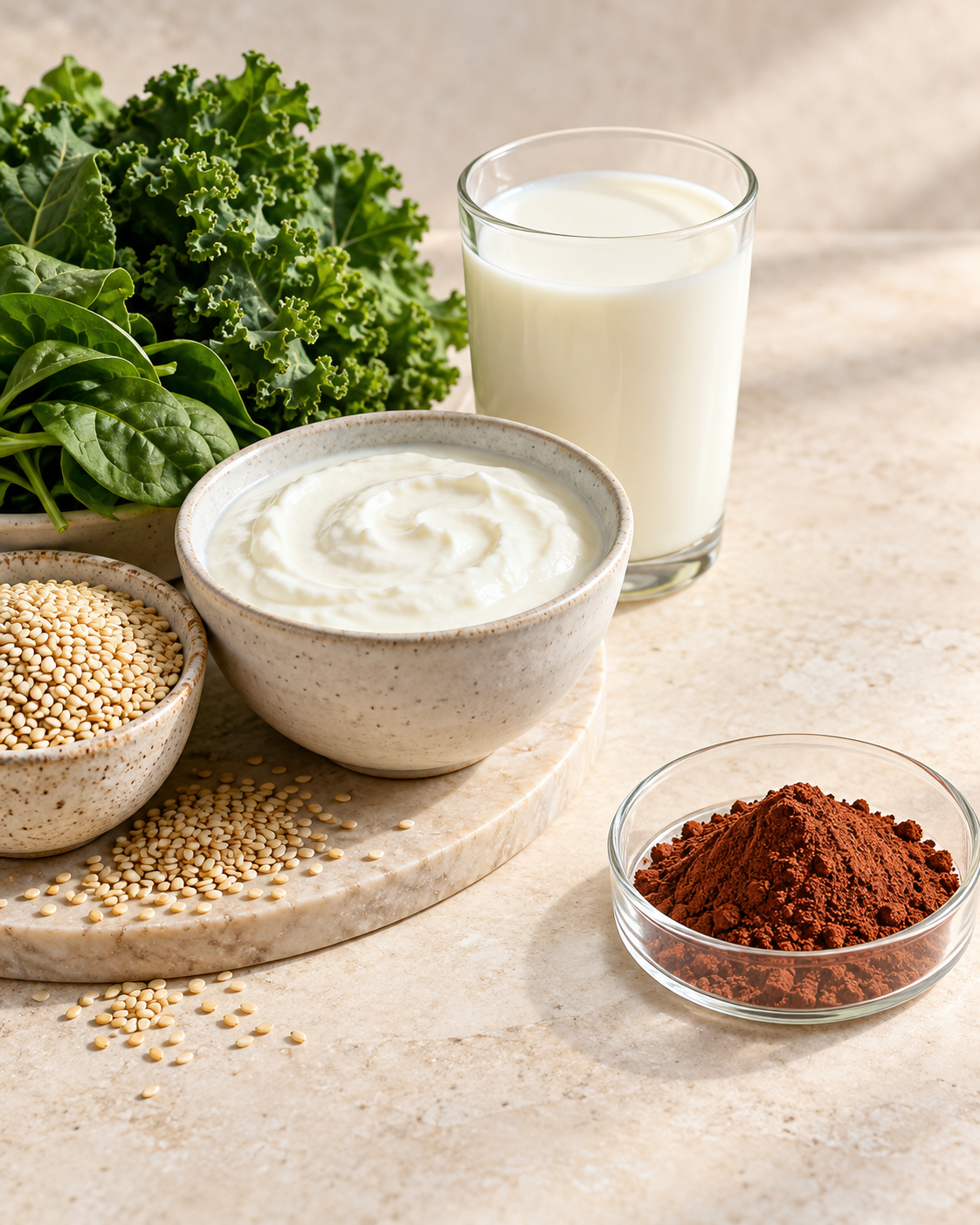
• Foods that reduce absorption: tea, coffee, cocoa, dairy and high-phytate grains and legumes. Foods that help: vitamin C-rich foods and meat, fish or poultry.
• Lab tests: recent iron intake can raise serum iron and transferrin saturation and mislead interpretation.
The usual practical solution is simple spacing: take iron apart from the interacting drug by the interval on the drug's label or your pharmacist's advice.
2. How Interactions Are Identified
Interaction claims differ greatly in reliability, and knowing the source helps you judge how seriously to take them.
• Pharmacokinetic studies. Volunteers take a drug with and without iron, and researchers compare blood levels (AUC and Cmax). This is strong evidence for absorption interactions, as with dolutegravir and iron (Song et al., 2015).
• Clinical outcome studies. These track a clinical marker such as TSH in people taking levothyroxine with iron (Campbell et al., 1992).
• Isotope absorption studies. These measure iron absorption itself when other nutrients, foods or drugs are present, as in studies of calcium, tea and phytate (Hallberg et al., 1991; Hurrell et al., 1999).
• Case reports. These can signal rare or unexpected effects but cannot prove cause.
• Drug labeling. Regulatory labels often contain separation advice based on manufacturer studies or chemical reasoning.
• Mechanistic reasoning. Chelation chemistry predicts that iron will bind molecules with carboxyl, hydroxyl or keto groups, but not every predicted interaction is clinically relevant.
The main limitation for this ingredient is extrapolation. Iron in bisglycinate is already coordinated to two glycine molecules, so it might bind some drugs less readily than free ferrous ions. No studies have established this, so the safe assumption is that interactions behave the same way. Reference databases used by pharmacists, such as Stockley's Drug Interactions and Lexicomp, generally list iron salts as a class.
3. Drug Classes of Concern
Drugs That Chelate With Iron
These drugs contain groups that bind metal ions. When iron and the drug meet in the gut, they can form poorly absorbed complexes, so the drug may work less well, or the iron may be absorbed less. The class includes fluoroquinolone and tetracycline antibiotics, some cephalosporins, levothyroxine, levodopa, methyldopa, penicillamine, bisphosphonates, HIV integrase inhibitors, eltrombopag and entacapone (Campbell and Hasinoff, 1991).
Acid-Reducing Drugs
Gastric acid helps convert dietary ferric iron into the absorbable ferrous form. Long-term proton pump inhibitor and H2 blocker use is associated with a higher risk of iron deficiency (Lam et al., 2017), and PPIs reduce dietary non-heme iron absorption (Hutchinson et al., 2007). Calcium-based antacids add direct binding of iron. Iron bisglycinate is already ferrous and chelated, so it may be less acid-dependent, but this is a hypothesis, not a proven advantage.
Iron-Chelating Medicines
Deferasirox, deferiprone and deferoxamine are designed to remove iron from the body. Taking an iron supplement alongside them defeats their purpose, so these drugs are managed by specialists and iron should not be added without advice.
Drugs That Affect Iron Balance or Blood Loss
NSAIDs and aspirin can cause gastrointestinal bleeding and irritation, which may contribute to iron deficiency and can add to the stomach upset caused by iron. Erythropoiesis-stimulating agents raise the body's demand for iron, so patients on them often need iron, but that decision belongs to their care team.
Drugs Whose Dose May Need Adjustment
Because iron can lower absorption of narrow-therapeutic-index drugs, monitoring matters more for levothyroxine, levodopa and antiretrovirals than for drugs with wide safety margins.
4. Specific Documented Interactions
The table lists interactions with human data or regulatory label support. Intervals are commonly cited examples. Always follow the specific drug label and pharmacist advice, because intervals differ between products.
|
Drug or class |
Effect |
Evidence |
Usual management |
|
Levothyroxine |
Iron binds the drug, lowering absorption; TSH can rise (Campbell et al., 1992) |
Clinical study, label |
Separate by at least 4 hours; recheck TSH after starting or stopping iron |
|
Ciprofloxacin and other fluoroquinolones |
Chelation lowers antibiotic absorption |
PK studies, label |
Cipro: take 2 hours before or 6 hours after iron; check label for others |
|
Doxycycline, minocycline, tetracycline |
Mutual reduction in absorption (Neuvonen, 1976) |
PK studies, label |
Typically separate by 2 to 3 hours |
|
Cefdinir |
Large reduction in absorption; red-tinted stools can occur |
PK study, label |
Separate by at least 2 hours |
|
Dolutegravir, bictegravir, raltegravir |
Reduced antiviral exposure when taken fasting with iron (Song et al., 2015) |
PK study, label |
Take together with food or follow the specific label spacing |
|
Levodopa |
Reduced levodopa absorption (Campbell and Hasinoff, 1991) |
PK and clinical studies |
Separate doses; watch for worsening symptoms |
|
Methyldopa |
Reduced absorption |
PK study |
Separate by about 2 hours |
|
Penicillamine |
Reduced absorption of penicillamine |
PK study, label |
Separate by about 2 hours |
|
Alendronate and other oral bisphosphonates |
Reduced bisphosphonate absorption |
Label |
Take the bisphosphonate first, on an empty stomach, and delay iron |
|
Eltrombopag |
Chelation reduces drug absorption |
Label |
Take 2 hours before or 4 hours after iron |
|
Entacapone |
Iron chelation in the gut |
Label |
Separate by 2 to 3 hours |
|
Proton pump inhibitors, H2 blockers |
Lower acid reduces absorption of iron salts (Hutchinson et al., 2007; Lam et al., 2017) |
Observational and PK data |
Discuss monitoring ferritin; chelate-specific effect unknown |
|
Calcium carbonate and other antacids |
Bind iron and raise gastric pH |
Label, absorption studies |
Separate by about 2 hours |
|
Bile acid sequestrants (cholestyramine, colestipol) |
May bind iron in the gut |
Label, mechanistic |
Typically take iron at least 1 hour before or 4 hours after |
|
Iron chelators (deferasirox, deferiprone, deferoxamine) |
Pharmacological opposition |
Mechanism, label |
Do not combine without specialist direction |
Several of these interactions affect the drug rather than the iron. In those cases the risk is therapeutic failure, such as a rising TSH or an under-treated infection, which can be silent until a test or symptom shows it.
5. Theoretical and Mechanistic Interactions
Some interactions are predicted from chemistry but lack solid human data. They deserve caution, not alarm.
• Mycophenolate mofetil. Early reports suggested iron reduced mycophenolic acid exposure, but later studies were inconsistent. Many clinicians still advise separating doses.
• Chloramphenicol. Drug references note that it may delay the response to iron therapy, though clinical significance is uncertain.
• Other chelating antibiotics and antivirals. Newer drugs with metal-binding structures may behave like quinolones or tetracyclines. Check the label of any new medicine.
• Bisglycinate-specific differences. The ring structure may change how iron meets drugs in the gut. This is unproven, and no one should rely on it to skip spacing.
• Alcohol and liver medicines. Iron overload and liver disease interact in complex ways. In people with chronic liver disease, iron should be used only after testing and advice.
• Antioxidant and pro-oxidant effects. Unabsorbed iron can promote oxidation in the gut. The clinical importance for people taking other supplements is unproven.
6. Supplement-Supplement Interactions
|
Supplement |
Effect on iron absorption |
Practical note |
|
Calcium |
Reduces non-heme and heme iron absorption in the same meal (Hallberg et al., 1991); long-term effect on iron stores appears smaller |
Separate by about 2 hours |
|
Zinc |
Can compete with iron when given together in solution at high ratios; effect is smaller with food (Fischer Walker et al., 2005) |
Avoid high-dose zinc at the same time; also, long-term high zinc can lower copper |
|
Magnesium |
Possible binding with iron in the gut; evidence limited |
Separate when practical |
|
Vitamin C |
Increases non-heme iron absorption (Teucher et al., 2004) |
Helpful pairing; high doses are not needed |
|
Vitamin A and beta-carotene |
Can improve absorption from cereal-based meals (Garcia-Casal et al., 1998) |
Relevant mostly where diets are low in vitamin A |
|
Copper |
Needed for iron mobilization; deficiency can mimic iron-resistant anemia |
Check copper if anemia does not respond |
|
Green tea extract, quercetin, resveratrol |
Polyphenols can bind iron and reduce absorption |
Separate by 1 to 2 hours |
|
Curcumin or turmeric extract |
Chelates iron in laboratory studies; a case report links high-dose turmeric to iron deficiency anemia (Smith and Ashar, 2019) |
Be cautious with long-term high doses |
|
Phytic acid (IP6) and high-dose fiber |
Bind iron |
Separate by 2 hours |
|
Other iron products or multivitamins |
Additive iron load; different iron forms compete (Pizarro et al., 2002) |
Count all iron toward the 45 mg upper limit |
|
Moringa and other iron-containing botanicals |
Add iron and sometimes polyphenols |
Include their iron in your total |

7. Food Interactions
Foods That Lower Absorption
• Tea and coffee: polyphenols can cut non-heme iron absorption sharply, with tea showing larger effects than coffee in a classic study (Hurrell et al., 1999).
• Milk and dairy: calcium and casein reduce absorption. Milk inhibited iron absorption from ferrous bisglycinate in humans, even though the chelate is more resistant than ferrous sulfate (Olivares et al., 1997).
• Phytate-rich foods: whole grains, legumes and nuts reduce absorption of non-heme iron (Hurrell and Egli, 2010). Bisglycinate is less affected but not immune (Layrisse et al., 2000; Bovell-Benjamin et al., 2000).
• Cocoa, red wine and some spices: polyphenols with similar effects.
• High-calcium meals and calcium-fortified foods.
Foods That Improve Absorption
• Vitamin C-rich foods such as citrus, guava, bell peppers and amla.
• Meat, fish and poultry, which contain a factor that boosts non-heme iron absorption (Cook and Monsen, 1976).
• Fermented and soaked foods, which reduce phytate.
Taking Iron With or Without Food
Iron is absorbed best on an empty stomach, but food reduces nausea. For people who cannot tolerate empty-stomach dosing, a light meal without tea, coffee or dairy is a reasonable compromise.
8. Lab-Test Interference
• Serum iron and transferrin saturation: rise within hours of a dose, so a test taken soon after a morning dose can look falsely reassuring. Clinicians commonly advise fasting overnight and holding iron for at least 24 hours before iron studies unless told otherwise.
• Ferritin: less affected by a single dose but raised by inflammation, infection and liver disease. A normal or high ferritin does not always rule out deficiency when inflammation is present.
• Hemoglobin and reticulocytes: respond to effective treatment, so rising values confirm response rather than interference.
• Stool tests: iron darkens stools, which can resemble bleeding. Fecal immunochemical tests detect human blood and are not affected by iron, and older guaiac tests were generally not made falsely positive by oral iron either (Laine et al., 1988). New black, tarry stools with pain, dizziness or vomiting still need medical evaluation.
• Thyroid tests: if iron lowers levothyroxine absorption, TSH may rise, so a recheck about 6 to 8 weeks after starting or stopping iron is sensible.
9. Severity and Strength of Evidence
The table separates how strong the evidence is from how much the interaction matters clinically. A well-documented interaction can be easy to manage, while a theoretical one involving a critical drug deserves extra care.
|
Interaction |
Evidence strength |
Clinical importance |
Typical action |
|
Levothyroxine |
Strong (clinical and PK) |
High: silent loss of control |
Separate 4 hours; monitor TSH |
|
Fluoroquinolones, tetracyclines, cefdinir |
Strong (PK, label) |
High: possible treatment failure |
Follow label spacing |
|
Integrase inhibitors |
Strong (PK) |
High in HIV treatment |
Take with food or space doses |
|
Levodopa |
Moderate (PK, clinical) |
Moderate: symptom swings |
Separate; monitor |
|
Bisphosphonates, penicillamine, eltrombopag |
Moderate (label, PK) |
Moderate |
Space doses |
|
Acid suppressants and antacids |
Moderate (observational, PK) |
Moderate for long-term use |
Monitor ferritin; separate antacids |
|
Iron chelators |
Strong (mechanism) |
High |
Specialist guidance only |
|
Calcium, tea, coffee, dairy, phytate |
Strong (isotope studies) |
Moderate: lower absorption |
Separate by 1 to 2 hours |
|
Zinc, magnesium |
Limited to moderate |
Low to moderate |
Avoid same-time high doses |
|
Curcumin, polyphenol extracts |
Limited (lab, case reports) |
Low to moderate |
Be cautious with long-term high doses |
|
Mycophenolate, chloramphenicol |
Limited or conflicting |
Uncertain |
Ask the prescriber |
|
Bisglycinate-specific differences |
No direct human data |
Unknown |
Assume same as other iron |
10. Who Should Consult a Clinician
Anyone can take simple steps to space doses, but some situations call for professional input before starting iron.
• People taking levothyroxine, antibiotics, HIV medicines, levodopa, bisphosphonates, immunosuppressants, thrombopoietin agonists or iron chelators.
• People using acid-suppressing medicines long term, who may need ferritin monitoring.
• Pregnant or breastfeeding women, who need individualized dosing.
• Children, because overdose is dangerous and doses depend on weight.
• People with hemochromatosis, thalassemia, sickle cell disease with transfusions, chronic liver disease or other iron-loading conditions.
• Anyone with kidney disease, heart failure, inflammatory bowel disease or a history of bariatric surgery.
• Adults, especially men and postmenopausal women, with iron deficiency that has no obvious cause, because it may signal blood loss.
• Anyone planning iron blood tests, surgery or colonoscopy.
A pharmacist can often review your full medicine and supplement list in minutes. Bring product labels, not just names, so that doses of calcium, zinc and other minerals can be checked.
11. Frequently Asked Questions
Does iron bisglycinate interact with fewer drugs than ferrous sulfate?
There is no solid evidence that it does. It is better tolerated and resists food inhibitors somewhat better, but pharmacists and drug labels treat iron products as a group. Use the same spacing rules.
How far apart should I take iron and levothyroxine?
Many clinicians advise at least 4 hours, and a TSH check a few weeks after any change. Follow your prescriber's instruction.
Can I take iron with my multivitamin?
Many multivitamins contain calcium, zinc and magnesium that compete with iron. Taking them at a different time of day improves absorption and also counts toward your total iron intake.
Is it fine to take iron with vitamin C?
Yes. Vitamin C improves non-heme iron absorption and is a common pairing, though more than a modest amount is not needed.
Should I avoid tea and coffee completely?
No. Separate them from your iron dose by one to two hours rather than giving them up. Over weeks, avoid drinking tea or coffee with your main iron-containing meals if you are treating deficiency.
Will iron change my blood tests?
Yes. A recent dose can raise serum iron and transferrin saturation. Ask your clinician whether to pause iron before testing.
Do black stools mean the iron is harmful?
Dark green or black stools are common and expected. Tarry, sticky stools with pain, dizziness or vomiting need prompt medical attention, because they can indicate bleeding.
What if I have to take iron and an interacting antibiotic?
Do not stop either one on your own. Ask a pharmacist for the right spacing, or ask your prescriber whether the iron can wait until the antibiotic course is over.
12. References
References were compiled for educational purposes. Readers should verify details against the original publications and current drug labels.
1. Bovell-Benjamin AC, Viteri FE, Allen LH. Iron absorption from ferrous bisglycinate and ferric trisglycinate in whole maize is regulated by iron status. Am J Clin Nutr. 2000;71(6):1563-1572.
2. Campbell NR, Hasinoff BB. Iron supplements: a common cause of drug interactions. Br J Clin Pharmacol. 1991;31(3):251-255.
3. Campbell NR, Hasinoff BB, Stalts H, Rao B, Wong NC. Ferrous sulfate reduces thyroxine efficacy in patients with hypothyroidism. Ann Intern Med. 1992;117(12):1010-1013.
4. Cook JD, Monsen ER. Food iron absorption in human subjects. III. Comparison of the effect of animal proteins on nonheme iron absorption. Am J Clin Nutr. 1976;29(8):859-867.
5. Fischer Walker C, Kordas K, Stoltzfus RJ, Black RE. Interactive effects of iron and zinc on biochemical and functional outcomes in supplementation trials. Am J Clin Nutr. 2005;82(1):5-12.
6. Garcia-Casal MN, Layrisse M, Solano L, et al. Vitamin A and beta-carotene can improve nonheme iron absorption from rice, wheat and corn by humans. J Nutr. 1998;128(3):646-650.
7. Hallberg L, Brune M, Erlandsson M, Sandberg AS, Rossander-Hulten L. Calcium: effect of different amounts on nonheme- and heme-iron absorption in humans. Am J Clin Nutr. 1991;53(1):112-119.
8. Hurrell RF, Reddy M, Cook JD. Inhibition of non-haem iron absorption in man by polyphenolic-containing beverages. Br J Nutr. 1999;81(4):289-295.
9. Hurrell R, Egli I. Iron bioavailability and dietary reference values. Am J Clin Nutr. 2010;91(5):1461S-1467S.
10. Hutchinson C, Geissler CA, Powell JJ, Bomford A. Proton pump inhibitors suppress absorption of dietary non-haem iron in hereditary haemochromatosis. Gut. 2007;56(9):1291-1295.
11. Laine LA, Bentley E, Chandrasoma P. Effect of oral iron therapy on the results of stool hemoccult testing. Dig Dis Sci. 1988;33(2):172-175.
12. Lam JR, Schneider JL, Quesenberry CP, Corley DA. Proton pump inhibitor and histamine 2 receptor antagonist use and iron deficiency. Gastroenterology. 2017;152(4):821-829.
13. Layrisse M, Garcia-Casal MN, Solano L, et al. Iron bioavailability in humans from breakfasts enriched with iron bis-glycine chelate, phytates and polyphenols. J Nutr. 2000;130(9):2195-2199.
14. Neuvonen PJ. Interactions with the absorption of tetracyclines. Drugs. 1976;11(1):45-54.
15. Olivares M, Pizarro F, Pineda O, et al. Milk inhibits and ascorbic acid favors ferrous bis-glycine chelate bioavailability in humans. J Nutr. 1997;127(7):1407-1411.
16. Pizarro F, Olivares M, Uauy R, et al. Iron bis-glycine chelate competes for the nonheme-iron absorption pathway. Am J Clin Nutr. 2002;76(3):577-581.
17. Smith TJ, Ashar BH. Iron deficiency anemia due to high-dose turmeric. Cureus. 2019;11(1):e3858.
18. Song I, Borland J, Arya N, Wynne B, Piscitelli S. Pharmacokinetics of dolutegravir when administered with mineral supplements in healthy adult subjects. J Clin Pharmacol. 2015;55(5):490-496.
19. Teucher B, Olivares M, Cori H. Enhancers of iron absorption: ascorbic acid and other organic acids. Int J Vitam Nutr Res. 2004;74(6):403-419.
20. Current prescribing information (drug labels) for levothyroxine, ciprofloxacin, doxycycline, cefdinir, dolutegravir, bictegravir, eltrombopag, entacapone and oral bisphosphonates.
21. Stockley's Drug Interactions and Natural Medicines database (pharmacist reference sources).
For general information only. Talk to your doctor before starting any supplement.


