
Ashwagandha Drug, Supplement and Food Interactions
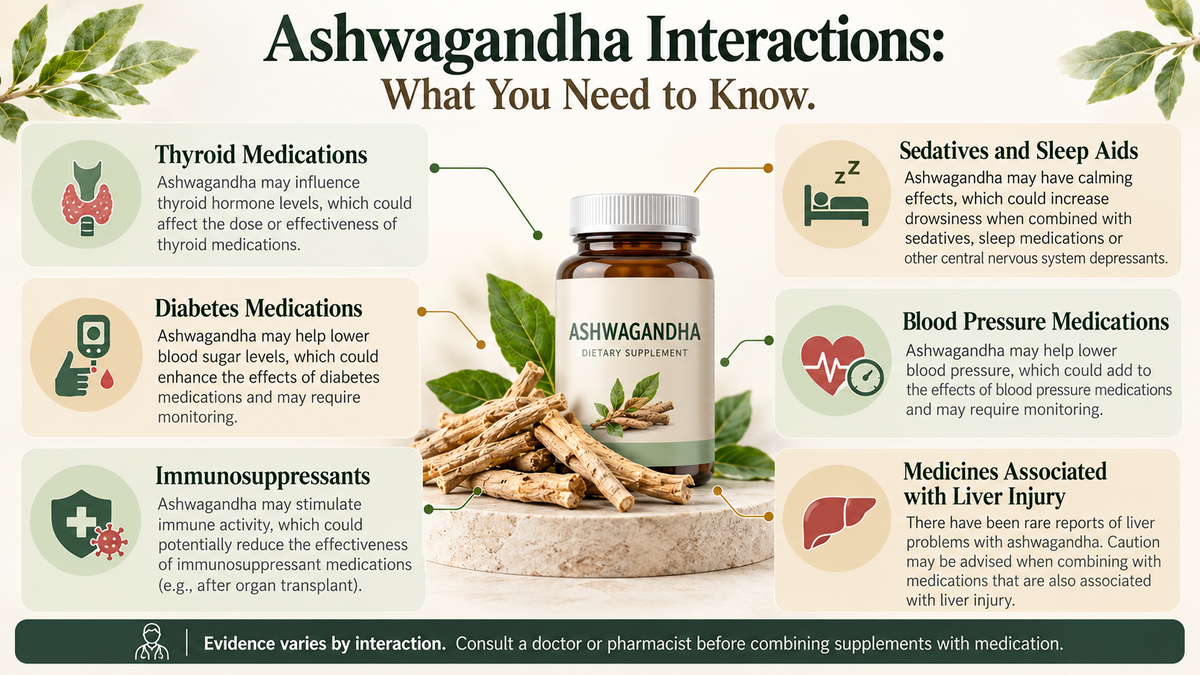
Ashwagandha Interactions: What Medications, Supplements and Foods to Watch
Ashwagandha interactions matter because this popular root extract is not inert. It can calm the nervous system, nudge thyroid hormones, lower blood sugar and blood pressure, and stimulate immune activity. If you take prescription medicine, a few of those effects can stack on top of what your drugs already do. This reference explains what is documented, what is only theoretical, and when a conversation with your pharmacist or doctor is the safest next step.
Many people start Withania somnifera for stress, sleep or energy and assume "natural" means "free of interactions." That assumption is where trouble starts. Read on and you will see exactly which drug classes deserve caution, how strong the evidence is for each, and how to check your own routine before you buy another bottle.
Ashwagandha Interactions at a Glance
Here is the short version, ranked by how much attention each area deserves.
- Thyroid medication: the most consistently flagged concern. The herb may raise thyroid hormone levels.
- Sedatives and sleep aids: additive drowsiness is plausible and often listed.
- Diabetes and blood pressure drugs: small additive lowering effects are possible.
- Immunosuppressants: a theoretical conflict, because the herb may activate immune function.
- Liver-stressing drugs: rare liver injury has been reported with ashwagandha, so stacking risk matters.
- Foods: very few documented problems. Alcohol is the notable exception.
- Lab tests: thyroid, liver, hormone and digoxin assays can be affected.
Most evidence comes from case reports, small trials and lab studies rather than large interaction trials. So treat the list as a prompt to ask questions, not as a final verdict.
How Ashwagandha Interactions Are Identified
Understanding where the information comes from helps you weigh it fairly. Interaction knowledge for herbs is built from several layers, and each layer carries a different level of confidence.
Case reports. A clinician notices an unexpected change in a patient who recently started the herb and publishes the details. Case reports are valuable for spotting signals, yet they cannot prove cause.
Clinical trials. Randomized trials of ashwagandha usually track outcomes such as stress scores or hormone levels. Safety data from them offers clues, such as shifts in thyroid or liver markers, but trials rarely test the herb alongside specific drugs.
Laboratory and animal work. Researchers examine whether withanolides, the active compounds, affect liver enzymes or transporters that process drugs. Findings in cells or mice do not always transfer to people.
Pharmacological reasoning. If an herb calms the brain and a drug also calms the brain, the combination is flagged even without a direct study. This is a theoretical interaction.
Reference databases. Pharmacist-facing resources and monographs pool all of the above and grade the evidence. They are a sensible place to check a specific combination.
Keep this hierarchy in mind as you read the sections below. A documented interaction rests on human observations. A theoretical one rests on logic and lab findings.
Drug Classes of Concern for Ashwagandha Drug Interactions
Ashwagandha drug interactions cluster around a handful of medication groups. If you use any of these, tell your prescriber or pharmacist before starting the herb.
- Thyroid hormone replacement and antithyroid drugs (levothyroxine, liothyronine, methimazole)
- Sedatives and anti-anxiety drugs (benzodiazepines, barbiturates, sleep medicines, some anticonvulsants)
- Antidiabetic drugs (insulin, metformin, sulfonylureas and others)
- Antihypertensives (ACE inhibitors, beta blockers, calcium channel blockers, diuretics)
- Immunosuppressants (cyclosporine, tacrolimus, azathioprine, mycophenolate, corticosteroids used for immune suppression)
- Hormone-related therapies (testosterone, anti-androgens used for prostate conditions, other endocrine drugs)
- Medicines with liver risk (some antifungals, certain antibiotics, high-dose acetaminophen, methotrexate)
- Digoxin, mainly because of testing interference, covered later
None of these pairings is automatically forbidden. They simply call for professional review, sometimes with extra monitoring.
Specific Documented Interactions
This section covers combinations with at least some human evidence behind them.
Ashwagandha and Thyroid Medication
The strongest signal involves the thyroid. In a small trial of adults with subclinical hypothyroidism, an ashwagandha root extract was associated with improved thyroid markers over eight weeks. Earlier animal work reported increased circulating thyroid hormones. Case reports have also described people developing thyrotoxicosis symptoms such as palpitations, anxiety and weight loss after starting the herb.
For someone taking levothyroxine, the worry is simple: the herb could push hormone levels higher than the dose was designed for. For someone with an overactive thyroid, extra stimulation is unwelcome. Anyone on ashwagandha and thyroid medication together should have thyroid blood tests rechecked, and a clinician should supervise the combination or advise against it.
Sedatives and Central Nervous System Depressants
Traditional use and animal studies point to a calming, sleep-supporting effect, which is why many people take it at night. Combined with benzodiazepines, sleep drugs, opioids or alcohol, extra drowsiness, slowed reaction time and impaired coordination are plausible. This is generally classed as a moderate, mostly pharmacological concern, not a proven pattern of serious harm.
Diabetes Medicines
Several small human trials reported lower fasting glucose after supplementation. If you already take glucose-lowering medication, an added effect could contribute to low blood sugar. Anyone who monitors glucose at home should watch for downward trends and report them.
Blood Pressure Medicines
Some studies and reference sources note possible modest blood pressure reduction. Combined with antihypertensives, the practical risk is dizziness or light-headedness, particularly when standing. People with already low blood pressure should be especially careful.
Immunosuppressants
Laboratory and animal data suggest the herb can increase activity of certain immune cells. For someone taking medication to suppress immunity, such as after an organ transplant or for an autoimmune condition, that could work against treatment. Evidence is largely theoretical, but the stakes are high, so most authorities advise avoidance unless the transplant or specialty team approves.
Liver Injury and Hepatotoxic Medicines
Published case series, including those compiled in the NIH LiverTox resource, describe rare but real episodes of liver injury linked to ashwagandha products, typically appearing weeks to months after starting and often resolving after stopping. Since the mechanism is not fully understood, combining the herb with other drugs that stress the liver is a reasonable thing to avoid or monitor. Yellowing of the skin or eyes, dark urine, itching and persistent nausea warrant prompt medical attention .
Theoretical and Mechanistic Interactions
Some interactions are predicted from biology rather than observed in patients.
Liver enzymes (cytochrome P450). Many drugs are processed by CYP enzymes. Lab studies have examined whether the herb alters CYP3A4 and CYP2D6 activity, and results have been mixed and mostly not clinically significant. Still, narrow-therapeutic-index drugs deserve a cautious approach.
Hormone pathways. Reports of raised testosterone and lowered cortisol in some trials suggest the herb can influence endocrine signaling. Anyone with a hormone-sensitive condition, or taking hormone therapy, should discuss this first.
Neurotransmitter activity. Withanolides may act on GABA-related pathways, which is the logic behind the sedative concern. Combining with other GABA-active agents is therefore flagged.
Immune signaling. Increased activity of natural killer cells and cytokines is the basis for the immunosuppressant warning.
These mechanisms explain why a pairing might matter. They do not demonstrate that a specific person will be affected.
Supplement-Supplement Interactions
Supplement stacks are common, and herbs can overlap in effect. Consider these groupings.
- Other calming agents: valerian, kava, passionflower, melatonin, GABA, L-theanine and 5-HTP may add to sedation.
- Thyroid-active products: iodine, kelp, and glandular "thyroid support" blends may combine with the herb's own thyroid effect.
- Glucose-lowering supplements: berberine, chromium, bitter melon and cinnamon extracts could add to blood sugar reduction.
- Blood pressure–lowering supplements: hibiscus, garlic extract and CoQ10 may contribute small additive effects.
- Liver-stressing supplements: concentrated green tea extract, high-dose niacin and kava have their own liver reports, so combining deserves caution.
- Immune stimulants: echinacea and similar products overlap conceptually with the immune concern.
- Hormone-influencing herbs: products marketed for testosterone or estrogen support may stack with endocrine effects.
Multi-ingredient "stress" or "sleep" formulas often hide several of these at once, so read full labels.
Food and Beverage Interactions
Good news first: documented food interactions are minimal. No well-established food has been shown to dangerously interact with the herb.
- Alcohol is the most sensible one to limit, because both can cause drowsiness and alcohol adds liver burden.
- Caffeine may blunt the calming effect for some people, which is a comfort issue rather than a safety one.
- Taking it with meals often reduces stomach upset, a common complaint.
- Nightshade sensitivity: ashwagandha belongs to the nightshade family (Solanaceae). People who react to tomatoes, potatoes or peppers may wish to be cautious.
-
Grapefruit and similar foods have no strong evidence of interacting with it, though anyone on grapefruit-sensitive medicine should still follow their drug's instructions.

Lab-Test Interference
Because this herb can alter body chemistry and, in at least one report, test chemistry, it is worth telling your lab provider.
- Thyroid panels (TSH, T3, T4): values may shift, which could change treatment decisions if the supplement is not disclosed.
- Liver enzymes (ALT, AST, bilirubin): a rise may reflect the supplement rather than another disease.
- Cortisol, testosterone and DHEA-S: reported changes can affect hormone testing.
- Blood glucose and blood pressure readings: modest drops are possible.
- Digoxin immunoassays: laboratory reports describe ashwagandha compounds producing false readings in some digoxin tests. If you take digoxin, mention it.
Stopping the supplement a couple of weeks before scheduled testing or surgery is a common recommendation, but confirm timing with your clinician.
Severity and Strength of Evidence
Not every warning carries equal weight. This table summarizes how confident the evidence is for each area.
| Area | Evidence level | Practical concern |
|---|---|---|
| Thyroid medication | Moderate (small trials, case reports) | Moderate to high |
| Liver injury with other hepatotoxic agents | Moderate (case series) | Moderate to high |
| Sedatives and alcohol | Low to moderate (pharmacology, animal data) | Moderate |
| Diabetes drugs | Low to moderate (small trials) | Low to moderate |
| Blood pressure drugs | Low (limited data) | Low to moderate |
| Immunosuppressants | Low (theoretical) | High stakes, so avoid without approval |
| Digoxin test interference | Low (lab reports) | Low, but relevant |
| Foods | Very low | Low |
| CYP enzyme effects | Low, mixed | Uncertain |
Evidence quality is limited overall. Absence of reports is not proof of safety, particularly for long-term or high-dose use.
Who Should Consult a Clinician Before Using Ashwagandha
Talk with a doctor, pharmacist or other qualified professional first if any of the following apply.
- You take thyroid medication or have any thyroid disorder.
- You use sedatives, sleep aids, anti-anxiety medicine, opioids or drink regularly.
- You manage diabetes or low blood pressure with medication.
- You take immunosuppressants or have an autoimmune condition or transplant.
- You have liver disease or have had abnormal liver tests.
- You are pregnant, trying to conceive or breastfeeding. Pregnancy is generally a reason to avoid it.
- You have a hormone-sensitive condition, including prostate cancer.
- You have surgery or an anesthetic procedure scheduled.
- You take several prescriptions or supplements at once.
- You have a nightshade allergy.
Bring the actual product label to the appointment. Doses and extract types vary widely, and that detail changes the advice.
Take Action: A Simple Safety Checklist
Knowing the risks is only useful if you act on it. Before starting or continuing, do the following.
- Write down every medicine and supplement you take, with doses.
- Ask a pharmacist to review the list against the product you plan to use.
- Choose a product that has been third-party tested.
- Start low and change one thing at a time so effects are easy to trace.
- Schedule lab work if your clinician recommends monitoring.
- Stop and seek help for jaundice, severe fatigue, palpitations, fainting or unusual symptoms.
Frequently Asked Questions
Can I take ashwagandha with levothyroxine?
Only with clinician oversight. The herb may increase thyroid hormone levels, so your dose and blood tests may need adjusting. Separating the two by several hours is sometimes suggested for absorption reasons, but timing does not remove the hormonal effect.
Is it safe with antidepressants?
Direct evidence is limited. Because it may influence calming and stress pathways, ask your prescriber, especially if you take SSRIs, SNRIs or other serotonergic drugs.
Does it interact with birth control?
No firm evidence of a significant interaction exists, though data are sparse. Mention it to your prescriber.
Can I drink alcohol while taking it?
Light use may be tolerable for some people, but combined drowsiness and added liver burden make limiting alcohol the prudent choice.
How long before surgery should I stop?
A commonly cited window is about two weeks, mainly because of possible sedative effects with anesthesia. Follow your surgical team's instruction.
Does it affect blood thinners?
Reliable human data are lacking. Some references list a theoretical concern, so anyone on warfarin or similar drugs should ask a pharmacist.
Can it cause false test results?
Yes, in specific cases such as digoxin immunoassays, and it can genuinely alter thyroid, liver and hormone values. Tell the ordering clinician.
Does the type of extract change the risk?
Possibly. Products differ in root versus leaf content, withanolide concentration and added ingredients. Leaf-containing products have drawn extra attention in safety discussions, and standardized root extracts are the form most used in clinical trials. Since doses vary from a few hundred milligrams to over a gram daily, the same bottle label can mean very different exposure. Share the exact product name and serving size with your pharmacist.
What if I already take it and several medicines?
Do not stop prescription drugs on your own. Instead, list everything, book a medication review and ask whether any monitoring is sensible. If you notice new symptoms after starting the herb, record when they began, because timing is the most useful clue a clinician can have.
How can I report a suspected reaction?
Tell your prescriber first. In the United States, you can also report adverse events through the FDA MedWatch program. Reports help regulators and researchers spot patterns that small studies miss.
Reading Labels and Spotting Hidden Ingredients
A surprising number of interaction problems come from what is not obvious on the front of the package. Proprietary blends may list an extract name without stating the amount of each herb. Sleep formulas may pair this root with melatonin, magnesium and valerian. Thyroid or "adrenal" blends may include iodine or animal glandular tissue. Testosterone boosters may combine several hormone-active plants.
Look for these habits when shopping: choose products that list the plant part and extract ratio, avoid vague "proprietary" blends when you take prescription medicine, and favor brands that publish independent testing for identity, heavy metals and contaminants. Contamination and adulteration are known weaknesses in the supplement market, so quality control is part of safety, not an optional extra.
Final Word
Ashwagandha interactions are mostly manageable when you know where to look: thyroid medicine, sedatives, diabetes and blood pressure drugs, immune therapy and liver health. Review your full list with a pharmacist, keep notes on how you feel, and let a clinician guide any combination involving prescription drugs. This article is educational and does not replace personal medical advice.
References
- National Institute of Diabetes and Digestive and Kidney Diseases. LiverTox: Clinical and Research Information on Drug-Induced Liver Injury. Ashwagandha. National Institutes of Health.
- Björnsson HK, et al. Drug-induced liver injury due to ashwagandha. Liver International. 2020.
- Sharma AK, et al. Efficacy and safety of Ashwagandha root extract in subclinical hypothyroid patients: a double-blind, randomized placebo-controlled trial. Journal of Alternative and Complementary Medicine. 2018.
- Panda S, Kar A. Withania somnifera and Bauhinia purpurea in the regulation of circulating thyroid hormone concentrations in female mice. Journal of Ethnopharmacology. 1999.
- Memorial Sloan Kettering Cancer Center. About Herbs: Ashwagandha.
- Natural Medicines Comprehensive Database. Ashwagandha monograph (professional subscription resource).
- Dasgupta A, et al. Reports on herbal supplement interference with digoxin immunoassays. Clinical laboratory literature.
For general information only. Talk to your doctor before starting any supplement.


