What Is Zinc? Identity, Sources and Supplement Use
What Is Zinc? Identity, Sources and Supplement Use
Few nutrients are needed in such small amounts yet affect so many body processes. So, what is zinc? Zinc is an essential trace mineral, chemical symbol Zn, that the body needs but cannot make or store in large amounts. It supports immune function, wound healing, protein and DNA synthesis, and the senses of taste and smell. People get zinc from foods such as oysters, meat, seeds, and legumes, or from a zinc supplement.
Zinc appears on countless labels, from multivitamins to cold lozenges, so it helps to understand the ingredient before you buy it. This guide explains what zinc is, where it comes from, how supplements use it, and what to check before taking it.
What Is Zinc? Key Facts at a Glance
| Fact | Detail |
|---|---|
| Ingredient | Zinc (Zn) |
| Type | Essential trace mineral |
| Atomic number | 30 |
| Active form in the body | Zinc ion (Zn²⁺) |
| Found in | Seafood, meat, dairy, seeds, legumes, fortified foods |
| Common supplement forms | Gluconate, sulfate, acetate, citrate, picolinate, bisglycinate, oxide |
| Adult daily intake (RDA) | 11 mg for men, 8 mg for women |
| Upper limit (adults) | 40 mg per day from all sources |
| Best known for | Immune support, wound healing, taste and smell, growth |
Scientific and Common Names of Zinc
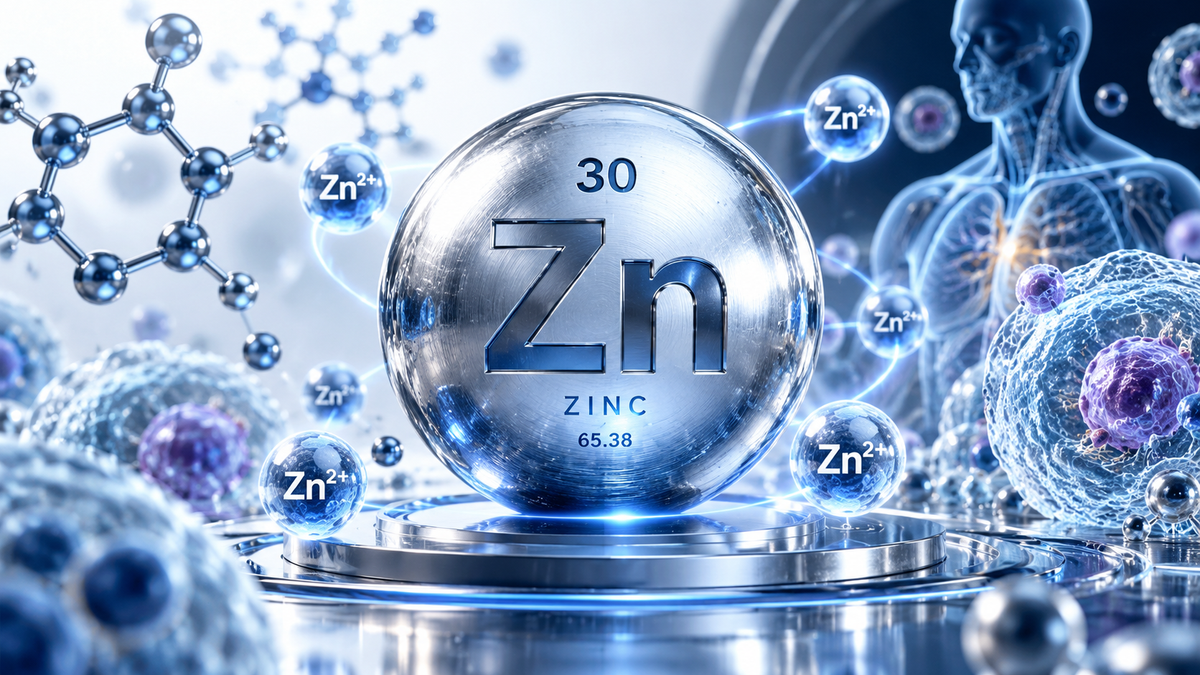
The scientific name is simply zinc, and its symbol is Zn. The word likely comes from the German Zink. Inside the body, the mineral exists mainly as a charged particle called the zinc ion (Zn²⁺).
You may see several labels for the same ingredient:
- Elemental zinc: the actual amount of zinc in a product, separate from the compound it is bound to.
- Zinc salts or chelates: zinc bound to another substance, such as gluconate or citrate, so the body can absorb it.
- Trace mineral or trace element: a general category label, not a different ingredient.
Reading the label for “elemental zinc” matters because the compound’s total weight is not the same as the zinc it delivers.
Ingredient Category: An Essential Trace Mineral
Zinc is a mineral, not a vitamin or an herb. Minerals are inorganic elements that come from soil and water. Plants absorb them and animals eat the plants, which is how they enter the food chain.
It is called a trace mineral because the body needs only small amounts, with the adult body holding roughly 2 to 3 grams in total. It is called essential because you must get it from your diet. The body has no dedicated storage system for it, so a regular intake matters.
The mineral works inside hundreds of enzymes, the proteins that speed up chemical reactions in cells. It also plays a structural role in many proteins that help regulate genes. This is why a shortfall can affect so many systems at once.
Natural Zinc Sources and Nutrient Form
Food is the primary route. Common zinc sources include:
- Shellfish: oysters contain far more zinc per serving than any other common food. Crab and lobster are also good sources.
- Meat and poultry: beef, pork, and dark-meat chicken.
- Plant foods: pumpkin seeds, cashews, chickpeas, lentils, and beans.
- Dairy and eggs: cheese, milk, and yogurt.
- Fortified foods: some breakfast cereals add zinc.
In food, zinc is bound to proteins and other molecules rather than floating free. Animal foods generally provide zinc that the body absorbs more easily. Whole grains and legumes contain phytates, natural compounds that bind zinc and reduce how much you absorb. Soaking, sprouting, and fermenting can lower phytate levels. Because of this, vegetarians and vegans may need somewhat more dietary zinc than meat eaters.
Where Zinc Comes From
Zinc is a naturally occurring element in the Earth’s crust. Commercial zinc comes mostly from mining ores, especially sphalerite, a zinc sulfide mineral. Refiners extract and purify the metal, and much of it goes to industry, such as galvanizing steel to prevent rust.
A small share becomes food-grade and supplement-grade zinc compounds. Manufacturers typically start with refined zinc or zinc oxide and react it with acids or organic compounds. A manufacturer can, for example, combine it with gluconic acid to produce zinc gluconate. These compounds are tested for purity and contaminants before they go into capsules, tablets, lozenges, or powders.
Soil zinc also matters for nutrition. Crops grown in zinc-poor soils contain less of the mineral, which is one reason some regions use zinc-enriched fertilizers.
How a Zinc Supplement Is Used
A zinc supplement provides the mineral in a measured dose when diet may fall short or when a healthcare professional recommends it. Common uses include:
- Daily multivitamin and mineral products, usually with modest zinc amounts.
- Standalone zinc capsules or tablets, often 15 to 30 mg of elemental zinc.
- Lozenges and syrups, taken by some people during colds, though results across studies are mixed.
- Eye-health formulas, such as those based on the AREDS2 research, which pair zinc with copper and other nutrients.
- Medically supervised treatment for diagnosed deficiency.
People most likely to fall short include older adults, people who are pregnant or breastfeeding, vegetarians, and people with digestive conditions that reduce absorption. A supplement is not automatically better than food, and more is not better. The goal is to fill a gap, not to exceed the upper limit.
Main Active Constituents
Because zinc is an element, it has no list of plant compounds like an herbal extract does. The active constituent is the zinc ion itself.
In a supplement, two parts matter:
- Elemental zinc: the amount that counts toward your daily intake.
- The carrier compound: the molecule that holds the zinc, such as gluconate, citrate, or an amino acid. It affects how much elemental zinc the product contains, how it tastes, and how well it is tolerated.
For example, zinc gluconate is roughly 14% elemental zinc by weight, and zinc sulfate is roughly 23%. A 100 mg zinc gluconate tablet therefore supplies about 14 mg of zinc. Always check the “Supplement Facts” panel for elemental zinc, not just the compound weight.
Why People Research Zinc
Interest in this mineral is high because of its range of roles:
- Immune function: zinc helps immune cells develop and work properly. Low zinc is linked to weaker immune responses.
- Wound healing and skin: the body uses zinc to build new tissue and support skin repair.
- Taste and smell: deficiency can dull both senses.
- Growth and development: it is vital in childhood, pregnancy, and adolescence.
- Colds: studies on lozenges and syrups have produced mixed results, and timing, dose, and form all vary between trials.
- Eye health: the AREDS2 trial tested a formula containing zinc and copper in people at risk of advanced age-related macular degeneration.
Research does not support zinc as a cure-all. Benefits are clearest when correcting a real shortfall. If your intake is already adequate, extra zinc may offer little and can cause problems.
Common Zinc Supplement Forms
| Form | Notes |
|---|---|
| Zinc gluconate | Widely used in lozenges and tablets; mild taste |
| Zinc sulfate | High elemental zinc content; can irritate the stomach |
| Zinc acetate | Common in lozenges |
| Zinc citrate | Well tolerated; less bitter |
| Zinc picolinate | Zinc bound to picolinic acid; popular in capsules |
| Zinc bisglycinate | Zinc bound to the amino acid glycine; often gentler on the stomach |
| Zinc oxide | Highest elemental zinc by weight, but less soluble |
Studies have not shown one form to be clearly best for everyone. Absorption varies with the dose, the food you take it with, and your own digestion. Choose a form you tolerate, and look for products tested by an independent third party.
What Zinc Is Not: Common Confusion
- Not a vitamin. It is a mineral, so it does not belong with vitamins C or D.
- Not an herb or plant extract. It is an element, and its “constituents” are not botanical.
- Not the same as topical zinc oxide. The zinc oxide in sunscreen and diaper cream is applied to the skin and is not a dosing guide for supplements.
- Not the same as industrial zinc. Galvanized metal and supplement-grade zinc are very different materials.
- Not magnesium or iron. These minerals have different roles, though they can compete with zinc for absorption at high doses.
-
Not a cure or treatment for disease. Zinc supports normal body functions but is not a replacement for medical care.

Zinc Safety Note
Zinc is safe at recommended intakes, but the margin is limited. The tolerable upper intake level for adults is 40 mg of zinc per day from food and supplements combined.
- Short-term excess can cause nausea, vomiting, stomach cramps, loss of appetite, and headaches.
- Long-term high intake can interfere with copper absorption and may lead to copper deficiency and related blood and nerve problems.
- Nasal zinc products have been linked to loss of smell, and the U.S. FDA issued a warning about certain zinc nasal gels and swabs in 2009.
- Medication interactions are possible, including with some antibiotics (quinolones and tetracyclines), penicillamine, and certain diuretics.
Talk to a doctor, pharmacist, or registered dietitian before starting a zinc supplement, especially if you are pregnant, breastfeeding, taking medication, or managing a health condition. This article is educational and is not medical advice.
Frequently Asked Questions
What is zinc in simple terms?
Zinc is an essential mineral that helps your immune system, wound healing, growth, and senses of taste and smell work normally.
Can I get enough zinc from food alone?
Many people can, especially if they eat meat, seafood, dairy, nuts, and legumes regularly. Vegetarians, older adults, and people with absorption problems may need extra attention.
How much zinc do I need daily?
The recommended dietary allowance for adults is 11 mg for men and 8 mg for women. Needs are higher in pregnancy and breastfeeding, and the upper limit is 40 mg a day.
Which zinc supplement form is best?
No single form is proven best for everyone. Pick one you tolerate, check the elemental zinc amount, and avoid exceeding the upper limit.
Should I take zinc with food?
Taking it with a meal can reduce stomach upset, though some foods, especially high-phytate ones, can lower absorption.
Can too much zinc be harmful?
Yes. High doses can cause nausea and, over time, copper deficiency. Stay within the upper limit unless a clinician supervises you.
Your Next Step
Now you know what zinc is, where it comes from, and how supplements use it, so you can read labels with confidence. Check your current diet, look for the elemental zinc amount on any product, and confirm your plan with a healthcare professional before you buy.
References
- National Institutes of Health, Office of Dietary Supplements. Zinc: Fact Sheet for Health Professionals. ods.od.nih.gov/factsheets/Zinc-HealthProfessional/
- National Institutes of Health, Office of Dietary Supplements. Zinc: Fact Sheet for Consumers.
- Institute of Medicine. Dietary Reference Intakes for Vitamin A, Vitamin K, Arsenic, Boron, Chromium, Copper, Iodine, Iron, Manganese, Molybdenum, Nickel, Silicon, Vanadium, and Zinc. National Academies Press, 2001.
- U.S. Food and Drug Administration. 2009 safety communication on intranasal zinc products and loss of smell.
- AREDS2 Research Group. Lutein + zeaxanthin and omega-3 fatty acids for age-related macular degeneration. JAMA, 2013.
- MedlinePlus (U.S. National Library of Medicine). Zinc in diet.
For general information only. Talk to your doctor before starting any supplement.