What Is Ashwagandha? Identity, Source and Supplement Use
What is ashwagandha? It is a shrubby botanical (Withania somnifera) whose roots, and sometimes leaves, have been used in Ayurveda for centuries. Today it is sold as an ashwagandha supplement in capsules, powders and extracts. Researchers study it for stress, sleep and general wellness. It is not a drug, and it is not right for everyone.
Key Facts at a Glance
| Item | Detail |
|---|---|
| Ingredient | Ashwagandha |
| Type | Botanical (herbal) |
| Scientific name | Withania somnifera (L.) Dunal |
| Family | Solanaceae (nightshade family) |
| Common names | Indian ginseng, winter cherry, Ajagandha |
| Plant part used | Mainly roots; sometimes leaves |
| Origin | India, the Middle East, parts of Africa |
| Key compounds | Withanolides, alkaloids, saponins |
| Typical forms | Capsules, powder, tea, tincture, gummies |
| Category | Adaptogen (traditional and marketing term) |
What Is Ashwagandha? A Plain-Language Definition
You have probably seen ashwagandha on supplement shelves, in wellness blogs and in sleep or stress blends. This guide covers what it is, where it comes from, and what to check on a label. It does not make medical promises.
Ashwagandha is a small woody plant that grows in dry regions. Its name comes from Sanskrit and is commonly linked to the smell of fresh roots, which some describe as horse-like. In traditional Indian medicine, practitioners classed it as a Rasayana, a group of herbs used to support vitality and long-term wellbeing.
Modern brands usually sell the plant as an ashwagandha supplement rather than a whole herb. That shift is why identity matters: the plant, the part used and the extract method all change what is in the bottle.
Scientific and Common Names
The accepted botanical name is Withania somnifera. The species name somnifera means “sleep-bringing” in Latin, which reflects its traditional calming reputation.
You may also see these names:
- Indian ginseng: a nickname. Ashwagandha is not related to true ginseng (Panax).
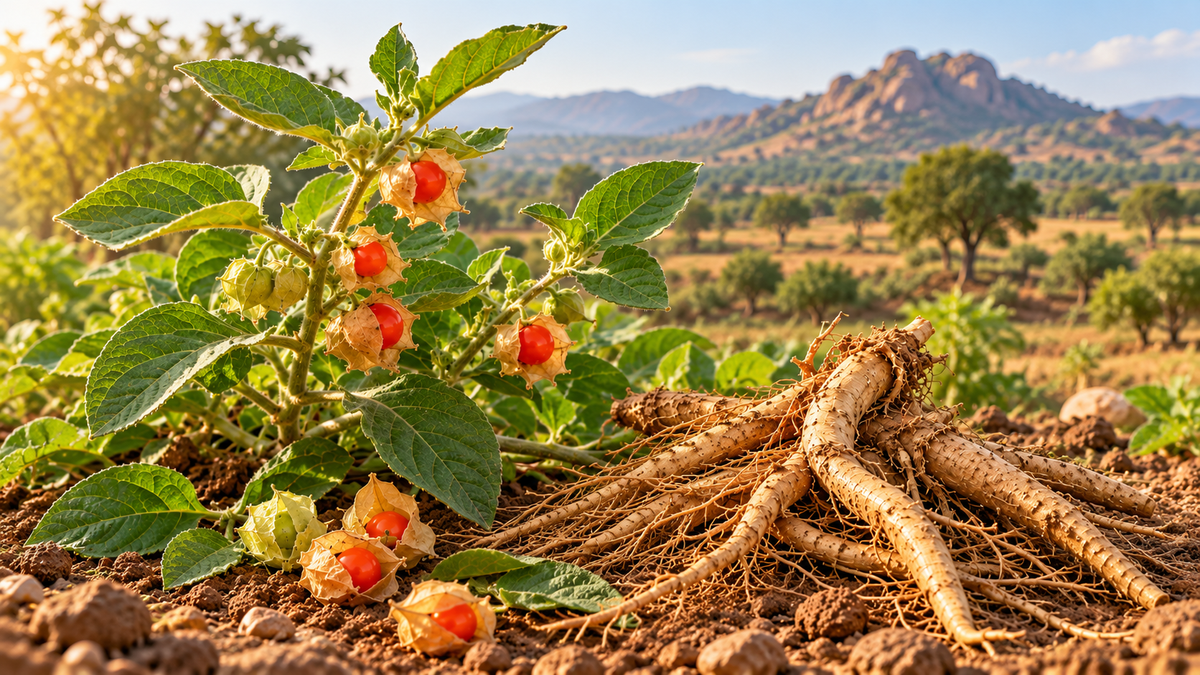
- Winter cherry: after the red-orange berries inside a papery husk.
- Withania: a short form used in research papers.
Check that a label lists the Latin name. This confirms you are getting the right species and not a look-alike.
Ingredient Category: Where Ashwagandha Fits
Ashwagandha is a botanical, which means it comes directly from a plant. It is neither a vitamin nor a mineral, and it is not a synthetic compound. In supplement marketing it is often called an adaptogen, a term for herbs said to help the body adapt to stress. Adaptogen is a traditional and commercial concept, not an official regulatory class.
In most countries, including the United States, it is sold as a dietary supplement. That means it is not approved to treat or cure any condition, and products are not pre-approved by regulators before sale.
Natural Source: Plant Part and Nutrient Form
Ashwagandha is not a nutrient you need daily, like vitamin C. It is a plant material with many naturally occurring compounds. Most products use one of these:
- Root powder: dried roots ground finely. This is the classic form.
- Ashwagandha root extract: roots processed with water or an alcohol-water mix, then concentrated. Makers often standardize it to a set percentage of withanolides.
- Leaf or root-and-leaf extract: used in some branded products. Leaves can contain different levels of certain compounds, so the part used matters.
An extract is more concentrated than plain powder. A label reading “500 mg root extract” is therefore not the same as “500 mg root powder.”
Where Ashwagandha Comes From
The plant grows wild or is cultivated in India, especially in Madhya Pradesh, Rajasthan and Gujarat. It also grows in Nepal, Sri Lanka, parts of the Middle East and Africa. It prefers dry, sandy or well-drained soil and warm weather.
Farmers usually harvest the roots after the plant has grown for several months. The roots are cleaned, dried and then sold as raw material to supplement makers. Growing region, soil, harvest timing and drying all affect quality, which is why trusted brands test their raw material.
How Ashwagandha Is Used in Supplements
Ashwagandha is sold alone or blended with other ingredients. Brands often pair it with magnesium, L-theanine, valerian, melatonin or other botanicals in stress or sleep formulas.
Typical label details include:
- the plant part used
- the extract ratio or standardization (for example, a percentage of withanolides)
- the serving amount per capsule or scoop
- third-party testing marks
Dose varies a lot by product, and no single dose fits everyone. Follow the label, and ask a healthcare professional if you have any doubts.
Main Active Constituents
Ashwagandha contains many plant compounds. The ones researchers discuss most are:
- Withanolides: steroid-like compounds unique to the nightshade family. Withaferin A and withanolide A are the best-known examples. They are the usual marker for standardization.
- Alkaloids: nitrogen-containing compounds such as withanine and somniferine.
- Sitoindosides: glycosides found in the roots.
- Saponins and flavonoids: additional plant compounds present in smaller amounts.
No single compound has been proven to explain all of the herb’s effects. Researchers still study how these compounds work together.
Why People Research Ashwagandha
Interest in ashwagandha has grown quickly. People usually look it up because they want to understand:
- Stress and mood: several small human trials have looked at perceived stress and cortisol, with mixed but promising results.
- Sleep quality: some studies examine whether the herb affects sleep, though trial designs vary.
- Physical performance and recovery: a few studies in active adults have looked at strength and recovery.
-
General wellbeing: the herb’s long traditional use makes it a common subject of curiosity.

Keep these points in mind:
- Many trials are short and small.
- Different extracts and doses make results hard to compare.
- Findings do not guarantee the same effect for you.
Research is ongoing, so treat claims that sound too strong with caution.
Common Ashwagandha Supplement Forms
Pick a form that suits your routine:
- Capsules and tablets: easy to dose and free of taste.
- Powder: mixed into smoothies or warm milk. It tastes earthy and slightly bitter.
- Tea: usually mild and low in extract strength.
- Liquid tincture: convenient, but alcohol-based in many cases.
- Gummies: pleasant to take, but often contain less extract per piece plus added sugar.
A powder is a whole ground root. An extract is concentrated. Compare labels for the actual amount of active material, not only the milligrams listed.
What Ashwagandha Is Not: Common Confusion
- Not ginseng: the “Indian ginseng” nickname is only a comparison. The two plants are unrelated.
- Not a stimulant: ashwagandha does not work like caffeine, and many people take it in the evening.
- Not a hormone: it is a plant, not a hormone product, although it may influence some hormone markers in studies.
- Not a medicine: it cannot replace treatment for anxiety, thyroid disease or sleep disorders.
- Not the same as Withania coagulans: a related species with different uses and chemistry. Check the Latin name.
Safety Note
Ashwagandha is generally well tolerated in short-term studies, but it is not risk-free. Possible issues include stomach upset, drowsiness and loose stools. Rare cases of liver injury have been reported.
Talk to a doctor before use if you:
- are pregnant or breastfeeding (it is usually advised against)
- have a thyroid condition or take thyroid medicine
- have an autoimmune disease
- take sedatives, blood pressure drugs, diabetes medicine or immunosuppressants
- have liver problems or a planned surgery
Stop use and seek care if you notice yellow skin or eyes, dark urine or severe stomach pain. This article is for education and is not medical advice.
Frequently Asked Questions
Is ashwagandha a herb or a vitamin?
It is a herb (botanical). It does not provide vitamins or minerals in meaningful amounts.
Which part of the plant is used?
Mostly the root. Some products also use leaf extract.
What does ashwagandha taste like?
Earthy, bitter and slightly pungent. Many people prefer capsules for this reason.
Is ashwagandha safe to take daily?
Studies often run 4 to 12 weeks. Long-term safety data are limited, so ask a professional about daily use.
How do I choose a quality product?
Look for the Latin name, plant part, standardization details and independent lab testing.
Can I take it with other supplements?
Often yes, but interactions are possible. Ask a pharmacist or doctor, especially with medicines.
References
- National Center for Complementary and Integrative Health (NCCIH). Ashwagandha. nccih.nih.gov
- National Institutes of Health, LiverTox. Ashwagandha. Drug-induced liver injury database. ncbi.nlm.nih.gov/books/NBK548536
- Chandrasekhar K, Kapoor J, Anishetty S. “A prospective, randomized double-blind, placebo-controlled study of safety and efficacy of a high-concentration full-spectrum extract of ashwagandha root in reducing stress and anxiety in adults.” Indian J Psychol Med. 2012;34(3):255-262.
- Tandon N, Yadav SS. “Safety and clinical effectiveness of Withania somnifera (Linn.) Dunal root in human ailments.” J Ethnopharmacol. 2020;255:112768.
- Mikulska P, et al. “Ashwagandha (Withania somnifera): current research on the health-promoting activities.” Pharmaceutics. 2023;15(4):1057.
SEO Checklist
| Requirement | Status |
|---|---|
| Title 50–60 characters with primary keyword | 54 characters, keyword included |
| Meta description 150–160 characters | 156 characters, with 1 primary and 2 secondary keywords |
| One H1 containing the primary keyword | Yes |
| Primary keyword within the first 100 words | Yes, in the opening answer |
| Each keyword in at least one H2 | “What Is Ashwagandha?”, “Ashwagandha Supplement Forms”, “Ashwagandha Root Extract” (see note below) |
| AIDA flow | Attention (direct answer), Interest (facts, source, actives), Desire (why people research it, forms), Action (safety checks, label tips, FAQ) |
| E-E-A-T and Panda | Cites NIH and peer-reviewed sources, states limits, avoids medical claims |
| Keyword density under 2% | About 0.8% for the exact phrase “what is ashwagandha”; the single word “ashwagandha” appears about 50 times in roughly 1,800 words |