What Is Beetroot? Identity, Source and Supplement Use
What Is Beetroot? Identity, Source and Supplement Use
What Is Beetroot? A Quick Answer
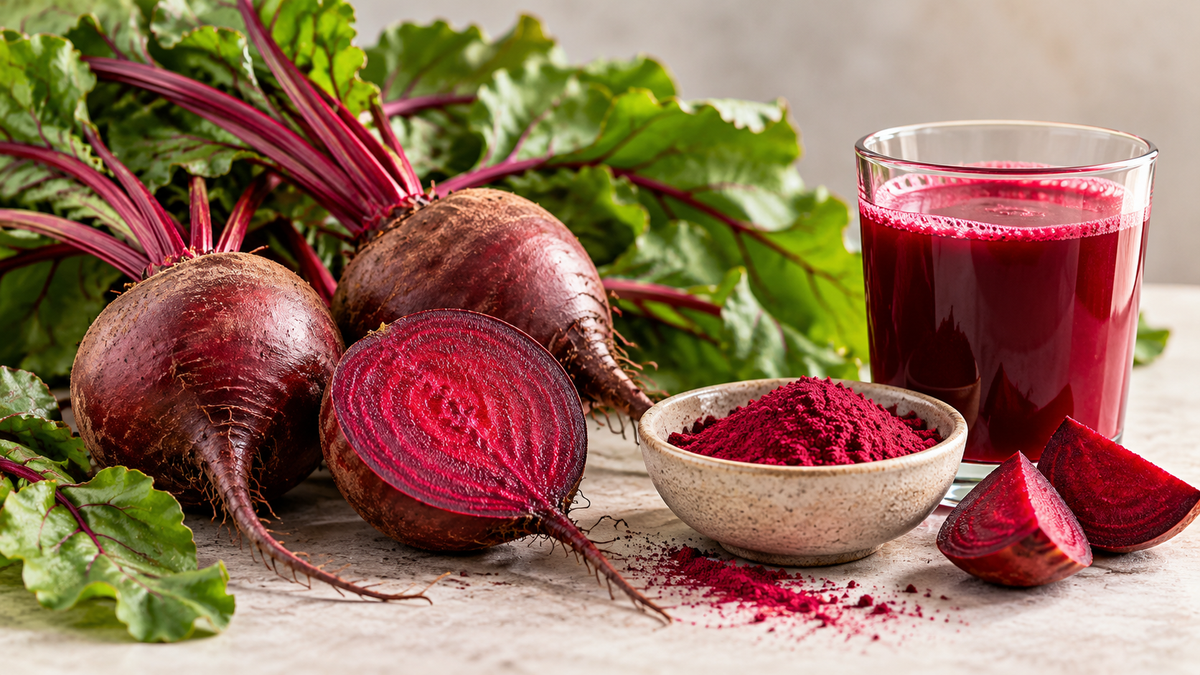
What is beetroot? Beetroot (Beta vulgaris subsp. vulgaris) is the edible, deep-red taproot of a plant in the amaranth family. People eat it as a vegetable, and manufacturers also dry it into beetroot powder or concentrate it into beetroot extract for supplements. It is best known for dietary nitrate, which the body can convert to nitric oxide, and for betalain pigments such as betanin.
You may have met beetroot as a roasted side dish, a purple juice or a scoop of powder in a pre-workout tub. This guide explains what the ingredient actually is, where it grows, which compounds it contains and how it shows up in supplements, so you can read a label with confidence.
Beetroot Key Facts at a Glance
- Ingredient name: Beetroot (also called red beet, table beet, garden beet; "beet" in North America)
- Scientific name: Beta vulgaris subsp. vulgaris (Conditiva group for the red table type)
- Plant family: Amaranthaceae (formerly Chenopodiaceae)
- Ingredient type: Botanical, a food-derived root vegetable ingredient
- Part used: Mainly the taproot; leaves ("beet greens") are edible but used less often in supplements
- Key constituents: Inorganic nitrate, betalains (betanin, vulgaxanthin), fibre, potassium, folate, phenolics
- Common supplement forms: Powder, juice concentrate, capsules, tablets, chews, gummies, shots
- Typical reasons for interest: Blood pressure, exercise performance, general vascular health
- Main caution: Dietary nitrate and oxalate content; talk to a clinician if you take blood pressure medicine or have kidney stones
Scientific and Common Names for Beetroot
The scientific name for the red table beet is Beta vulgaris subsp. vulgaris. The same species has been bred into several crops that look very different from each other. Sugar beet is grown for sucrose, Swiss chard and spinach beet are grown for their leaves, and mangelwurzel was grown as livestock feed. Table beetroot is the type selected for its sweet, deeply coloured root.
Names vary by region. In the United Kingdom, India, Australia and much of the Commonwealth, the root is called beetroot. In the United States and Canada it is usually "beet" or "red beet". On supplement labels you may also see Beta vulgaris root, red beet root or beet root powder. These all refer to the same botanical source, although the processing differs.
Ingredient Category: Where Beetroot Fits
Beetroot sits in two categories at once. It is a whole food (a root vegetable) and a botanical ingredient (a plant-derived material standardised or concentrated for supplements). It is not a vitamin, mineral, amino acid or drug.
In supplement catalogues it is usually grouped as a nitrate-providing botanical, a polyphenol or pigment-rich botanical, or a sports nutrition ingredient. Because it is a food, beetroot has a long history of everyday human consumption, which is one reason researchers have been comfortable studying it in human trials.
Natural Source, Plant Part and Nutrient Form
The part used is the swollen taproot, technically a fusion of the hypocotyl and the upper root. The red-purple colour runs through the flesh and skin because of betalain pigments, not anthocyanins, which colour red cabbage and blueberries.
Raw beetroot is mostly water, with roughly 9–10 g of carbohydrate and about 2–3 g of fibre per 100 g, plus potassium, folate and small amounts of manganese and vitamin C, according to USDA FoodData Central (USDA, 2019). Its nutrient profile is modest in calories but notable for its nitrate and betalain content.
The form matters. Fresh root, juice, dried powder and extract each deliver different amounts of nitrate and pigment. Nitrate levels in commercial products vary widely depending on variety, soil, harvest time and processing (Wruss et al., 2015), so two products labelled "beetroot" are not automatically equivalent.
Where Beetroot Comes From: Origin and Cultivation
Wild sea beet (Beta vulgaris subsp. maritima) grows along the coasts of Europe, North Africa and western Asia, and it is the ancestor of cultivated beets. Early cultures mainly ate the leaves. Swollen red roots were selected over centuries in Europe, and beetroot became a common garden vegetable from about the sixteenth century.
Today beetroot is a cool-season crop grown across Europe, North America and Asia, with Russia, Germany, France, Poland and the United States among major producers of beet crops in general. For supplement use, roots are typically washed, sliced, dried and milled into powder, or pressed for juice that is then concentrated or spray-dried.
How a Beetroot Supplement Is Used
A beetroot supplement is typically taken as a convenient, shelf-stable way to get the compounds found in the root without preparing fresh vegetables. Common uses include:
- Sports nutrition: powders, shots and chews, often taken in the hours before exercise.
- Cardiovascular wellness products: daily capsules or powders marketed for circulation and healthy blood pressure.
- Greens and "superfood" blends: beetroot powder is added for colour, taste and nitrate.
- Colour and flavour: beetroot red (E162) is a food colourant made from the root, separate from supplement use.
The most studied approach uses concentrated juice, which provides a measured nitrate dose, usually in the range of roughly 300–600 mg of nitrate in studies. Powders and capsules may supply much less nitrate unless the label states the amount, so check the label rather than assuming.
Main Active Constituents: Dietary Nitrate and Betalains
Dietary nitrate. Beetroot is among the richest common food sources of inorganic nitrate (Hord et al., 2009). After you swallow nitrate, oral bacteria reduce part of it to nitrite. Nitrite can then be converted to nitric oxide, a signalling molecule that helps blood vessels relax and affects how muscles use oxygen. This is known as the nitrate–nitrite–nitric oxide pathway (Lundberg et al., 2008). Antibacterial mouthwash can blunt this conversion, which is one reason researchers pay attention to oral bacteria.
Betalains. These water-soluble pigments include red-violet betacyanins, mainly betanin, and yellow betaxanthins such as vulgaxanthin. Laboratory studies show antioxidant and anti-inflammatory activity for betanin, but results from cell and animal work do not automatically translate to people (Esatbeyoglu et al., 2015).
Other components. Beetroot also supplies fibre, potassium, folate, phenolic compounds and saponins. Beetroot extract may concentrate some of these, but the profile depends on the solvent and method used, which is why a standardisation statement on the label is useful.
Why People Research Beetroot
Interest in beetroot comes mostly from two areas, both linked to nitrate and nitric oxide.
Blood pressure. Small clinical trials report modest reductions in blood pressure after beetroot juice or nitrate-rich foods. In one trial of people with hypertension, daily nitrate-rich beetroot juice lowered clinic and home blood pressure over four weeks (Kapil et al., 2015). A study in healthy men found a drop after beetroot juice and beetroot-enriched bread (Hobbs et al., 2012). Trials are generally short and small, so long-term effects are less certain.
Exercise performance. A well-known study found that nitrate from beetroot juice lowered the oxygen cost of moderate exercise and improved tolerance to high-intensity exercise (Bailey et al., 2009). The International Olympic Committee consensus statement lists nitrate as a supplement with supporting evidence for some performance situations (Maughan et al., 2018), although responses vary by fitness level, dose and event. Benefits tend to be smaller in highly trained athletes (Jones et al., 2018).
A balanced review of the evidence is available in Clifford et al. (2015). In short, beetroot is an interesting, well-studied food ingredient, not a treatment for any disease.
Common Forms: Beetroot Powder, Beetroot Extract and More
- Beetroot powder: dried, milled whole root. It keeps fibre and a broad nutrient profile. Nitrate content varies by product, and flavour is earthy and sweet.
- Beetroot extract: a concentrate made with water or other solvents. It may be standardised to nitrate or betalains, which makes dosing clearer.
- Juice concentrate and shots: the form used in many clinical trials, usually with a stated nitrate amount.
- Capsules and tablets: convenient and tasteless, but often lower in nitrate per serving, so several may be needed.
- Chews and gummies: easy to take, but check sugar content and nitrate per serving.
When comparing products, look for the plant name (Beta vulgaris), the part used (root), the form (powder or extract) and, ideally, the milligrams of nitrate or betalains per serving.
What Beetroot Is Not: Common Confusion
- Not sugar beet. Sugar beet is a different cultivar group grown for sugar production, not for table or supplement use.
- Not a source of iron that treats anaemia. Beetroot contains small amounts of iron, but it is not an established treatment for iron deficiency.
- Not the same as beet greens or chard. These are the same species but are used differently and have different nutrient profiles.
- Not a nitrate-free pigment. Red colour does not tell you nitrate content. Pigment and nitrate are different compounds.
- Not a medicine. Beetroot may support normal vascular function as part of a healthy diet but is not intended to diagnose, treat, cure or prevent disease.
- Not the cause of a dangerous "blood" problem. Beeturia, pink or red urine after eating beetroot, is common and generally harmless, though it can look alarming.
Safety Note on Beetroot Supplements
Beetroot is a food and is generally well tolerated in food amounts. Still, keep these points in mind:
- Blood pressure medicines. Because nitrate may lower blood pressure, people taking antihypertensives, nitrates or drugs for erectile dysfunction should speak to a doctor or pharmacist first.
- Kidney stones. Beetroot is high in oxalate (Noonan & Savage, 1999), so people prone to calcium oxalate stones are often advised to limit it.
- Digestive upset. Large amounts may cause stomach discomfort or loose stools.
- Pregnancy, breastfeeding and children. Supplement doses have not been well studied in these groups; ask a healthcare professional.
-
Surgery and low blood pressure. Seek medical advice if you already have low blood pressure or are scheduled for surgery.

This article is for general education and does not replace personal medical advice.
Beetroot FAQ
What is beetroot used for in supplements? It is mainly used as a source of dietary nitrate and betalain pigments, in products aimed at exercise performance and cardiovascular wellness.
Is beetroot the same as a beet? Yes. Beetroot and beet both refer to the red table root of Beta vulgaris. "Beetroot" is the common term in the UK and India, "beet" in North America.
Is beetroot powder as good as fresh beetroot? Not necessarily. Powder is convenient and concentrated by weight, but nitrate and betalain content vary by product and processing. Fresh root also offers more water and texture.
What is the difference between beetroot powder and beetroot extract? Powder is the dried whole root. Extract is a concentrate that may be standardised to specific compounds.
Why does beetroot turn urine pink? Betalain pigments can pass through the body unchanged in some people. This is called beeturia and is usually harmless.
Can I take a beetroot supplement every day? Many people eat beetroot regularly, but supplement suitability depends on your health, medicines and the product's dose. Check with a healthcare professional if unsure.
References
- Bailey SJ, Winyard P, Vanhatalo A, et al. Dietary nitrate supplementation reduces the O2 cost of low-intensity exercise and enhances tolerance to high-intensity exercise in humans. J Appl Physiol. 2009;107(4):1144–1155.
- Clifford T, Howatson G, West DJ, Stevenson EJ. The potential benefits of red beetroot supplementation in health and disease. Nutrients. 2015;7(4):2801–2822.
- Esatbeyoglu T, Wagner AE, Schini-Kerth VB, Rimbach G. Betanin: a food colorant with biological activity. Mol Nutr Food Res. 2015;59(1):36–47.
- Hobbs DA, Kaffa N, George TW, Methven L, Lovegrove JA. Blood pressure-lowering effects of beetroot juice and novel beetroot-enriched bread products in normotensive male subjects. Br J Nutr. 2012;108(11):2066–2074.
- Hord NG, Tang Y, Bryan NS. Food sources of nitrates and nitrites: the physiologic context for potential health benefits. Am J Clin Nutr. 2009;90(1):1–10.
- Jones AM, Thompson C, Wylie LJ, Vanhatalo A. Dietary nitrate and physical performance. Annu Rev Nutr. 2018;38:303–328.
- Kapil V, Khambata RS, Robertson A, Caulfield MJ, Ahluwalia A. Dietary nitrate provides sustained blood pressure lowering in hypertensive patients. Hypertension. 2015;65(2):320–327.
- Lundberg JO, Weitzberg E, Gladwin MT. The nitrate–nitrite–nitric oxide pathway in physiology and therapeutics. Nat Rev Drug Discov. 2008;7(2):156–167.
- Maughan RJ, Burke LM, Dvorak J, et al. IOC consensus statement: dietary supplements and the high-performance athlete. Br J Sports Med. 2018;52(7):439–455.
- Noonan SC, Savage GP. Oxalate content of foods and its effect on humans. Asia Pac J Clin Nutr. 1999;8(1):64–74.
- U.S. Department of Agriculture. FoodData Central: Beets, raw. 2019. fdc.nal.usda.gov
- Wruss J, Waldenberger G, Huemer S, et al. Compositional characteristics of commercial beetroot products and beetroot juice prepared from seven beetroot varieties grown in Upper Austria. J Food Compos Anal. 2015;42:46–55.
For general information only. Talk to your doctor before starting any supplement.