
Complete Scientific Guide to Moringa Seed Oil
Moringa Seed Oil: The Complete Scientific Guide (2026)
Moringa seed oil is a pale golden vegetable oil pressed from the seeds of Moringa oleifera, a fast-growing tree native to the Indian subcontinent. It is sold as a cosmetic oil, a culinary oil and a supplement ingredient, and it carries a long list of marketing claims. This guide separates what laboratory analysis, animal research and human studies actually show from what is only tradition or advertising. You will learn what the oil contains, how it is made, what the evidence supports, where it is unsafe or unproven, and how to judge the quality of a bottle before you buy it.
How this guide is organized. The article follows a simple path. First comes the attention-grabbing summary, then the interest-building science of identity, chemistry and production. After that the desire-building evidence sections explain what the oil may and may not do. Finally, the action sections give practical rules for safe use, buying and testing. Each claim is labeled by the strength of its evidence, and every reference is listed at the end so you can check the sources yourself.
1. Executive Summary and Quick Facts About Moringa Seed Oil
Moringa seed oil is best understood as a monounsaturated, oleic-acid-rich oil with an unusual long-chain saturated fatty acid called behenic acid. Because of this profile, it resists oxidation better than most polyunsaturated oils and feels light and non-greasy on skin. It also contains small amounts of tocopherols (forms of vitamin E) and plant sterols. These are real, measurable features.
The health story is less settled. Most of the supportive data come from composition analysis, test-tube experiments and animal studies. Controlled human trials of the oil itself are scarce. Many of the bold claims found online come from studies of moringa leaves or seed extracts, which are different materials. The honest summary is this: the oil is a high-quality, stable, generally well-tolerated edible and cosmetic oil, while proven therapeutic effects in people remain largely unconfirmed.
|
Quick fact |
Summary |
|---|---|
|
Common names |
Ben oil, behen oil, drumstick seed oil, horseradish tree oil |
|
INCI name (cosmetics) |
Moringa Oleifera Seed Oil |
|
Source |
Seed kernels of Moringa oleifera Lam. (family Moringaceae) |
|
Oil content of kernels |
Roughly 30 to 45 percent by weight, depending on origin and method |
|
Main fatty acid |
Oleic acid (C18:1), usually about 67 to 78 percent |
|
Signature fatty acid |
Behenic acid (C22:0), usually about 5 to 9 percent |
|
Minor components |
Tocopherols, phytosterols (such as beta-sitosterol), trace phenolics |
|
Appearance and aroma |
Pale yellow to golden, mild and slightly nutty when properly refined or cold pressed |
|
Stability |
High compared with oils rich in linoleic or linolenic acid |
|
Strongest evidence |
Chemical composition and oxidative stability |
|
Weakest evidence |
Clinical benefits in humans (very limited) |
|
Established dose |
None; no regulatory or clinical reference dose exists |
|
Main safety note |
Seed oil is considered low-risk in food and cosmetic amounts; data in pregnancy are lacking |
2. What Is Moringa Seed Oil? Ingredient Definition and Identity
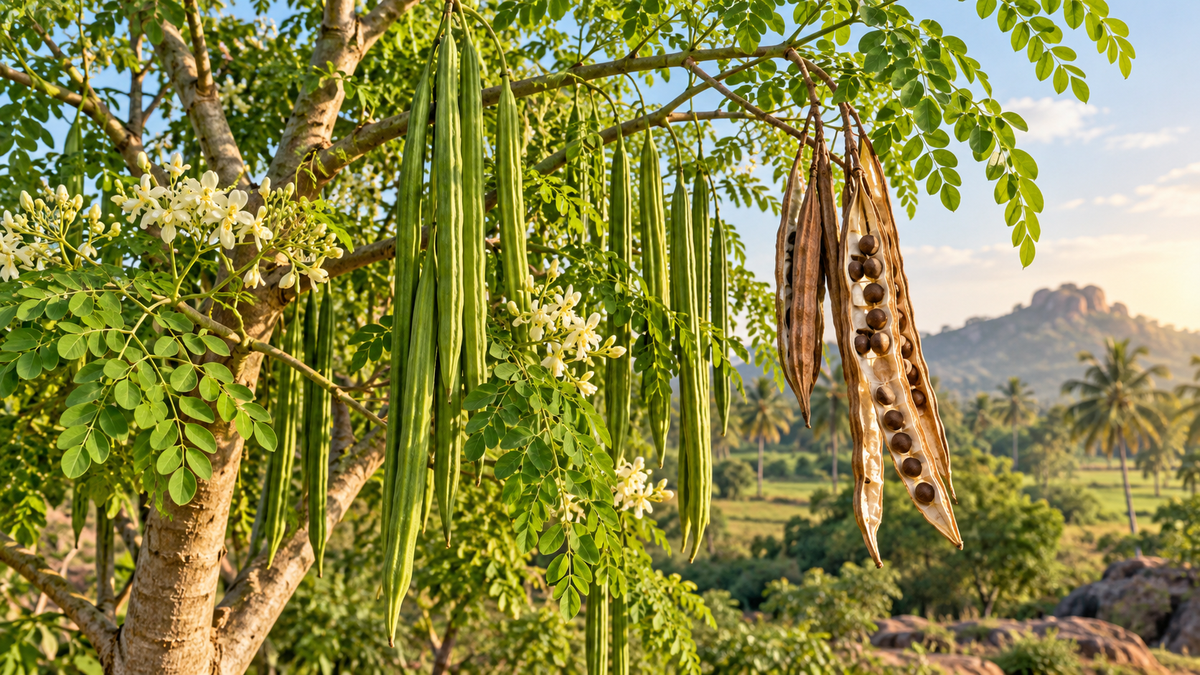
Moringa seed oil is the lipid fraction obtained from the kernels of the Moringa oleifera seed. Each tree produces long, ridged, three-sided pods, often called drumsticks. A pod holds around a dozen round seeds with three papery wings. Removing the husk reveals a white kernel that is rich in fat and protein.
A clear definition matters because several different products share the word "moringa." Moringa leaf powder, moringa leaf extract, moringa seed powder, moringa seed extract and moringa seed oil are separate ingredients with different chemistry. Leaves are rich in protein, minerals, flavonoids and phenolic acids. Seed extracts contain sulfur-rich compounds called glucosinolates and their breakdown products, the isothiocyanates. The oil, by contrast, is a triacylglycerol-based lipid. Because the isothiocyanate compounds are water-soluble and bound to the protein-rich seed cake, they remain mostly in the press cake rather than in the oil. This is why research on leaves or seed extracts cannot be simply transferred to the oil.
The oil has also been called "ben oil" or "behen oil." These names come from its historical use and from behenic acid, which takes its name from the oil. The same names have sometimes been applied to oils from related Moringa species, such as Moringa peregrina, so the botanical source on a label deserves attention.
3. Botanical and Chemical Classification
Botanical classification. Moringa oleifera Lam. belongs to the kingdom Plantae, order Brassicales, family Moringaceae. The family contains a single genus, Moringa, with about 13 species. The order Brassicales also includes mustard, cabbage and papaya, which explains the shared presence of glucosinolates in moringa tissues.
Chemical classification. As an edible fixed oil, moringa seed oil is composed mainly of triacylglycerols, which are glycerol molecules bound to three fatty acids. The oil's unsaponifiable fraction, usually below 1 to 2 percent, includes sterols, tocopherols, squalene-type hydrocarbons and trace pigments. In the language of lipid science it is classed as a high-oleic oil, comparable in broad type to olive oil, high-oleic sunflower oil and macadamia oil, but with a distinctive tail of very long-chain saturated fatty acids.
|
Classification level |
Detail |
|---|---|
|
Kingdom / Order / Family |
Plantae / Brassicales / Moringaceae |
|
Species |
Moringa oleifera Lam. |
|
Plant part |
Seed kernel |
|
Material class |
Fixed (non-volatile) vegetable oil |
|
Dominant chemical class |
Triacylglycerols rich in monounsaturated fatty acids |
|
Notable minor classes |
Tocopherols, phytosterols, trace phenolics |
|
Fatty acid family |
Omega-9 (oleic) dominant; very long-chain saturated acids present |
4. Origin, Cultivation and Sourcing of Moringa Seed Oil
Moringa oleifera originated in the sub-Himalayan foothills of northern India and nearby regions. Today it grows across tropical and subtropical zones, including India, Pakistan, Sri Lanka, many African countries, Southeast Asia, Central America, South America and the Caribbean. India is the largest producer of moringa pods, and a growing seed-oil sector has developed in India, East Africa, West Africa and parts of Latin America.
The tree tolerates heat, poor soil and long dry periods, which makes it attractive to smallholder farmers. It grows from seed or cuttings, can flower within the first year, and may yield pods once or twice a year depending on the climate and cultivar. Seed yield and oil content vary widely with genetics, rainfall, altitude, soil and harvest time. Studies of seeds from different countries and regions have reported oil contents and fatty acid proportions that differ noticeably from one location to the next [1, 2, 6].
This natural variability has practical consequences. A bottle labeled with an exact oleic acid percentage may reflect one harvest, not every harvest. Reputable producers therefore test each batch instead of relying on a single published value.
Sourcing also raises sustainability questions. Moringa seeds are often a by-product of pod and leaf production, which can make oil production an additional income source for farmers rather than a competing land use. Traceability, fair pricing and organic certification are relevant quality markers for buyers who care about these issues.
5. History and Traditional Use
Moringa has been used for thousands of years. In Ayurvedic and Unani traditions, different parts of the tree were applied for digestion, inflammation, skin problems and general vitality. The oil itself has an equally long record. Ancient Egyptians are widely reported to have used ben oil as a base for perfumes and ointments because it resists rancidity and holds fragrance well. Greek and Roman writers also mention oil from a "balanos" tree, and later traders valued ben oil as a fine lubricant for delicate machinery such as clocks, again because it does not turn rancid easily.
In many tropical communities, seed oil has been used for cooking, hair dressing and skin care. Seeds have also been used in traditional water clarification, a separate use that depends on proteins in the seed cake, not on the oil.
Traditional use is useful for generating hypotheses, but it is not evidence of efficacy. Long use shows that an ingredient is not acutely harmful in customary amounts, which is relevant for safety. It does not prove that the oil lowers blood sugar, treats arthritis or heals wounds, claims that appear in some popular sources.
6. Modern Nutraceutical Use, Moringa Oil Benefits and Moringa Oil for Skin
Today moringa seed oil appears in three main product groups.
- Cosmetics and personal care. Facial oils, serums, body oils, hair oils, lip balms and massage blends. Here the oil is valued for its light feel, quick absorption and stability. Searches for moringa oil for skin are common, which is why this use dominates consumer demand.
- Food and culinary oils. Cold pressed moringa oil is used as a finishing or light cooking oil in some regions. Its relatively high oxidative stability suits moderate-heat cooking.
- Dietary supplements. Softgel capsules and liquid oils, often marketed for antioxidant support, cardiovascular health or general wellness.
The commonly advertised moringa oil benefits include moisturizing and softening skin, supporting hair shine, providing antioxidant protection, supporting healthy lipid profiles and reducing inflammation. These benefits fall into two groups. Skin-feel and moisturizing effects follow directly from the oil's fatty acid profile and are physically plausible. Systemic health benefits after swallowing the oil are largely extrapolated from animal data or from related moringa materials. Later sections grade each claim separately so that you can see which are supported and which are speculative.
7. Chemical Composition: Fatty Acid Composition of Moringa Oil
The fatty acid composition is the defining feature of the oil. Independent analyses from Pakistan, Kenya, Greece, India, Malaysia, Nigeria and Ecuador broadly agree: oleic acid dominates, saturated fatty acids are modest, and polyunsaturated fatty acids are low [1 to 6, 16, 17].
|
Fatty acid |
Shorthand |
Typical share of total fatty acids (reported ranges) |
|---|---|---|
|
Oleic acid |
C18:1 (omega-9) |
About 67 to 78 percent |
|
Palmitic acid |
C16:0 |
About 6 to 10 percent |
|
Behenic acid |
C22:0 |
About 5 to 9 percent |
|
Stearic acid |
C18:0 |
About 3 to 7 percent |
|
Arachidic acid |
C20:0 |
About 2 to 4 percent |
|
Palmitoleic acid |
C16:1 |
About 1 to 3 percent |
|
Gadoleic (eicosenoic) acid |
C20:1 |
About 1 to 2 percent |
|
Linoleic acid |
C18:2 (omega-6) |
Usually below 2 percent |
|
Alpha-linolenic acid |
C18:3 (omega-3) |
Trace to under 1 percent |
These ranges are summaries of published studies, not specifications. Individual samples can fall outside them, particularly when seeds come from unusual climates or the oil is blended.
What the profile means. The oleic acid content is similar to, and sometimes higher than, that of olive oil. The ratio of monounsaturated to polyunsaturated fatty acids is very high, which explains the oil's slow oxidation. The saturated fraction, however, is not trivial: about 15 to 25 percent of fatty acids in many samples. That includes the long-chain behenic and arachidic acids, which also raise the oil's melting behavior, so it may cloud or partly solidify in a cool room.
Other physical and chemical indicators. Published studies report iodine values often near 65 to 75, saponification values near 180 to 195 mg KOH per gram, and density around 0.90 g/mL. Free fatty acid and peroxide values depend on seed handling, extraction and storage, which makes them useful freshness indicators rather than fixed identity values [3, 5, 17].
|
Indicator |
Typical published range |
What it tells you |
|---|---|---|
|
Iodine value |
About 65 to 75 |
Degree of unsaturation; supports identity |
|
Saponification value |
About 180 to 195 mg KOH/g |
Average fatty acid chain length |
|
Peroxide value (fresh oil) |
Low, ideally under 5 meq O2/kg |
Early oxidation |
|
Free fatty acids |
Low in well-handled seed |
Seed quality and processing |
|
Unsaponifiable matter |
Often below 1 to 2 percent |
Sterols, tocopherols, hydrocarbons |
 8. Key Active Compounds Including Behenic Acid
Three groups of compounds explain most of the oil's functional and nutritional behavior.
Oleic acid. This omega-9 monounsaturated fatty acid is the main structural component. In diets, replacing saturated fat with oleic-acid-rich oil is associated with improved blood lipid profiles. One well-known mechanism study linked oleic acid in olive oil to blood pressure reduction through effects on membrane lipid structure and signaling [12]. Because moringa seed oil is also oleic-rich, similar effects are plausible, but they have not been directly tested with moringa oil in people.
Behenic acid. Behenic acid (C22:0) is a very long-chain saturated fatty acid that makes moringa oil chemically distinctive. It gives the oil a slightly richer, more cushioned skin feel, and it functions as a useful fingerprint for authenticity because it is rare in common cheap oils. In human nutrition, behenic acid is poorly absorbed compared with shorter saturated fatty acids. One controlled feeding study found that it still raised LDL cholesterol relative to oleic acid, although the effect was smaller than for palmitic acid [Cater and Denke, ref. 20]. Given that moringa oil usually provides only a small portion of daily fat, this effect is likely minor in practical terms, but it is an example of why "healthy plant oil" should not be assumed automatically.
Tocopherols and phytosterols. Moringa seed oil contains alpha-, gamma- and delta-tocopherol, with the exact distribution and total varying by origin and processing [2, 4, 5]. These fat-soluble antioxidants help protect the oil and may contribute small nutritional amounts of vitamin E. Phytosterols reported include beta-sitosterol, stigmasterol, campesterol and delta-5-avenasterol, which are typical of seed oils and are also used in authenticity profiling.
Minor phenolics. Cold pressed and unrefined oils may carry small amounts of phenolic compounds, and some studies report measurable antioxidant activity in vitro [16]. These levels are lower than those of the leaves, so the oil should not be marketed as a rich polyphenol source.
9. Extraction and Processing: Cold Pressed Moringa Oil vs Solvent-Extracted
How the oil is extracted changes its yield, color, flavor, stability and minor-component content.
Mechanical pressing. Cleaned, dehusked and sometimes lightly conditioned kernels are crushed in screw presses or expeller presses. Cold pressed moringa oil is produced when temperatures are kept low, commonly under about 50 to 60 degrees Celsius, although the term has no single legal definition in many jurisdictions. The oil is then settled or filtered. Cold pressing preserves more tocopherols, aroma and delicate minor compounds, but gives lower yields, often leaving a substantial amount of oil in the cake.
Solvent extraction. Hexane or similar solvents recover more oil from the kernel and are typical in large-scale operations. The oil must then be desolventized and usually refined. Residual solvent testing is essential for such oils.
Alternative methods. Aqueous enzymatic extraction and supercritical carbon dioxide extraction have been studied in the laboratory. Supercritical carbon dioxide extraction avoids organic solvents and can produce high-quality oil, but equipment costs limit its use [3].
Refining. Refined oil may be degummed, neutralized, bleached and deodorized. These steps remove free fatty acids, pigments and odors, and can extend shelf life, but they may also reduce tocopherols and sterols and may create process contaminants if poorly controlled.
|
Method |
Advantages |
Limitations |
|---|---|---|
|
Cold pressing |
Retains aroma, tocopherols; no solvent |
Lower yield; higher cost per liter |
|
Hot or expeller pressing |
Higher yield |
Heat may degrade minor compounds |
|
Solvent extraction |
Highest yield; low cost |
Requires solvent removal and testing |
|
Supercritical CO2 |
Solvent-free; high purity |
Expensive, limited availability |
|
Refining (post-process) |
Neutral taste, longer shelf life |
Loss of some bioactives; process contaminant control needed |
Seed pretreatment also matters. Mature, dry, intact seeds stored away from moisture give better oil than damp or insect-damaged seeds, which can carry mold and produce high free fatty acids. After extraction, oil should be protected from air, light and heat, and ideally packed in dark glass or flushed containers.
10. Standardization and Potency
Unlike a herbal extract standardized to a marker compound, moringa seed oil is a food-type fixed oil. Its "potency" is therefore not measured as a single active ingredient. Instead, quality is defined by a panel of identity and purity indicators: fatty acid profile, sterol profile, tocopherol content, acid value, peroxide value, anisidine value, color, moisture and absence of contaminants.
No widely adopted pharmacopoeial monograph currently sets legal specifications for moringa seed oil, and to the best of current knowledge the Codex standard for named vegetable oils does not list it, so buyers should verify this with the latest Codex text. In practice, producers set their own specifications, often based on published ranges. A responsible supplier gives a batch-specific certificate of analysis rather than a generic data sheet.
|
Parameter |
Practical specification idea (producer-defined) |
Why it matters |
|---|---|---|
|
Oleic acid |
Within the published range, about 67 to 78 percent |
Identity |
|
Behenic acid |
About 5 to 9 percent |
Strong authenticity marker |
|
Peroxide value |
Low, commonly under 5 to 10 meq O2/kg for fresh oil |
Freshness |
|
Acid value / free fatty acids |
Low |
Seed and process quality |
|
Tocopherols |
Reported per batch |
Antioxidant reserve |
|
Residual solvent |
Not detected or below limits (if solvent extracted) |
Safety |
|
Heavy metals, pesticides |
Below regulatory limits |
Safety |
Because there is no recognized active-compound dose, claims such as "high potency" or "concentrated" on a bottle of plain oil are not meaningful. Look for specific test numbers instead.
11. Mechanisms of Action
The proposed mechanisms of moringa seed oil are mostly inferred from its components. Two points should be kept apart: mechanisms shown in cells or animals, and mechanisms that are only plausible.
On the skin (physical and barrier effects). Oleic acid and other lipids form an occlusive and emollient film that reduces water loss and softens the outer skin layer. This is a physical effect and does not require any special biological activity. Very high oleic acid intake in topical products can, in some experimental settings, disturb the skin barrier in dry or damaged skin, so oleic-rich oils are not automatically ideal for every skin type, particularly for people with eczema-prone or very oily, acne-prone skin.
Antioxidant effects. Tocopherols can neutralize lipid radicals and slow oxidation within the oil. Some in vitro studies report free-radical scavenging by moringa seed oil [16]. Whether this activity translates into measurable antioxidant effects inside the body after consuming typical amounts is not established.
Lipid metabolism. Replacing saturated fat with monounsaturated fat can improve LDL cholesterol and other lipid markers. Phytosterols compete with cholesterol for intestinal absorption, though the quantity in moringa oil is small compared with fortified products. Behenic acid works against this effect to a modest degree, as discussed earlier [12, 20].
Anti-inflammatory signaling. Animal studies of moringa seed materials report reductions in inflammatory markers, but most use seed extracts or whole seed preparations in which isothiocyanates are active. The oil itself has been studied far less, and the mechanism is therefore speculative [1, 7, 10].
Wound and skin repair. Fatty acids can support membrane repair and hydration, and tocopherols may limit oxidative injury. Experimental data on the oil in wound models are limited and should not be treated as clinical proof.
12. Pharmacokinetics
Pharmacokinetics describes how a substance is absorbed, distributed, metabolized and eliminated (ADME). For moringa seed oil, there are no published human pharmacokinetic studies of the oil as a whole. What is known comes from general lipid physiology.
Absorption. Dietary triacylglycerols are broken down by pancreatic lipase in the small intestine into free fatty acids and monoacylglycerols. These combine with bile salts to form micelles and are absorbed by intestinal cells. Oleic acid is absorbed efficiently. Very long-chain saturated fatty acids, including behenic acid, are absorbed less completely than shorter-chain fatty acids, with a significant share passing through unabsorbed [20].
Distribution. Absorbed fatty acids are packaged into chylomicrons and enter circulation through the lymphatic system. They are delivered to muscle, fat and liver tissue and incorporated into cell membranes and energy pathways.
Metabolism. Oleic acid is oxidized for energy, stored as triacylglycerol or incorporated into phospholipids. Tocopherols are transported with lipoproteins and metabolized mainly in the liver.
Excretion. Fatty acids end up mainly as carbon dioxide and water, and unabsorbed fat is lost in feces. Tocopherol metabolites are excreted in bile and urine.
For topical use, the oil stays mainly in the outer layers of skin. Only small amounts of lipophilic components are likely to penetrate deeper, and systemic exposure from normal cosmetic use is expected to be low, although this has not been well measured for moringa oil specifically.
13. Bioavailability
Bioavailability refers to the fraction of a compound that reaches circulation in an active form. Because moringa seed oil is a fat-based material, its bioavailability depends on fat digestion and on the form of the product.
Several factors influence it. A meal containing other fat stimulates bile release and improves absorption of fat-soluble compounds such as tocopherols. Taking the oil on an empty stomach may reduce this effect. Emulsified or encapsulated forms may disperse differently from bulk oil, but there are no comparative human bioavailability studies of moringa oil formulations. Oxidized oil delivers less intact antioxidant and may carry harmful oxidation products, so freshness is itself a determinant of useful bioavailability.
There are no peer-reviewed data on absolute bioavailability of moringa-specific compounds from the oil. Any supplement company that states precise absorption percentages for moringa seed oil should be asked for the study behind the number.
14. Preclinical Evidence Summary
Preclinical evidence includes laboratory (in vitro) and animal (in vivo) work. It is useful for generating hypotheses but is a weak predictor of results in people.
|
Area |
What preclinical studies report |
Strength and caveats |
|---|---|---|
|
Antioxidant activity |
Radical scavenging in chemical assays; oxidative stability of the oil is high [3, 4, 16] |
Chemical assays do not equal in-body effects |
|
Lipid profile |
Rodent studies using moringa seed preparations report improved cholesterol and triglyceride markers [1, 7] |
Often whole seed or extract, not purified oil |
|
Inflammation |
Reduced inflammatory markers in rodent models with seed materials [7, 10] |
Active compounds are probably isothiocyanates, mostly absent from oil |
|
Antimicrobial effects |
Some in vitro activity of seed extracts and occasionally the oil against bacteria and fungi [7, 11] |
Not equivalent to clinical antimicrobial treatment |
|
Skin and wound models |
Improved hydration or healing in some animal and cell studies [1, 10] |
Few well-controlled studies using the oil alone |
|
Toxicity |
Seed oil and kernel preparations show low acute toxicity in animal studies at typical doses [8, 15] |
Chronic and reproductive data are limited |
Interpreting the gap. A major source of confusion is that the phrase "moringa seeds" in a study may mean ground seed, defatted seed cake, aqueous extract or oil. Only the last is relevant to this article. When reading any summary, check which material was tested.
15. Human Clinical Evidence Summary
Human clinical evidence for moringa seed oil itself is very limited. Most published human trials of moringa involve leaf powder, leaf extract or seed powder, with small sample sizes and short duration. Reviews consistently note that robust randomized trials are lacking, even for leaves [8, 10, 11, 13].
For the oil specifically, the following points apply.
- Nutritional trials. Well-designed, randomized, placebo-controlled trials giving moringa seed oil to adults and measuring blood lipids, blood pressure, glucose or inflammatory markers have not been established as a body of evidence.
- Topical and cosmetic studies. A small number of cosmetic evaluations and consumer-perception studies exist for formulations containing moringa oil, usually combined with other ingredients, which prevents attribution of effects to the oil alone.
- Related moringa evidence. Some trials of leaf powder suggest possible improvements in blood sugar or lipid markers, but the quality is generally low and the results cannot be assigned to the oil [13].
The correct conclusion is that moringa seed oil has a plausible, mechanism-based rationale and a good safety record in customary use, but not a proven clinical benefit. Well-conducted trials are needed before therapeutic claims can be justified.
16. Evidence Grading by Outcome
The table below grades the evidence for specific outcomes on a simple scale: strong (consistent, high-quality human trials), moderate (some human trials or strong mechanistic support), limited (mostly animal or in vitro data) and insufficient (very little or conflicting data). These grades reflect the published literature reviewed for this article and the reasoning of the author; they are not an official regulatory rating.
|
Outcome |
Evidence grade for the oil |
Comment |
|---|---|---|
|
Chemical stability and shelf-life advantages |
Strong (laboratory) |
Reproducible across studies [2 to 5] |
|
Emollient / skin-softening effect |
Moderate (physical plausibility, limited direct trials) |
Consistent with fatty acid properties |
|
Replacement of saturated fat with high-oleic oil improving lipids |
Moderate (for oleic-rich oils in general) |
Not tested with moringa oil specifically [12] |
|
Antioxidant effect in the body |
Limited |
Mostly in vitro |
|
Cholesterol lowering by moringa oil |
Limited |
Animal data with seed preparations |
|
Blood sugar control |
Insufficient |
Evidence relates to leaves, not oil |
|
Blood pressure reduction |
Insufficient |
Extrapolated from oleic acid studies |
|
Anti-inflammatory effect in people |
Insufficient |
Animal data; isothiocyanates mostly not in oil |
|
Wound healing |
Insufficient to limited |
Few controlled studies |
|
Hair growth or hair-strength claims |
Insufficient |
No well-controlled trials found |
|
Antimicrobial treatment |
Insufficient |
In vitro only |
|
Anti-aging of skin |
Insufficient |
No dedicated trials of the oil |
 17. Dosages Used in Studies
There is no established, evidence-based dose for moringa seed oil. The absence of human trials means no reference intake has been set by any major health authority.
Animal studies. Rodent experiments use doses scaled to body weight, often a few hundred milligrams to a few grams of seed oil or seed preparation per kilogram. These figures cannot be converted directly into safe or effective human doses, because metabolism, diet and body size differ.
Human use. Supplements on the market commonly provide approximately 500 to 1,000 mg of oil per softgel, and culinary use ranges from a teaspoon-sized serving as a dressing or finishing oil to normal cooking amounts. These are market practices, not evidence-based recommendations.
|
Context |
Typical amount seen in practice |
Evidence status |
|---|---|---|
|
Dietary supplement (softgel) |
About 500 to 1,000 mg of oil per capsule, product-specific |
No clinical dose established |
|
Culinary use |
Roughly 1 teaspoon to 1 tablespoon (about 5 to 15 mL) as part of normal fat intake |
Food use; no studied therapeutic dose |
|
Topical use |
A few drops per application to face, hair or body |
Cosmetic practice; no dose studies |
A reasonable principle is to treat the oil as a food fat: count it within your total daily fat intake and do not exceed the label directions. Anyone considering it for a medical purpose should talk with a qualified clinician first.
18. Timing and Use
Because no clinical trial defines optimal timing, advice here rests on general fat physiology and product practicalities.
Oral use. Taking the oil with a meal that contains other fats may improve absorption of fat-soluble components and reduces the chance of stomach upset. Capsules are usually taken once or twice daily with food. There is no evidence that taking it at a specific hour of the day offers advantages.
Duration. Studies do not define a safe or effective duration. Short courses of several weeks are typical in marketing, but these are not evidence-derived. Anyone using it for months should monitor tolerance and consider periodic breaks and routine medical reviews.
Topical use. Applying a few drops to slightly damp skin after cleansing can help lock in moisture. At night, the oil is often used as the last step of a skin routine. People with acne-prone or fungal-prone skin should patch test first, since oleic-rich oils may not suit every skin type. A patch test on the inner forearm, watched for 24 to 48 hours, helps detect irritation or allergy.
Cooking. The oil's stability allows light sautéing and baking, but smoke point and oxidation depend on refinement level. Unrefined cold pressed oil is best used at low to medium heat or added after cooking.
19. Available Forms
Moringa seed oil appears in a variety of products. Knowing the form helps you compare labels fairly.
|
Form |
Typical use |
Notes |
|---|---|---|
|
Cold pressed, unrefined oil |
Skin, hair, culinary |
Best retention of aroma and tocopherols; shorter shelf life than refined oil |
|
Refined oil |
Cosmetics, culinary |
Neutral scent and color; fewer minor components |
|
Softgel capsules |
Supplements |
Check whether the capsule contains only oil or a blend |
|
Blended facial or hair oils |
Cosmetics |
Moringa share may be small; check ingredient order |
|
Creams, lotions, balms |
Skin care |
Oil content depends on formulation |
|
Bulk oil for formulators |
Manufacturing |
Needs batch certificate and specification |
When buying, confirm that the label states the botanical name (Moringa oleifera), the part used (seed), the extraction method and, ideally, a batch or lot number.
20. Safety and Moringa Oil Side Effects
Moringa seed oil has a long history of use in food and cosmetics and is generally regarded as low-risk in customary amounts. Reviews of moringa safety find that leaves and seed preparations are well tolerated at typical intakes, while some other plant parts, especially root and bark, contain compounds of concern [8, 15]. Safety data specific to the refined or cold pressed seed oil in controlled human studies remain thin, so caution is still appropriate.
Possible moringa oil side effects (oral use).
- Digestive upset such as nausea, loose stools, bloating or a greasy aftertaste, especially if taken on an empty stomach or in large amounts.
- Heartburn or reflux in sensitive people.
- Allergic reactions, which are uncommon but possible, particularly in people with sensitivity to other plants in the Brassicales order or to seed oils.
- Added calories: about 9 kcal per gram, like other fats.
Possible moringa oil side effects (topical use).
- Contact irritation or allergic dermatitis, which may appear as redness, itching or rash.
- Clogged pores or breakouts in acne-prone skin, although comedogenicity varies from person to person and no single rating is reliable.
- Staining of clothing or bedding, and rancid odor if the oil is old.
Oxidation risk. Rancid oil has lost quality and may irritate the gut or skin. Discard oil that smells sharp, paint-like or stale.
When to stop and seek help. Stop use and contact a healthcare professional for swelling of the face or lips, trouble breathing, widespread rash, severe stomach pain, or persistent diarrhea or vomiting.
|
Risk area |
Level of concern |
Notes |
|---|---|---|
|
Short-term oral use in food amounts |
Low |
Typical for culinary use |
|
High-dose or long-term supplement use |
Unknown |
No long-term human safety trials for the oil |
|
Topical use |
Low to moderate for sensitive skin |
Patch test advised |
|
Allergy |
Low but real |
Stop at first sign of reaction |
|
Rancid product |
Avoidable |
Check smell, date and storage |
21. Drug and Supplement Interactions
No well-documented clinical interaction studies exist for moringa seed oil. The following possibilities are theoretical or drawn from related moringa materials, so they should be seen as reasons for caution and not as confirmed events [8, 10, 11].
|
Category |
Possible interaction |
Practical advice |
|---|---|---|
|
Blood-sugar medicines (such as insulin or sulfonylureas) |
Moringa leaf research suggests additive glucose lowering; effect of the oil is unknown |
Monitor glucose and inform your clinician |
|
Blood pressure medicines |
Oleic-rich diets can modestly lower blood pressure; additive effects are theoretical |
Report new supplement use at checkups |
|
Cholesterol-lowering drugs and plant sterol products |
Overlapping lipid effects are possible |
Review the plan with your clinician |
|
Drugs processed by liver enzymes (CYP3A4, CYP2C9 and others) |
In vitro and animal data on some moringa extracts show enzyme effects; relevance to the oil is unclear |
Ask a pharmacist when taking narrow-therapeutic-index drugs |
|
Anticoagulants such as warfarin |
Vitamin K is present mainly in leaves, not oil; high-dose vitamin E can influence clotting in rare cases |
Mention all supplements to your prescriber |
|
Thyroid medicines |
Some leaf data suggest effects on thyroid hormones; oil effect unknown |
Separate timing and monitor if advised |
|
Other fat-soluble supplements |
Taking oil with them may increase absorption |
Usually beneficial, but follow label dosing |
Because topical oil can also be absorbed to a small degree, people on important medications should still mention all products they use regularly.
22. Special Populations
Pregnancy. Parts of the moringa tree, especially the root and bark, have been reported to have uterine-stimulating effects, and reviews advise avoiding them in pregnancy [8]. The seed oil is a different material, and small food or cosmetic amounts are probably low-risk, but safety trials in pregnancy do not exist. The conservative recommendation is to avoid supplement use unless a healthcare professional approves it.
Breastfeeding. Leaves are traditionally used to support lactation, but evidence for the oil is lacking. Food amounts are likely acceptable; supplement use should be discussed with a professional.
Infants and children. Moringa oil is sometimes used as a massage oil in some cultures. Because infant skin is more permeable and sensitive, patch testing and medical advice are important. Oral supplement use in children has no established dosing.
Older adults. Older adults often take multiple medicines, which raises the importance of checking interactions. Fat tolerance may also be lower in some individuals.
People with liver, gallbladder or pancreatic disease. Because the oil is a concentrated fat, people with impaired fat digestion or bile flow may tolerate it poorly and should seek medical advice.
People with chronic conditions (diabetes, heart disease, high blood pressure). The oil should not replace prescribed treatment. Where patients wish to use it, it should be counted within the daily fat budget and monitored with the care team.
People with allergies or sensitive skin. A patch test is essential, and use should stop at once if irritation appears.
Before surgery. Because of uncertain effects on blood sugar, blood pressure and clotting, tell your surgical team about all supplements, including this oil.
23. Quality, Testing and Authentication
Quality varies widely in the marketplace, so informed buying is a safety measure and not only a matter of preference. The questions below follow the logic of Google's helpful-content and E-E-A-T principles: show who made the product, how it was tested and what the evidence says.
Laboratory tests that matter.
|
Test |
Method (typical) |
Purpose |
|---|---|---|
|
Fatty acid profile |
Gas chromatography of fatty acid methyl esters (GC-FAME) |
Identity; behenic and oleic acid levels |
|
Sterol profile |
GC or GC-MS |
Detects blends with other oils |
|
Tocopherols |
HPLC |
Antioxidant content and refining effect |
|
Peroxide value and p-anisidine value |
Titration and spectrophotometry |
Primary and secondary oxidation |
|
Acid value / free fatty acids |
Titration |
Seed quality and freshness |
|
Heavy metals (lead, arsenic, cadmium, mercury) |
ICP-MS |
Safety |
|
Pesticide residues |
GC-MS/MS, LC-MS/MS |
Safety |
|
Residual solvents |
Headspace GC |
Safety for solvent-extracted oil |
|
Microbial and mycotoxin tests |
Culture methods, LC-MS |
Safety, especially for seed-derived products |
|
Polycyclic aromatic hydrocarbons |
GC-MS |
Process contaminant, mainly in refined or heated oils |
What a trustworthy label and seller provide.
- Botanical name (Moringa oleifera), plant part (seed) and country of origin.
- Extraction method (for example, cold pressed) and whether the oil is refined.
- Batch or lot number with a recent certificate of analysis.
- Production and best-before dates, and storage instructions.
- Dark glass bottle or other light-protective packaging.
- Third-party certifications where relevant, such as organic, good manufacturing practice or ISO-accredited laboratory testing.
Simple checks at home. Fresh oil should smell mild and slightly nutty, not sharp or paint-like. Cool storage may cause cloudiness or partial solidification, and this is normal rather than a sign of spoilage. Home checks cannot replace laboratory testing, but they can help you reject obviously rancid products.
24. Adulteration and Contamination Risks
Because moringa seed oil is a premium-priced oil, it is exposed to economic adulteration, a form of food and cosmetic fraud.
Common adulteration patterns.
- Dilution with cheaper oils such as high-oleic sunflower, soybean, refined palm olein, sesame or olive oil.
- Products labeled as moringa oil but made from a different Moringa species, or sold as mixtures where moringa is only a small share.
- Use of mineral oil or synthetic esters in cosmetic blends.
How adulteration is detected. The behenic acid fraction, the full sterol profile and tocopherol pattern together form a fingerprint. An oil with too little behenic acid, an unusual linoleic acid fraction or atypical sterols is a red flag. Isotopic and spectroscopic methods can add further evidence in specialist laboratories.
Contamination risks.
|
Contaminant |
Source |
Control measure |
|---|---|---|
|
Heavy metals |
Contaminated soil or water, polluted processing equipment |
Supplier soil and batch testing |
|
Pesticide residues |
Farm inputs |
Organic or tested supply chain |
|
Aflatoxins and other mycotoxins |
Mold growth on damp seed |
Dry storage, seed sorting, testing |
|
Residual solvents |
Hexane extraction |
Desolventizing and testing |
|
Oxidation products |
Poor storage, heat, light, air |
Cool, dark, sealed storage; peroxide and anisidine tests |
|
Microbial contamination |
Water exposure, unclean equipment |
Hygienic production, dry oil, GMP |
|
Process contaminants |
High-temperature refining |
Controlled processing, supplier audits |
Because fake or diluted oil can still look and smell acceptable, price alone is a poor guide. Very cheap bulk "moringa oil" should be treated with suspicion.
25. Regulatory Overview
The regulatory status of moringa seed oil depends on the product category and the country. The following overview is general information, not legal advice, and rules change, so always check the current texts before launching or importing a product.
Cosmetics. In the European Union, cosmetic products fall under Regulation (EC) No 1223/2009, which requires a safety assessment, a responsible person and ingredient listing using INCI names; moringa seed oil is listed as Moringa Oleifera Seed Oil [24]. In the United States, cosmetics are regulated under the Federal Food, Drug, and Cosmetic Act, with no pre-market approval of ingredients but an obligation that products be safe and properly labeled. In India, cosmetics are regulated under national drug and cosmetic rules administered by the central drug authority.
Food and food supplements. In the United States, supplements are governed by the Dietary Supplement Health and Education Act of 1994, which places responsibility for safety and truthful labeling on the manufacturer and does not allow disease-treatment claims [26]. In the European Union, food ingredients not consumed significantly before May 1997 may fall under novel food rules in Regulation (EU) 2015/2283, and the status of individual moringa parts and extracts should be checked in the Union's novel food catalogue before marketing [25]. In India, the food safety authority regulates edible oils and nutraceuticals under its own standards.
Claims. Across major jurisdictions, statements that a product treats, cures or prevents disease convert it into an unapproved medicine. Permitted wording is usually limited to cosmetic effects (moisturizing, softening) or approved nutrition and health claims. As of the evidence reviewed here, no health claim for moringa seed oil is recognized as authorized by a major regulator, and sellers who promise medical outcomes are making unsupported claims.
|
Region / area |
Main framework |
Key point for moringa seed oil |
|---|---|---|
|
European Union (cosmetics) |
Regulation (EC) 1223/2009 |
INCI listing, safety assessment, responsible person |
|
European Union (food) |
Regulation (EU) 2015/2283 |
Check novel food status before marketing as food |
|
United States (supplements) |
DSHEA 1994 |
Manufacturer responsible for safety; no disease claims |
|
United States (cosmetics) |
FD&C Act |
No pre-approval; must be safe and correctly labeled |
|
International food standards |
Codex Alimentarius |
Check whether the oil has a named-oil standard |
|
India |
National food and cosmetic regulators |
Follow local specifications and labeling |
26. Research Gaps
The literature on moringa is large, but the portion that deals with seed oil specifically is small. Important gaps include the following.
- Randomized controlled trials. Well-powered, placebo-controlled human studies of the oil on lipids, glucose, blood pressure, inflammation and skin outcomes.
- Pharmacokinetic data. Human absorption and distribution studies, including behenic acid handling and tocopherol uptake from the oil.
- Dose-response and duration. No established effective or maximum safe dose; long-term safety data are missing.
- Standardized specifications. An internationally accepted monograph with defined limits for identity and purity.
- Cultivar and origin effects. Systematic comparison of how genotype, climate, harvest timing and storage change composition.
- Processing effects. Controlled comparisons of cold pressing, solvent extraction and refining on bioactive retention and contaminant profiles.
- Authentication methods. Validated, inexpensive tests to detect adulteration in finished consumer products.
- Special populations. Safety in pregnancy, lactation, children, older adults and people with chronic disease.
- Topical clinical research. Controlled studies of skin hydration, barrier function and tolerance with the oil alone.
Filling these gaps would turn many currently plausible claims into either confirmed benefits or discarded myths. Until then, readers should treat the oil as a high-quality specialty fat and not as a proven therapy.
27. FAQ
What is moringa seed oil used for? It is mainly used as a skin and hair oil, a culinary oil and an ingredient in supplements and cosmetic formulations.
Is moringa seed oil the same as moringa leaf powder or extract? No. Leaves, seeds and oil are different materials with different compounds and different evidence. Findings on leaves should not be applied to the oil.
What are the proven moringa oil benefits? The best-supported properties are chemical: high oxidative stability and an oleic-rich fatty acid profile that gives a good emollient feel. Clinical health benefits in humans are not yet proven.
Is moringa oil good for skin? Many people find it light and moisturizing, and this is consistent with its fatty acid profile. Controlled trials on the oil alone are limited, and results vary by skin type. A patch test is advised.
What is the difference between cold pressed moringa oil and refined oil? Cold pressed oil is mechanically extracted at low temperature and keeps more aroma and tocopherols. Refined oil is processed for neutral color and odor and may last longer but contains fewer minor components.
What is behenic acid, and why does it matter? Behenic acid is a very long-chain saturated fatty acid that is unusually abundant in this oil. It adds a richer skin feel and serves as an authenticity marker. It is poorly absorbed, but it can still raise LDL cholesterol slightly [20].
Can I cook with moringa seed oil? Yes, for light sautéing and baking, because it is relatively stable. Unrefined oil is best at moderate heat.
How much moringa seed oil should I take? No evidence-based dose exists. Follow the product label, count it within your daily fat intake and consult a clinician if you have a health condition or take medication.
Does moringa oil lower blood sugar or cholesterol? There is not enough human evidence to say so. Animal and leaf data are suggestive but not conclusive for the oil.
What are the main moringa oil side effects? The most likely problems are stomach upset when taken orally, and skin irritation or allergy when applied topically. Rancid oil is more likely to cause problems.
Is moringa seed oil safe during pregnancy? Safety data are lacking. Other parts of the tree, such as root and bark, are advised against in pregnancy, so the cautious approach is to ask a healthcare professional before using supplements.
How should I store it? Keep it in a cool, dark place in a tightly closed dark bottle. Refrigeration can extend the life of unrefined oil but may cause clouding, which is harmless.
How can I tell whether the oil is real? Look for a batch certificate showing the fatty acid profile with behenic acid near 5 to 9 percent and oleic acid near 67 to 78 percent, plus clear botanical and origin details. Home tests cannot prove authenticity.
Can moringa seed oil replace medication? No. It should never replace prescribed treatment.
What should I do next? If you plan to buy moringa seed oil, request the certificate of analysis, check the extraction method and test a small amount on your skin first. If you plan to use it as a supplement, ask your doctor or pharmacist to review it against your medicines. Share this guide with anyone comparing products so they can ask suppliers the right questions.
Medical disclaimer. This article is for education and does not replace professional medical advice, diagnosis or treatment.
28. Scientific References
References were compiled from memory of the published literature; please verify volume, page and DOI details against the original sources before publication.
- Leone A, Spada A, Battezzati A, Schiraldi A, Aristil J, Bertoli S. Moringa oleifera seeds and oil: characteristics and uses for human health. Int J Mol Sci. 2016;17(12):2141.
- Anwar F, Bhanger MI. Analytical characterization of Moringa oleifera seed oil grown in temperate regions of Pakistan. J Agric Food Chem. 2003;51(22):6558-6563.
- Abdulkarim SM, Long K, Lai OM, Muhammad SKS, Ghazali HM. Some physico-chemical properties of Moringa oleifera seed oil extracted using solvent and aqueous enzymatic methods. Food Chem. 2005;93(2):253-263.
- Tsaknis J, Lalas S, Gergis V, Dourtoglou V, Spiliotis V. Characterization of Moringa oleifera variety Mbololo seed oil of Kenya. J Agric Food Chem. 1999;47(11):4495-4499.
- Lalas S, Tsaknis J. Characterization of Moringa oleifera seed oil variety Periyakulam 1. J Food Compos Anal. 2002;15(1):65-77.
- Ayerza R. Seed characteristics, oil content and fatty acid composition of moringa (Moringa oleifera Lam.) seeds from three arid land locations in Ecuador. Ind Crops Prod. 2012;36(1):588-591.
- Saini RK, Sivanesan I, Keum YS. Phytochemicals of Moringa oleifera: a review of their nutritional, therapeutic and industrial significance. 3 Biotech. 2016;6(2):203.
- Stohs SJ, Hartman MJ. Review of the safety and efficacy of Moringa oleifera. Phytother Res. 2015;29(6):796-804.
- Anwar F, Latif S, Ashraf M, Gilani AH. Moringa oleifera: a food plant with multiple medicinal uses. Phytother Res. 2007;21(1):17-25.
- Kou X, Li B, Olayanju JB, Drake JM, Chen N. Nutraceutical or pharmacological potential of Moringa oleifera Lam. Nutrients. 2018;10(3):343.
- Padayachee B, Baijnath H. An updated comprehensive review of the medicinal, phytochemical and pharmacological properties of Moringa oleifera. S Afr J Bot. 2020;129:304-316.
- Teres S, Barcelo-Coblijn G, Benet M, et al. Oleic acid content is responsible for the reduction in blood pressure induced by olive oil. Proc Natl Acad Sci USA. 2008;105(37):13811-13816.
- Mbikay M. Therapeutic potential of Moringa oleifera leaves in chronic hyperglycemia and dyslipidemia: a review. Front Pharmacol. 2012;3:24.
- Fahey JW. Moringa oleifera: a review of the medical evidence for its nutritional, therapeutic, and prophylactic properties. Trees for Life J. 2005;1:5.
- Gopalakrishnan L, Doriya K, Kumar DS. Moringa oleifera: a review on nutritive importance and its medicinal application. Food Sci Hum Wellness. 2016;5(2):49-56.
- Ogbunugafor HA, Eneh FU, Ozumba AN, et al. Physico-chemical and antioxidant properties of Moringa oleifera seed oil. Pak J Nutr. 2011;10(5):409-414.
- Ogunsina BS, Indira TN, Bhatnagar AS, Radha C, Debnath S, Gopala Krishna AG. Quality characteristics and stability of Moringa oleifera seed oil of Indian origin. J Food Sci Technol. 2014;51(3):503-510.
- Dhakad AK, Ikram M, Sharma S, Khan S, Pandey VV, Singh A. Biological, nutritional, and therapeutic significance of Moringa oleifera Lam. Phytother Res. 2019;33(11):2870-2903.
- Mahmood KT, Mugal T, Haq IU. Moringa oleifera: a natural gift - a review. J Pharm Sci Res. 2010;2(11):775-781.
- Cater NB, Denke MA. Behenic acid is a cholesterol-raising saturated fatty acid in humans. Am J Clin Nutr. 2001;73(1):41-44.
- Mensink RP, Zock PL, Kester AD, Katan MB. Effects of dietary fatty acids and carbohydrates on the ratio of serum total to HDL cholesterol and on serum lipids and apolipoproteins. Am J Clin Nutr. 2003;77(5):1146-1155.
- Oyeyinka AT, Oyeyinka SA. Moringa oleifera as a food fortificant: recent trends and prospects. J Saudi Soc Agric Sci. 2018;17(2):127-136.
- Codex Alimentarius Commission. Standard for Named Vegetable Oils (CXS 210-1999), as amended.
- Regulation (EC) No 1223/2009 of the European Parliament and of the Council on cosmetic products.
- Regulation (EU) 2015/2283 on novel foods.
- Dietary Supplement Health and Education Act of 1994 (Public Law 103-417), United States.
For general information only. Talk to your doctor before starting any supplement.


