
How Vitamin C Works: Mechanisms of Action in the Body
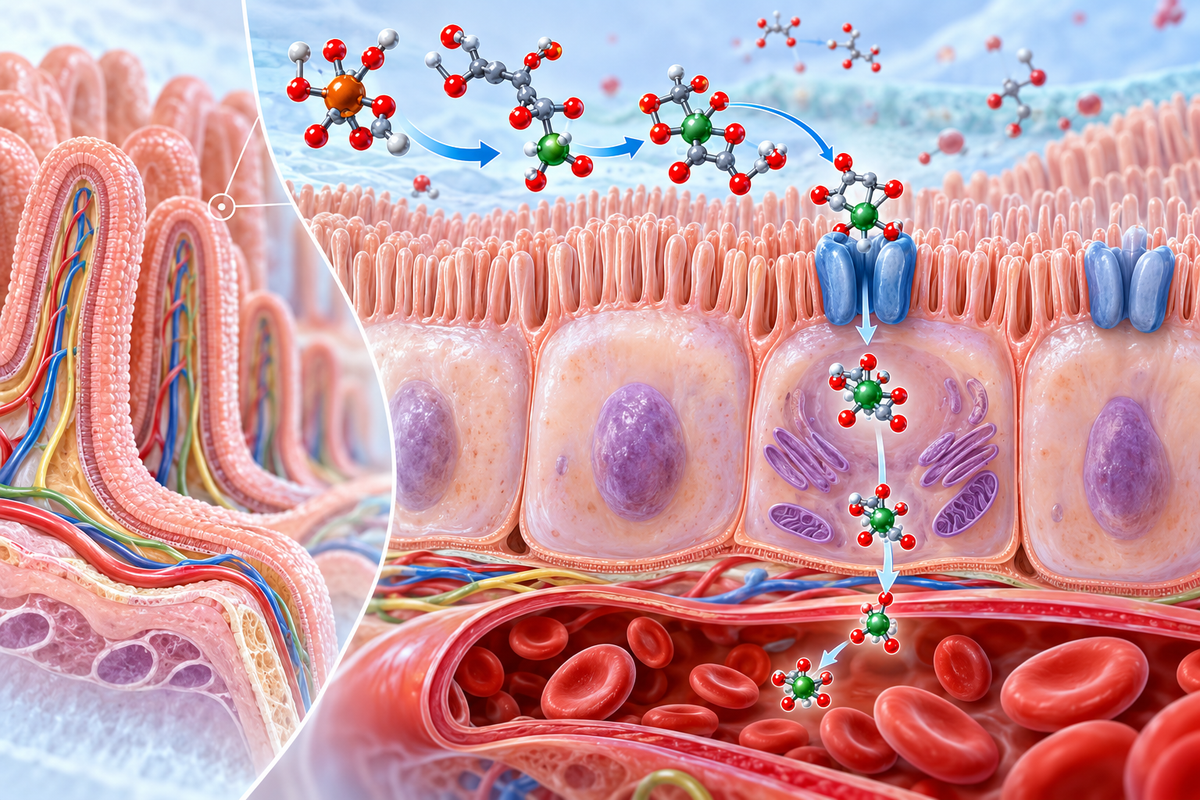
How Vitamin C Works: Mechanisms of Action in the Body
Almost every mammal makes its own vitamin C. Humans do not. A broken gene in our ancestors left us dependent on food for a molecule that cells use in dozens of reactions, from building connective tissue to switching genes on and off. Knowing how vitamin C works explains why a shortage causes scurvy, why the body guards it so tightly, and why high-dose claims deserve scrutiny.
This guide walks through the biochemistry, the transport system, the enzyme and antioxidant roles, and the evidence behind each mechanism. It also flags where the science is still uncertain.
How Vitamin C Works: Executive Summary of Mechanisms
Vitamin C is a water-soluble electron donor. Nearly everything it does comes from that one chemical talent. By handing electrons to other molecules, it can:
- Act as an enzyme cofactor, keeping iron and copper at the centre of certain enzymes in their active, reduced state.
- Neutralize reactive oxygen and nitrogen species, and regenerate other antioxidants such as vitamin E.
- Reduce dietary iron so the gut can absorb it more easily.
- Support immune cells, which accumulate it at concentrations far above those in blood.
- Influence gene regulation by supporting enzymes that remove chemical marks from DNA and histones.
| Mechanism | Key molecular players | Strength of human evidence |
|---|---|---|
| Collagen hydroxylation | Prolyl and lysyl hydroxylases | Strong (scurvy) |
| Iron absorption | Dietary non-heme iron, DCYTB, DMT1 | Strong |
| Catecholamine and peptide hormone synthesis | Dopamine β-hydroxylase, PAM | Moderate, mostly from biochemistry |
| Carnitine synthesis | Hydroxylases in the carnitine pathway | Moderate |
| Antioxidant and redox buffering | Radicals, vitamin E, glutathione | Mixed |
| Immune cell function | Neutrophils, lymphocytes | Moderate, partly indirect |
| Epigenetic regulation | TET enzymes, JmjC demethylases | Mostly cell and animal data |
Roughly 10 mg a day prevents scurvy. Current US recommended intakes are 90 mg for men and 75 mg for women, set to keep tissues well supplied. Whether higher intakes add further biological benefit is a separate question, and most of it comes down to concentration.
Ascorbic Acid: Molecular and Biochemical Properties
The chemical name for vitamin C is ascorbic acid (C₆H₈O₆, molecular weight about 176 g/mol). Its structure is a small lactone ring carrying an enediol group, which is the source of its reducing power. At the pH of blood and cells, most of it is present as ascorbate, the negatively charged form. The two terms are used interchangeably in biology.
The redox chemistry happens in steps:
- Ascorbate gives up one electron and becomes the ascorbyl radical, a fairly stable and unreactive radical.
- Giving up a second electron forms dehydroascorbic acid (DHA).
- Cells can reduce both back to ascorbate, using NADH-dependent enzymes for the radical and glutathione or thioredoxin-based systems for DHA.
This recycling matters. DHA is unstable and breaks down irreversibly within minutes at body temperature, so recapturing it keeps the pool intact.
Humans cannot make ascorbate because the gene for the last enzyme in the pathway, L-gulonolactone oxidase (GULO), is a nonfunctional pseudogene. Guinea pigs, some bats, and some primates share the defect. Mice and rats retain the gene, which is why researchers build GULO-knockout mice to study scurvy-like states.
Vitamin C Absorption and Cellular Uptake
The body regulates ascorbate more tightly than most vitamins, using transporters and a kidney threshold.
Two sodium-dependent transporters do most of the work:
- SVCT1 (SLC23A1) sits mainly in the intestine and kidney. It absorbs ascorbate from food and reclaims it from urine.
- SVCT2 (SLC23A2) is found in most other tissues, with especially high expression in the brain, adrenal glands, and eye. It builds up high intracellular levels.
DHA enters cells differently. Glucose transporters (GLUT1, GLUT3, and GLUT4) carry it in. Once inside, it is quickly reduced to ascorbate, which traps the vitamin within the cell.
Pharmacokinetic studies in healthy volunteers show a saturable system:
- At 30 to 180 mg a day, absorption is about 70 to 90 percent.
- At doses above 1 g, absorption drops below 50 percent.
- Plasma levels plateau at roughly 70 to 80 micromoles per litre at intakes of about 200 to 400 mg a day.
- Excess is excreted in urine, as the kidney stops reclaiming it above this level.
Even 3 g taken every four hours by mouth only raised peak plasma levels to roughly 220 micromoles per litre in one controlled study. Tissue concentrations tell a different story. Adrenal glands, pituitary, brain, and white blood cells hold ascorbate at 1 to 10 millimoles per litre, far above plasma. That gradient shows the importance of active transport, and it implies some tissues need the vitamin at high levels.
Enzymatic Cofactor Functions
Ascorbate’s most firmly established role is as a cofactor, or helper, for enzymes that use metal ions. These enzymes can lose their iron or copper to oxidation during their catalytic cycle. Ascorbate restores the metal to its active reduced form.
Iron- and 2-oxoglutarate-dependent dioxygenases include:
- Prolyl and lysyl hydroxylases for collagen
- Prolyl hydroxylase domain (PHD) enzymes and factor inhibiting HIF, which control the cell’s response to low oxygen
- TET enzymes and JmjC histone demethylases, which alter gene regulation
- Hydroxylases in carnitine synthesis, needed to move fatty acids into mitochondria
Copper-dependent enzymes include:
- Dopamine β-hydroxylase, which converts dopamine to norepinephrine
- Peptidylglycine α-amidating monooxygenase (PAM), which activates many peptide hormones through amidation
This explains why one nutrient affects so many body systems. It is not acting through one receptor. It supports a family of enzymes that otherwise stall.
Collagen Synthesis and Connective Tissue
Collagen is the most abundant protein in the body, and ascorbate is essential to its stability. During collagen synthesis, newly made chains must be modified before they can fold into a strong triple helix:
- Prolyl 4-hydroxylase adds hydroxyl groups to proline residues, forming hydroxyproline. These groups allow the helix to hold together at body temperature.
- Lysyl hydroxylase hydroxylates lysine. Those sites are then glycosylated or form the cross-links that give collagen its tensile strength.
Without ascorbate, the hydroxylases run a few cycles and then become inactive. The cell produces under-hydroxylated collagen that is unstable and degraded. In scurvy, this shows up as fragile capillaries, bleeding gums, poor wound healing, loosened teeth, and corkscrew-shaped hairs.
Cell studies also suggest ascorbate can raise collagen gene expression and stabilize its messenger RNA in fibroblasts. This regulatory effect is less well established than the cofactor role, but it points to a second route by which the vitamin supports connective tissue.
The effect extends beyond skin. Bone matrix, cartilage, tendon, blood vessel walls, and the cornea all depend on collagen, and the vitamin also supports the synthesis of other matrix proteins.
Antioxidant Activity and Redox Biology
Ascorbate is among the most effective water-soluble antioxidants in body fluids. It reacts quickly with superoxide, hydroxyl and peroxyl radicals, and reactive nitrogen species, converting them to less harmful products.
Three features stand out:
- Regenerating vitamin E. In membranes, vitamin E captures lipid radicals and becomes a tocopheroxyl radical. Ascorbate at the membrane surface can reduce it back, restoring the fat-soluble antioxidant.
- Interacting with glutathione. Glutathione helps recycle DHA to ascorbate, and ascorbate can spare glutathione under stress. The two form a linked network rather than working alone.
- Supporting nitric oxide signalling. Ascorbate may help preserve tetrahydrobiopterin, a cofactor for endothelial nitric oxide synthase, and may reduce nitric oxide breakdown by superoxide.
The pro-oxidant side. Ascorbate can also reduce free transition metals such as iron and copper, which can then drive Fenton-type reactions that generate hydroxyl radicals. In the body, free metal ions are tightly bound to proteins, so this is generally limited. At very high concentrations achieved only by intravenous dosing, ascorbate can generate hydrogen peroxide in the fluid between cells. This is an important property for oncology research (see the pharmacological section below), and it shows that “antioxidant” is a context-dependent label, not a fixed property.
Iron Absorption and Metabolism
This is one of the best-documented practical mechanisms. Dietary non-heme iron, the form in plants and fortified foods, is mostly in the ferric (Fe³⁺) state, which is poorly soluble at intestinal pH. Ascorbate helps in two ways:
- It reduces Fe³⁺ to Fe²⁺, the form taken up by the transporter DMT1 on intestinal cells. A cell-surface enzyme, duodenal cytochrome b, also contributes.
- It forms a soluble iron-ascorbate complex that stays available in the gut and counteracts inhibitors such as phytates and polyphenols in tea, coffee, and whole grains.
Human meal studies found that adding ascorbate to a meal can increase non-heme iron absorption several-fold, depending on the meal’s inhibitors. The effect is largest in plant-based meals. Heme iron from meat is less affected.
Inside cells, ascorbate may influence iron handling further, including iron release from ferritin and iron-sensing pathways. These roles are an active research area. People with iron-overload disorders such as hereditary hemochromatosis should seek medical advice before using high-dose supplements, since enhanced iron uptake is the very mechanism that could cause harm.
Immune-System Functions
Immune cells are some of the body’s most avid collectors of ascorbate. Neutrophils, lymphocytes, and monocytes accumulate it to concentrations many times those in plasma. Research points to several roles:
- Neutrophils: ascorbate appears to support chemotaxis, phagocytosis, and the controlled production of reactive oxygen species. It also appears to help regulate the death of neutrophils and their clearance by macrophages, which limits tissue damage after an infection. Its influence on neutrophil extracellular trap formation is under study.
- Lymphocytes: ascorbate supports the growth, differentiation, and function of T cells and B cells, partly through the epigenetic enzymes covered below.
- Barriers: through collagen synthesis and its antioxidant role, the vitamin helps maintain skin and epithelial integrity.
- Consumption during illness: plasma and white cell levels fall during severe infection and sepsis, which suggests heavy use.
Clinical outcomes are more modest than the cell biology might suggest. A Cochrane review found that routine supplementation in the general population did not reduce how often people caught colds, though it shortened them slightly. Benefits appeared larger in people under heavy physical stress. The gap between mechanism and outcome is a recurring theme in this field.
Neurotransmitter and Hormone-Related Pathways
The brain keeps ascorbate at some of the highest concentrations in the body, and it holds on to it even during deficiency. Brain uptake depends on SVCT2.
The best-characterized pathways are enzymatic:
- Norepinephrine synthesis. Dopamine β-hydroxylase needs ascorbate to convert dopamine to norepinephrine. Adrenal chromaffin cells and noradrenergic neurons are rich in the vitamin, and it is released along with catecholamines.
- Peptide hormone activation. PAM uses ascorbate to amidate peptides such as oxytocin, vasopressin, and several neuropeptides, a step required for full biological activity.
- Carnitine synthesis. Low carnitine contributes to the fatigue and muscle weakness seen in scurvy.
Neurons release ascorbate during glutamate signalling, and it may help modulate neuronal activity and protect cells from oxidative stress. These effects are mainly based on cell and animal work, and their importance in healthy humans is still being defined.
Gene Regulation and Epigenetic Mechanisms
The newest mechanistic discoveries concern how ascorbate shapes which genes are active.
DNA demethylation. TET enzymes convert 5-methylcytosine to 5-hydroxymethylcytosine, the first step in removing methyl marks from DNA. Like collagen hydroxylases, they need Fe²⁺ and ascorbate. In embryonic stem cell studies, ascorbate raised TET activity and shifted DNA methylation patterns. It also improved the efficiency of reprogramming cells to a stem-like state.
Histone demethylation. JmjC-domain demethylases also depend on ascorbate, tying it to chromatin regulation.
Hypoxia signalling. PHD enzymes mark the transcription factor HIF-1α for destruction when oxygen is available. Low ascorbate may allow HIF-1α to build up even without low oxygen. Some tumor studies have linked lower tissue ascorbate to higher HIF activity.
Blood stem cells. Mouse studies showed that ascorbate regulates stem cell function and that restoring TET2 activity can suppress the growth of leukemia cells with TET2 mutations.
These discoveries are conceptually important but not yet translated into proven clinical benefits.
Pharmacological Versus Physiological Concentrations
A single molecule can behave very differently depending on its concentration.
| Physiological | Pharmacological | |
|---|---|---|
| Route | Food and oral supplements | Intravenous infusion |
| Plasma level | About 30 to 80 µM (up to about 220 µM with frequent large oral doses) | Millimolar range, many times higher |
| Main behaviour | Cofactor and antioxidant | Pro-oxidant, generating hydrogen peroxide in extracellular fluid |
| Control | Tightly regulated by transporters and kidney | Bypasses gut absorption and kidney thresholds |
Oral intake saturates the transport system and cannot reach the millimolar range in plasma. Intravenous dosing can. In cell cultures, those levels generated hydrogen peroxide and selectively killed some cancer cell lines. Whether this translates into clinical benefit in people is not established, and the results of oral supplement studies should not be extrapolated to intravenous therapy, or the reverse. Intravenous use also carries its own risks and belongs under medical supervision.
Mechanistic Evidence From Cell Studies
Cell experiments provide most of the detail on the pathways above, including:
- Ascorbate-dependent hydroxylase activity in fibroblasts
- TET activation and DNA demethylation in stem cells
- Uptake and recycling in neutrophils and other immune cells
- Hydrogen peroxide formation and cancer cell toxicity at high concentrations
These studies have real limitations. Standard cell culture runs at much higher oxygen levels than tissues experience, and ascorbate breaks down quickly in culture medium, producing hydrogen peroxide as an artifact. Many cultured cells also lack the SVCT transporters that tissues use, so their ascorbate levels may not resemble those in the body. Cell data show what is possible, not necessarily what happens in a person.
Animal and Preclinical Evidence
Animal models support the mechanisms and show effects at the organism level.
- Guinea pigs and GULO-knockout mice develop scurvy-like disease when deprived of the vitamin, reproducing the collagen and vascular defects.
- SVCT2-knockout mice die around birth with brain hemorrhage and respiratory failure, which highlights how important transport into tissues is during development.
- Tumor xenograft studies found that high-dose ascorbate slowed tumor growth in some models, with effects linked to peroxide generation.
- Immune studies in deficient animals show impaired neutrophil and lymphocyte function that improves with repletion.
- Hematopoietic and epigenetic studies in mice link ascorbate to stem cell regulation.
Rodents differ from humans in important ways. Most make their own ascorbate, and their baseline tissue levels differ. Knockout models that remove synthesis help, but they do not make mice a perfect model for people.
Human Mechanistic Evidence
Human data are strongest where deficiency can be studied and where outcomes are measurable.
- Experimental scurvy. Controlled depletion studies in volunteers showed that very low intake produces symptoms, and that small amounts reverse them. This is the foundation for the scurvy-preventing intake of about 10 mg a day.
- Pharmacokinetics. Dose-response studies in healthy volunteers established plasma saturation, urinary loss, and the difference between oral and intravenous levels.
- Iron absorption. Meal studies demonstrate the enhancing effect directly.
- Vascular function. Some trials found improved endothelium-dependent vasodilation after ascorbate, consistent with better nitric oxide availability, mainly in people with risk factors.
- Oxidative stress markers. Results are inconsistent. Large randomized trials of antioxidant vitamins, including ascorbate, have generally not shown protection against chronic disease.
- Immune measures. Lower white cell ascorbate has been observed in severe infection, but intervention trials have given mixed results.
In short, humans clearly show the cofactor and iron-absorption mechanisms. The broader antioxidant and disease-prevention claims are far less certain.
Limitations and Unresolved Pathways
Several questions remain open:
- How much antioxidant activity matters in vivo. Antioxidant effects in a test tube do not guarantee benefit in tissues, and trial results have been disappointing.
- Dose-response for immune function. It is unclear what intake best supports immune cells in healthy people, or whether people with low levels benefit more.
- Variability between people. Genetic differences in transporters such as SVCT1, along with smoking, obesity, and illness, change plasma levels.
- Epigenetic effects in humans. The TET and demethylase findings come mostly from cells and mice.
- Intravenous therapy. The role of pharmacological ascorbate in disease remains under investigation, and results are not consistent.
- Measurement problems. Ascorbate degrades quickly in blood samples, which can distort studies if handling is not careful.
Frequently Asked Questions About How Vitamin C Works
How does vitamin C work in the body in simple terms?
It donates electrons. That lets it keep key enzymes active, neutralize reactive molecules, help absorb iron, and support cells such as neutrophils.
Why can’t humans make vitamin C?
The gene for the final enzyme in its synthesis, GULO, is mutated and nonfunctional in humans, so we depend on food.
What does ascorbic acid do for collagen?
It is a cofactor for the enzymes that hydroxylate proline and lysine, which lets collagen fold into a stable triple helix.
Is vitamin C a good antioxidant?
In body fluids, yes, chemically. Whether supplements reduce disease through this effect is not supported by large trials.
Does more vitamin C get absorbed if I take more?
Not proportionally. Absorption drops at higher doses, and the kidneys excrete the excess.
Why does vitamin C improve iron absorption?
It reduces ferric iron to the ferrous form and keeps it soluble, which helps overcome inhibitors in plant foods.
Does it support the immune system?
Immune cells concentrate it and use it, but supplements do not clearly prevent colds in the general population.
What is the difference between oral and intravenous vitamin C?
Oral intake is limited by transporters. Intravenous dosing bypasses them and reaches much higher blood levels with different chemical effects.
Can it affect gene expression?
Cell and animal studies show it supports enzymes that remove methyl marks from DNA and histones. Human relevance is still being studied.
Your Next Step
Vitamin C is far more than a general antioxidant. It is a cofactor, an iron-absorption aid, an immune-cell nutrient, and an emerging regulator of gene activity. The clearest benefits come from getting enough, not from taking very large amounts.
Review your diet for fruits and vegetables rich in the vitamin, such as citrus, peppers, kiwi, and broccoli. If you consider a supplement, check the dose against the recommended intake and the upper limit of 2,000 mg a day for adults, and talk to a clinician if you have kidney stones, iron overload, or take medication.
This article is educational and does not replace medical advice.
Scientific References
- Linster CL, Van Schaftingen E. Vitamin C: biosynthesis, recycling and degradation in mammals. FEBS J. 2007;274:1-22.
- Nishikimi M, et al. Cloning and chromosomal mapping of the human nonfunctional gene for L-gulono-gamma-lactone oxidase. J Biol Chem. 1994;269:13685-13688.
- Levine M, et al. Vitamin C pharmacokinetics in healthy volunteers: evidence for a recommended dietary allowance. Proc Natl Acad Sci USA. 1996;93:3704-3709.
- Padayatty SJ, et al. Vitamin C pharmacokinetics: implications for oral and intravenous use. Ann Intern Med. 2004;140:533-537.
- Lykkesfeldt J, Tveden-Nyborg P. The pharmacokinetics of vitamin C. Nutrients. 2019;11(10):2412.
- Padayatty SJ, Levine M. Vitamin C: the known and the unknown and Goldilocks. Oral Dis. 2016;22:463-493.
- Mandl J, Szarka A, Banhegyi G. Vitamin C: update on physiology and pharmacology. Br J Pharmacol. 2009;157:1097-1110.
- Pinnell SR. Regulation of collagen biosynthesis by ascorbic acid: a review. Yale J Biol Med. 1985;58:553-559.
- Myllyharju J. Prolyl 4-hydroxylases, key enzymes in the synthesis of collagens and regulation of the response to hypoxia, and their roles as treatment targets. Ann Med. 2008;40:402-417.
- Carr AC, Frei B. Toward a new recommended dietary allowance for vitamin C based on antioxidant and health effects in humans. Am J Clin Nutr. 1999;69:1086-1107.
- Hallberg L, Brune M, Rossander L. The role of vitamin C in iron absorption. Int J Vitam Nutr Res Suppl. 1989;30:103-108.
- Lane DJR, Richardson DR. The active role of vitamin C in mammalian iron metabolism: much more than just enhanced iron absorption! Free Radic Biol Med. 2014;75:69-83.
- Carr AC, Maggini S. Vitamin C and immune function. Nutrients. 2017;9(11):1211.
- Hemilä H, Chalker E. Vitamin C for preventing and treating the common cold. Cochrane Database Syst Rev. 2013;(1):CD000980.
- Blaschke K, et al. Vitamin C induces Tet-dependent DNA demethylation and a blastocyst-like state in ES cells. Nature. 2013;500:222-226.
- Cimmino L, et al. Vitamin C induces Tet2-dependent DNA demethylation and blocks leukemia progression. Cell. 2017;170:1079-1095.
- Agathocleous M, et al. Ascorbate regulates haematopoietic stem cell function and leukaemogenesis. Nature. 2017;549:476-481.
- Kuiper C, et al. Increased tumor ascorbate is associated with extended disease-free survival and decreased hypoxia-inducible factor-1 activation in human colorectal cancer. Front Oncol. 2014;4:10.
- Chen Q, et al. Pharmacologic ascorbic acid concentrations selectively kill cancer cells: action as a pro-drug to deliver hydrogen peroxide to tissues. Proc Natl Acad Sci USA. 2005;102:13604-13609.
- Du J, Cullen JJ, Buettner GR. Ascorbic acid: chemistry, biology and the treatment of cancer. Biochim Biophys Acta. 2012;1826:443-457.
- Sotiriou S, et al. Ascorbic-acid transporter Slc23a1 is essential for vitamin C transport into the brain and for perinatal survival. Nat Med. 2002;8:514-517.
- Hodges RE, et al. Experimental scurvy in man. Am J Clin Nutr. 1969;22:535-548.
- Institute of Medicine. Dietary Reference Intakes for Vitamin C, Vitamin E, Selenium, and Carotenoids. National Academies Press, 2000.
- National Institutes of Health, Office of Dietary Supplements. Vitamin C: Fact Sheet for Health Professionals.
For general information only. Talk to your doctor before starting any supplement.


