
Zinc Safety: Side Effects, Doses and Contraindications
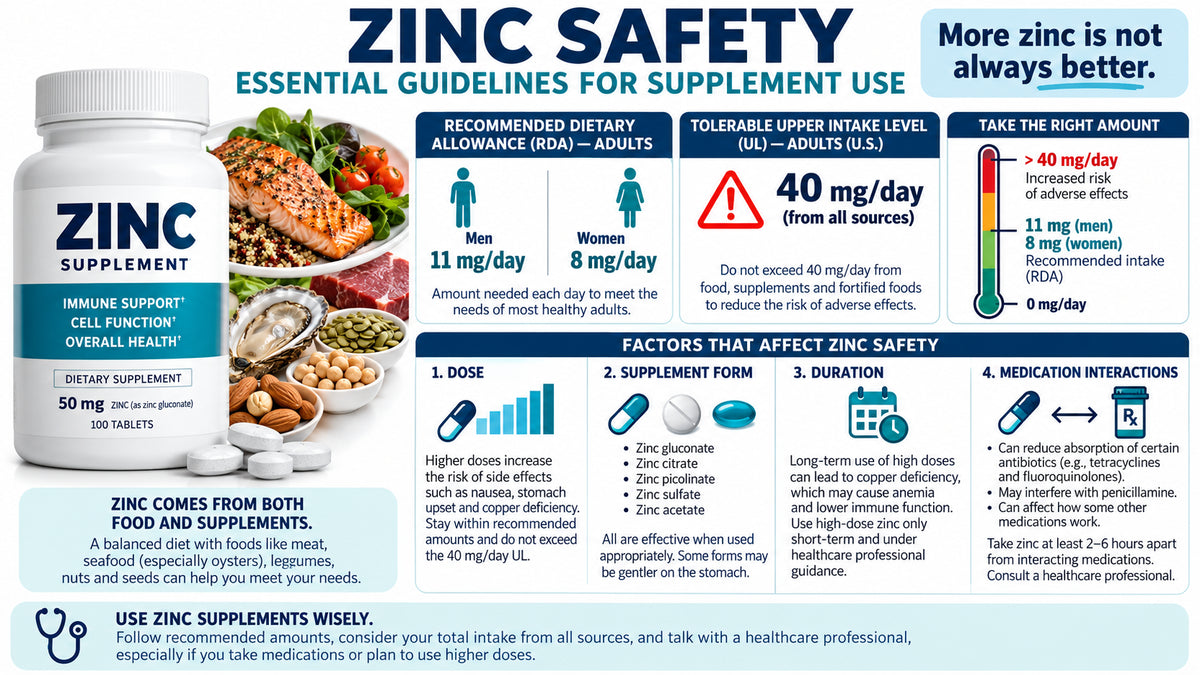
Zinc is one of the most widely sold minerals in the world, and it sits in everything from multivitamins to cold lozenges to nasal gels. Because it is an essential nutrient, many people assume more is always better. It isn’t. Zinc safety depends on the dose, the form, how long you take it, and your own health and medications.
This guide covers what the evidence shows about zinc’s risks: the common and rare adverse effects, the upper limits, who should be cautious, and when to get medical help. Read it before you start a supplement, or if you already take one and have noticed something unusual.
Zinc Safety Summary
Zinc is generally safe when you stay within recommended amounts. The adult recommended dietary allowance (RDA) is 11 mg per day for men and 8 mg for women. The tolerable upper intake level (UL) for adults is 40 mg per day from food, fortified products, and supplements combined.
The key points:
- Food sources are very unlikely to cause harm. Problems almost always come from supplements, lozenges, nasal products, or non-food exposures.
- Short-term excess mostly causes stomach upset.
- Long-term excess can lower copper levels, which may lead to anemia and nerve damage.
- Some people need extra caution, including those taking certain medications, children, and people with specific medical conditions.
- Some uses are riskier than others. Intranasal zinc has been linked to loss of smell, and heavy use of zinc-containing denture adhesive has been linked to copper deficiency.
The margin between a helpful dose and a harmful one is narrower for zinc than for many nutrients, which is why it deserves a careful look.
Common Zinc Side Effects
The most frequently reported zinc side effects involve the digestive system and taste. They tend to be dose-related and usually go away when the dose is lowered or the product is stopped.
- Nausea: the most common complaint, especially when zinc is taken on an empty stomach.
- Vomiting: more likely with higher doses or with irritating forms such as zinc sulfate.
- Abdominal cramps and stomach pain.
- Diarrhea.
- Loss of appetite.
- Metallic or bitter taste: very common with zinc lozenges and syrups.
- Headache.
In cold lozenge trials, participants often reported nausea and a bad taste, and these effects were a main reason some people stopped taking them. Taking zinc with a meal, choosing a gentler form such as zinc bisglycinate or citrate, or splitting the dose can reduce stomach symptoms. High-phytate foods may slightly reduce absorption, but a small snack is often better than taking zinc on an empty stomach.
Mild effects like these are not usually dangerous. They are still a signal that the dose or form may not suit yo
Less Common and Serious Zinc Adverse Effects
Rarer effects usually appear with very high doses, long-term use, or unusual routes of exposure.
Copper deficiency. This is the best-documented serious effect of chronic excess zinc. High zinc intake triggers the gut to produce a protein that traps copper and blocks its absorption. Over time, this can cause anemia, low white blood cell counts (neutropenia), and neurological problems such as numbness, tingling, and difficulty walking (myeloneuropathy). Case reports describe this in people taking high-dose supplements for months or years, and in people using large amounts of zinc-containing denture cream.
Loss of smell (anosmia). Zinc nasal gels and swabs were linked to reports of long-lasting or permanent smell loss. In 2009, the U.S. FDA warned consumers to stop using certain zinc nasal products. Oral zinc has not been tied to this effect in the same way.
Lower HDL cholesterol and weaker immune function. Studies of very high intakes (well above the UL) reported lower HDL (“good”) cholesterol and impaired immune responses. This is ironic, since zinc is often taken to support immunity.
Acute zinc poisoning. Single very large doses, in the range of several hundred milligrams, can cause severe vomiting and abdominal pain. Swallowing zinc-containing objects, such as post-1982 U.S. pennies, can injure the stomach and release large amounts of zinc. This is mainly a risk for young children and pets.
Metal fume fever. Workers who inhale zinc oxide fumes, such as during welding of galvanized metal, can develop flu-like symptoms with fever and chills. This is an occupational hazard unrelated to supplements.
Dose-Related Zinc Safety and Upper Limits
Most zinc safety guidance rests on the UL, which is the highest daily intake unlikely to cause harm in almost everyone. The adult UL was set mainly to prevent reduced copper status.
| Age group | Upper limit (mg/day, all sources) |
|---|---|
| 0–6 months | 4 |
| 7–12 months | 5 |
| 1–3 years | 7 |
| 4–8 years | 12 |
| 9–13 years | 23 |
| 14–18 years (including pregnancy and breastfeeding) | 34 |
| 19 years and older (including pregnancy and breastfeeding) | 40 |
A few points help put these numbers in context:
- The UL counts everything. A multivitamin, a separate zinc capsule, a fortified cereal, and a cold lozenge all add up.
- Check elemental zinc. The label should list the actual zinc amount, not just the compound weight. A 100 mg tablet of zinc gluconate supplies only about 14 mg of zinc.
- Therapeutic doses can exceed the UL. Some clinical uses, such as the zinc dose in the AREDS eye-health formula (80 mg of zinc oxide in the original trial), are higher than the UL. Those doses belong under professional guidance, not self-directed use.
- Higher is not better. Taking more than you need does not increase benefits, and it raises the chance of side effects and copper depletion.
Children are more vulnerable because their UL is much lower. Pediatric zinc products, including gummies, should be stored out of reach, since accidental overdose is a real risk.
Duration of Use in Zinc Trials
Most of what we know about zinc side effects comes from trials that were short.
- Cold lozenge and syrup trials typically lasted days to a couple of weeks, with participants taking zinc only while symptoms lasted.
- Deficiency and growth trials, especially in children in lower-income countries, ran from several weeks to a year or more, usually at moderate doses.
- The AREDS and AREDS2 eye studies followed participants for around five to six years or more, which is among the longest-term supplemental zinc data available, though zinc was taken alongside copper and other nutrients.
- Copper-status studies that informed the UL often lasted weeks to months.
The takeaway: there is reasonable evidence for short courses and for moderate doses over a few months. For very high doses used for years, the data are thin, and most of what exists comes from observational studies and case reports.
Zinc Contraindications and Precautions
Few people have an absolute reason to avoid all zinc, since it is an essential nutrient. But several situations call for caution or professional supervision. These are the main zinc contraindications and precautions.
Medication interactions
- Quinolone antibiotics (such as ciprofloxacin) and tetracycline antibiotics (such as doxycycline): zinc can bind these drugs in the gut and reduce their absorption. Official guidance generally advises spacing them apart, but ask your pharmacist for the exact timing for your medication.
- Penicillamine: zinc can reduce its absorption.
- Thiazide diuretics: these increase zinc loss in urine, which can matter for long-term users.
- Cisplatin and some other drugs: discuss with your oncology team before using any supplement.
Medical conditions
- Kidney disease: zinc handling can change when kidney function is reduced, so supplementation should be guided by a clinician.
- Wilson disease or other copper disorders: zinc is sometimes used as a prescribed treatment because it lowers copper absorption. This is intentional and monitored, and self-supplementing could interfere with treatment.
- Anemia of unknown cause or unexplained nerve symptoms: these can be signs of copper deficiency, so adding zinc without medical review is unwise.
- Digestive conditions with ongoing diarrhea or vomiting: zinc may worsen stomach symptoms, though doctors sometimes prescribe zinc for diarrhea in children.
- Men with prostate concerns: see the organ-specific section below.
Life stages
- Pregnancy and breastfeeding: needs are higher, but the UL still applies. Use supplements only as advised by your healthcare provider.
- Infants and children: use age-appropriate products and doses only.
Product-specific cautions
- Avoid zinc nasal gels and swabs that carry smell-loss warnings.
- Use zinc-containing denture adhesives as directed and do not use excessive amounts over long periods.
Allergy Considerations
A true allergy to the mineral zinc is rare. Because zinc is a normal part of the human body, immune reactions to the element itself are uncommon.
Reactions to a zinc product are more often caused by something else in it:
- Fillers, binders, dyes, and flavorings in tablets, lozenges, or gummies.
- Allergens in the carrier, such as milk, soy, gluten, or shellfish-derived ingredients in some multi-ingredient products.
- Contact dermatitis from topical zinc products is uncommon but possible.
Signs of an allergic reaction include hives, itching, swelling of the lips or face, wheezing, or trouble breathing. Severe symptoms need emergency care. If you have known allergies, read the full ingredient list, including “other ingredients,” and choose a product that avoids your trigger.
Also keep intolerance and allergy separate. A stomach upset after taking zinc on an empty stomach is a tolerance issue, not an allergy.
Copper Deficiency and Other Nutrient Imbalances
Zinc and copper compete for absorption in the intestine. When zinc intake is high for a long time, the body’s copper uptake can fall enough to cause deficiency.
What copper deficiency can look like
- Anemia that does not respond to iron
- Low white blood cell counts and increased infection risk
- Numbness, tingling, or weakness in the hands and feet
- Unsteady walking or balance problems
- Fatigue
The nerve damage can be slow to reverse, and in some cases is not fully reversible, which is why catching the problem early matters.
Who is at higher risk: people who take high-dose zinc supplements for months, people who overuse zinc denture cream, and people with conditions or surgeries that already limit copper absorption, such as some types of bariatric surgery.
How it is checked: clinicians can measure serum copper and ceruloplasmin and review a blood count. Treatment involves stopping the excess zinc and, where needed, giving copper under medical supervision.
Other balances to be aware of
- Iron: high zinc doses taken at the same time as iron supplements may reduce iron absorption, although findings vary. Taking them at different times can help.
- Calcium and other minerals: these can compete with zinc when taken in large amounts at once.
- Folate and other nutrients: zinc status interacts with several nutrients, which is one reason a balanced diet is the safest foundation.
Some supplements pair zinc with a small amount of copper to help protect against this imbalance. That is a reasonable design, but it does not make unlimited zinc safe.
Organ-Specific Zinc Concerns
Documented concerns about zinc and specific organs are limited, and it matters to separate solid evidence from weak signals.
Digestive system. Zinc can irritate the stomach lining, especially in forms like zinc sulfate or when taken without food. Swallowed zinc objects can cause gastric injury.
Nervous system. The main documented nerve problems come from zinc-induced copper deficiency, not from direct nerve toxicity.
Blood. Anemia and low white cell counts have been reported with chronic excess, again through copper depletion.
Sense of smell. Intranasal zinc products have been linked to smell loss.
Immune system and lipids. Very high intakes have been associated with impaired immune function and reduced HDL cholesterol.
Genitourinary system and prostate. In the original AREDS trial, participants taking high-dose zinc had more hospital admissions for genitourinary causes than those not taking it. Separately, some large observational studies linked long-term, high-dose supplemental zinc to a higher risk of advanced prostate cancer, while other studies found no link. These findings show an association, not proof that zinc causes the problem, and results are inconsistent. They are a reason for men to avoid very high long-term doses without medical advice.
Liver. There is no strong evidence that zinc at usual doses harms the liver in healthy people. People with liver disease should still check with their clinician, since nutrient handling can change.
Kidneys. Evidence of direct kidney toxicity at normal doses is limited, but kidney disease alters mineral balance, so medical guidance is wise.
When to Stop Zinc and Seek Medical Care
Stop taking the product and contact a healthcare professional if you notice:
- Persistent nausea, vomiting, or stomach pain after taking zinc
- Numbness, tingling, weakness, or balance problems
- Unexplained fatigue, paleness, or frequent infections
- A reduced or lost sense of smell after using a nasal zinc product
- Signs of an allergic reaction such as a rash or swelling
Seek urgent or emergency care for:
- Severe or repeated vomiting after a large amount of zinc
- Difficulty breathing, throat swelling, or widespread hives
- A child who has swallowed a zinc supplement bottle’s worth of tablets or a zinc-containing coin
- Fever and chills with breathing difficulty after inhaling metal fumes
In the U.S., poison control is available at 1-800-222-1222. In other countries, contact your local poison information service or emergency number. When you see a clinician, bring the supplement bottle so they can check the exact amount and form.
How Strong Is the Safety Evidence for Zinc?
The evidence is strong in some areas and weak in others.
Stronger evidence
- The short-term stomach and taste effects are consistently reported across many randomized trials.
- Zinc-induced copper deficiency is well documented through case series, clinical findings, and mechanism studies.
- The link between intranasal zinc and smell loss led to a regulatory warning.
- The UL is derived from human data on copper status and is set by expert panels.
Weaker or mixed evidence
- Prostate cancer links come mainly from observational studies, which can be affected by other lifestyle differences.
- Many trials of lozenges and syrups used different doses, forms, and schedules, making direct comparison hard.
- Adverse events are not always reported consistently, and small trials may miss rare problems.
- Most trials involve generally healthy adults or children with specific needs, so data for people with several health conditions are sparse.
In short, we know a good deal about what high doses can do, and less about subtle effects of moderate doses taken for many years.
Long-Term Zinc Safety Gaps
Several important questions remain open:
- Very long-term use at moderate supplemental doses (for example, 25–40 mg daily for many years) has not been studied in large, long randomized trials for outcomes beyond copper status.
- Optimal zinc-to-copper balance in supplements is not firmly established.
- Specific groups such as older adults with multiple medications, people with kidney disease, and people who are pregnant have limited high-quality long-term data at supplemental doses.
- Different forms (gluconate, picolinate, bisglycinate, and others) have not been compared head-to-head for long-term safety.
- Prostate and genitourinary findings need better-designed studies to confirm or rule out a real effect.
- Product quality varies, so what’s on the label may not always match what’s in the bottle, which is why independent third-party testing helps.
Until these gaps close, the sensible approach is the simple one: use the lowest effective amount, for the shortest time needed, and review it with a professional.
Frequently Asked Questions About Zinc Safety
Is zinc safe to take every day?
For most adults, yes, at amounts near the RDA and below the 40 mg UL from all sources. Long-term daily use of higher doses should be supervised by a clinician.
What are the most common zinc side effects?
Nausea, stomach cramps, vomiting, diarrhea, loss of appetite, headache, and a metallic taste. Taking zinc with food usually helps.
How much zinc is too much?
For adults, regularly going over 40 mg per day from all sources raises the risk of problems, mainly copper deficiency over time. Single doses of several hundred milligrams can cause vomiting.
Can zinc cause copper deficiency?
Yes. High, prolonged zinc intake reduces copper absorption and can lead to anemia and nerve problems. Stopping the excess zinc and medical follow-up are the standard approach.
Does zinc interact with medications?
Yes. Notable examples include quinolone and tetracycline antibiotics, penicillamine, and thiazide diuretics. Ask your pharmacist how to space doses.
Can I take zinc while pregnant or breastfeeding?
Zinc needs rise during these stages, but supplements should be used only on your provider’s advice and kept within the UL.
Is it safe to give children zinc supplements?
Only at age-appropriate doses. Children’s upper limits are much lower than adults’, and accidental overdose from gummies or tablets is a risk, so store supplements securely.
Are zinc nasal sprays and gels safe?
Certain intranasal zinc products have been linked to loss of smell, and the FDA has issued warnings. Many experts advise avoiding them.
Can zinc cause an allergic reaction?
A true zinc allergy is rare. Reactions are more often caused by other ingredients in the product.
Should I take zinc on an empty stomach?
Absorption may be a bit better, but nausea is more likely. Most people tolerate it better with a light meal.
Does zinc cause prostate cancer?
No causal link has been established. Some observational studies found a higher risk of advanced prostate cancer with long-term, high-dose supplements, while others did not. Men concerned about this should discuss their dose with a doctor.
What should I do if I think I took too much zinc?
Stop the supplement and contact poison control or a healthcare professional. Get emergency help for severe vomiting, trouble breathing, or any suspected overdose in a child.
Your Next Step: Use Zinc Wisely
Zinc is a valuable nutrient, and for most people a balanced diet or a modest supplement is safe. The real risks come from high doses, long durations, interacting medications, and non-oral products like nasal gels.
Before you buy or continue a supplement:
- Add up your total daily zinc from food, multivitamins, and any other products.
- Check the label for elemental zinc and stay below the upper limit for your age.
- Review your medications and health conditions with a pharmacist or doctor.
- Choose products with independent third-party testing.
- Stop and seek advice if you notice nerve symptoms, persistent stomach problems, or any change in your sense of smell.
This article is for education and does not replace personalized medical advice.
References
- National Institutes of Health, Office of Dietary Supplements. Zinc: Fact Sheet for Health Professionals. ods.od.nih.gov/factsheets/Zinc-HealthProfessional/
- National Institutes of Health, Office of Dietary Supplements. Zinc: Fact Sheet for Consumers.
- Institute of Medicine. Dietary Reference Intakes for Vitamin A, Vitamin K, Arsenic, Boron, Chromium, Copper, Iodine, Iron, Manganese, Molybdenum, Nickel, Silicon, Vanadium, and Zinc. National Academies Press, 2001.
- Plum LM, Rink L, Haase H. The essential toxin: impact of zinc on human health. Int J Environ Res Public Health. 2010.
- Fosmire GJ. Zinc toxicity. Am J Clin Nutr. 1990.
- Hedera P, et al. Myelopathy from zinc-induced copper deficiency. Neurology. 2003.
- Nations SP, et al. Denture cream: an unusual source of excess zinc, leading to hypocupremia and neurologic disease. Neurology. 2008.
- U.S. Food and Drug Administration. 2009 safety communication on intranasal zinc products and loss of smell.
- Age-Related Eye Disease Study Research Group. A randomized, placebo-controlled trial of high-dose supplementation with vitamins C and E, beta carotene, and zinc for age-related macular degeneration (AREDS Report No. 8). Arch Ophthalmol. 2001.
- AREDS2 Research Group. Lutein + zeaxanthin and omega-3 fatty acids for age-related macular degeneration. JAMA. 2013.
- Leitzmann MF, et al. Zinc supplement use and risk of prostate cancer. J Natl Cancer Inst. 2003.
- Singh M, Das RR. Zinc for the common cold. Cochrane Database Syst Rev.
- MedlinePlus (U.S. National Library of Medicine). Zinc in diet.


