
Ashwagandha Safety, Side Effects and Contraindications
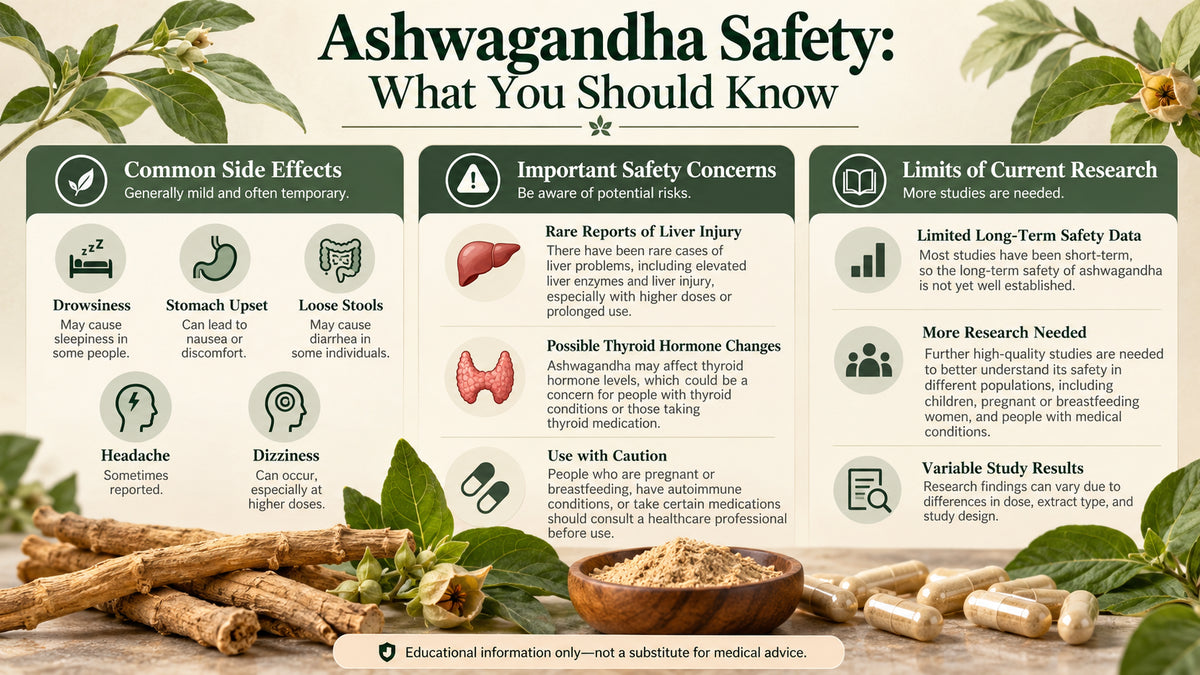
Ashwagandha Safety: Side Effects, Contraindications and What the Evidence Shows
You may have seen ashwagandha on a supplement shelf, in a wellness video or in a friend's stress routine, and wondered whether it is actually safe. That is the right question to ask before you buy. Ashwagandha safety depends on who you are, what else you take, how much you use and for how long. For many healthy adults, short-term use in clinical trials has been well tolerated. For others, including pregnant people, those with thyroid or liver conditions and anyone on sedatives or immune-suppressing drugs, the picture is very different. This guide walks through what the research says, where it falls short and when to stop.
Medical disclaimer: This article is educational and does not replace advice from a doctor or pharmacist. Review it with a qualified healthcare professional before starting any supplement. Suggested byline for E-E-A-T: written by a named health writer and medically reviewed by a licensed clinician or pharmacist, with the review date shown.
Ashwagandha Safety Summary: The Short Version
Ashwagandha (Withania somnifera) is a shrub in the nightshade family. Its root, and sometimes its leaf, is used in Ayurvedic practice and sold today as capsules, powders, gummies and tinctures. Researchers have studied it mainly for stress, sleep, anxiety, fatigue and athletic performance.
Here is the safety picture in plain terms:
- Most reported problems are mild. Drowsiness, stomach upset, loose stools and headache lead the list in clinical trials.
- Rare but serious liver injury has been reported. These cases are uncommon, yet they are the main reason regulators and clinicians urge caution.
- Some groups should avoid it. This includes pregnancy, breastfeeding, active thyroid disease without medical supervision and people taking certain medicines.
- Trials are short. Most last 4 to 12 weeks, so what happens after a year or more is largely unknown.
- Product quality varies. Extracts differ in strength, plant part and manufacturing, and supplements are not tested like prescription drugs.
If you remember one thing, make it this: "natural" does not mean risk-free, and a short list of side effects in trials does not guarantee safety in every person.
Common Ashwagandha Side Effects Reported in Studies
When people ask about ashwagandha side effects, the best starting point is randomized controlled trials, where adverse events are recorded for both the supplement group and the placebo group. Across these studies, the most frequently reported effects are:
- Drowsiness or sedation. Ashwagandha is often used for sleep, so feeling sleepy is expected. It can become a problem if you take it before driving or work that needs alertness.
- Digestive upset. Nausea, abdominal discomfort, loose stools or diarrhea, and occasionally constipation appear in several trials.
- Headache. Usually mild and short-lived.
- Dizziness or light-headedness. May relate to lower blood pressure or blood sugar in some people.
- Mild skin reactions. Itching or rash is uncommon but documented.
In many placebo-controlled trials, the rate of these effects in the ashwagandha group was similar to the placebo group, and most people finished the study. A common practical tip is to take capsules with food, which often reduces stomach upset. Starting at a lower dose and increasing gradually, under professional guidance, may also help you judge how your body responds.
It is worth noting that mild effects can still matter. If a symptom is persistent, worsening or simply unpleasant, that is a reason to stop and talk to a clinician, not to push through.
Less Common and Serious Ashwagandha Safety Reports
Serious reactions are rare, but they deserve clear attention because they change the risk-benefit conversation.
Liver injury
The most discussed serious concern is drug-induced liver injury. A published case series from Iceland and the US Drug-Induced Liver Injury Network described patients who developed liver injury after taking ashwagandha products. Symptoms included jaundice (yellowing of the skin or eyes), itching, dark urine and fatigue. Blood tests typically showed raised liver enzymes and bilirubin. In most reported cases the liver recovered after the product was stopped, though some patients needed hospital care. The US National Institutes of Health's LiverTox database also lists ashwagandha as a cause of clinically apparent liver injury, with a cholestatic or mixed pattern most often described.
These are case reports, which cannot prove cause or tell us how often it happens. Multi-ingredient products make attribution harder. Even so, the pattern of symptoms and recovery after stopping makes a link plausible.
Thyroid effects
Some studies show ashwagandha can raise thyroid hormone levels (T3 and T4), and isolated case reports describe thyrotoxicosis, meaning too much thyroid hormone, in people taking it. This matters for anyone with an overactive thyroid and for anyone already on thyroid medicine.
Other rare reports
Individual reports and small studies have described extreme sleepiness, low blood sugar, low blood pressure, adrenal or hormone-related changes and allergic reactions. Because these come from isolated cases, they show what is possible rather than what is typical.
Dose-Related Ashwagandha Safety
There is no officially established upper safe limit for ashwagandha, and that gap is important. What we have instead is the range tested in trials.
- Root extracts in human studies usually provide about 250 to 600 mg per day, often split into one or two doses.
- Some trials have used up to about 1,000 mg per day of standardized extract, and traditional powdered root doses can be higher.
- Branded extracts differ. Products standardized to withanolides, the plant's main active compounds, are not interchangeable with raw root powder.
Higher doses do not automatically mean better results, and the evidence that larger amounts are safe is thinner than for moderate amounts. Because withanolide content varies between brands, the number on the label of one product may not equal the same "dose" of another. Gummies, teas and blends add another layer of uncertainty.
Practical points for safer use:
- Choose products that state the plant part, extract ratio and withanolide percentage.
- Avoid stacking several ashwagandha-containing products at once.
- Do not exceed the label dose or the amount your clinician recommends.
- Prefer third-party tested products (for example, those verified by independent quality programs) because contamination and mislabeling are documented problems in the supplement market.

Duration of Use in Clinical Trials
Most ashwagandha trials are short. Typical lengths are 4, 8 or 12 weeks, and a few extend to around 6 months. A well-known 8-week safety study of a standardized root extract reported good tolerability with routine blood, liver, kidney and thyroid markers monitored. Trials in stress and sleep have generally followed participants for 60 to 90 days.
What this means for you:
- Short-term use (up to about 3 months) has the most supporting data in healthy adults.
- Use beyond 3 to 6 months is less studied, so benefits and risks are less certain.
- Continuous multi-year use has not been properly tested in controlled trials.
Many practitioners suggest cycling, such as using it for several weeks and then taking a break, though strong clinical evidence that cycling improves safety is lacking. If you plan to use it longer, periodic check-ins with a clinician and, where appropriate, liver and thyroid blood tests are a sensible precaution.
Ashwagandha Contraindications: Who Should Avoid It
Ashwagandha contraindications are the situations in which the risks are considered to outweigh any benefit, or where evidence is too limited to judge. Talk to a healthcare professional before use if any of these apply.
Pregnancy. Ashwagandha has traditional use as a substance that may trigger miscarriage, and there is no adequate human safety data. Avoid it while pregnant or trying to conceive unless a clinician advises otherwise.
Breastfeeding. There is not enough reliable information on transfer into breast milk or effects on infants. Avoiding it is the cautious choice.
Thyroid conditions. People with hyperthyroidism should generally avoid it, and people taking levothyroxine or antithyroid drugs need medical oversight because ashwagandha may change hormone levels.
Liver disease or a history of liver injury. Given the case reports, people with liver disease, unexplained abnormal liver tests or earlier supplement-related liver problems should avoid it.
Autoimmune conditions and immunosuppressants. Ashwagandha may stimulate immune activity, which could in theory worsen conditions such as rheumatoid arthritis, lupus, multiple sclerosis or type 1 diabetes, and may counter medicines that suppress immunity after transplant.
Hormone-sensitive conditions. Because it may influence testosterone and other hormones, people with hormone-sensitive prostate cancer or similar conditions should seek specialist advice.
Upcoming surgery. Ashwagandha may add to the effect of anaesthesia and sedatives. Many health authorities advise stopping about two weeks before a planned operation.
Medication interactions. Discuss it with a pharmacist if you take any of these:
- Sedatives, sleeping pills, benzodiazepines or anti-anxiety medicines (added drowsiness)
- Blood pressure medicines (possible additive lowering)
- Diabetes medicines (possible low blood sugar)
- Thyroid medicines (altered hormone levels)
- Immunosuppressants (possible reduced effect)
Children. Safety in children has not been established.
Allergy Considerations
Ashwagandha belongs to the Solanaceae, or nightshade, family, which also includes tomatoes, potatoes, peppers and eggplant. People with a known sensitivity to nightshades or to other plants in this family may be more likely to react, although cross-reactivity is not well quantified.
Allergic reactions can include skin rash, hives, itching, swelling of the lips or face and, rarely, breathing difficulty. If you have a history of plant or supplement allergies, try a product only after consulting a clinician, and read the full ingredient list, since capsules and gummies can contain other herbs, fillers or flavourings. Stop immediately and seek urgent help if you notice swelling of the face or throat, wheezing or trouble breathing.
Organ-Specific Concerns Where Documented
Liver
This is the best-documented organ concern. Reports describe cholestatic or mixed liver injury appearing weeks to months after starting. Warning signs include yellow eyes or skin, dark urine, pale stools, persistent itching, upper right abdominal pain and unusual tiredness. Anyone with these symptoms should stop the product and get liver tests.
Thyroid
Some trials show increases in T3 and T4, and a small trial in subclinical hypothyroidism reported improved thyroid markers. That cuts both ways: it may help certain patients under supervision but could push others into excess hormone levels. Self-treating a thyroid condition with ashwagandha is not advised.
Reproductive and hormonal systems
Research in men suggests possible increases in testosterone and changes in sperm parameters in small studies, though results vary. Concern about pregnancy loss remains the main reproductive caution. Regulators in some countries, including Denmark, have restricted ashwagandha in food products partly because of questions around reproductive and hormonal effects, so rules differ by country.
Nervous system
Its calming effect is the reason many people use it, but that same effect can cause excessive drowsiness, slowed reactions or low mood in a minority. Combining it with alcohol or other sedating substances may intensify this.
Kidneys, heart and blood sugar
Trials that monitored kidney markers have generally not flagged problems in healthy adults, but data in people with kidney disease are scarce. Possible blood pressure and blood sugar lowering means people on medicines for those conditions should monitor closely.
When to Stop Ashwagandha and Seek Care
Stop taking ashwagandha and contact a healthcare professional promptly if you notice:
- Yellowing of the skin or eyes, dark urine, pale stools or severe itching
- Persistent nausea, vomiting or upper abdominal pain
- Rapid or irregular heartbeat, tremor, heat intolerance or unexplained weight loss (possible excess thyroid hormone)
- Fainting, extreme dizziness or confusion
- Skin rash, hives or any sign of allergy
- Severe, unusual drowsiness that interferes with daily life
Call emergency services immediately for swelling of the face, lips or throat, difficulty breathing or chest pain.
Also stop and speak to your clinician if you become pregnant, are scheduled for surgery or start a new prescription. Bring the product label to your appointment so the exact ingredients and dose can be reviewed. In many countries you can report suspected supplement reactions to a national regulator or poison centre, which helps build safety knowledge.
Ashwagandha Safety Evidence Quality
It helps to be honest about how strong the evidence really is.
- Randomized trials exist but are mostly small. Many enroll fewer than 100 people, which limits their ability to detect uncommon harms.
- Short follow-up. Rare or delayed effects are unlikely to show up in 8 to 12 weeks.
- Industry involvement. Several trials use branded extracts and are funded or supported by the manufacturer, which can introduce bias.
- Variable reporting of harms. Adverse events are not always reported in a consistent or detailed way.
- Product differences. Findings for one extract may not apply to another.
- Case reports are signals, not proof. They flag risks such as liver injury but cannot give a rate.
Systematic reviews generally conclude that ashwagandha appears well tolerated at studied doses in short-term use, while also calling for larger and longer trials with better safety monitoring. That is a cautious, not a definitive, endorsement.
Long-Term Ashwagandha Safety Gaps
Several important questions remain unanswered:
- Long-term use. We lack controlled data beyond roughly six months.
- Who is at risk for liver injury? Researchers do not yet know whether genetics, dose, product type or other factors raise the chance.
- Special populations. Pregnancy, breastfeeding, children, older adults and people with kidney, liver or autoimmune disease are poorly studied.
- Interactions. Formal drug-interaction studies are limited, so most warnings are based on theory or case reports.
- Plant part and processing. Roots, leaves and whole-plant products may carry different risk profiles.
- Hormonal effects over time. The long-term meaning of changes in thyroid, cortisol and sex hormones is unclear.
Until these gaps close, the sensible approach is conservative: use the lowest effective amount, for a defined period, with professional oversight where you have any risk factors.
Ashwagandha Safety FAQ
Is ashwagandha safe to take every day? Short-term daily use at studied doses has been tolerated by many healthy adults in trials. Safety of daily use over many months or years is not well established, so periodic review with a clinician is wise.
What are the most common ashwagandha side effects? Drowsiness, stomach upset, loose stools, headache and dizziness are the most commonly reported, and they are usually mild.
Can ashwagandha damage the liver? Rare cases of liver injury have been reported. It is uncommon, but anyone with liver disease should avoid it, and anyone who develops jaundice or dark urine should stop and seek care.
Who should not take ashwagandha? People who are pregnant or breastfeeding, those with overactive thyroid or liver disease, people with certain autoimmune conditions, those awaiting surgery and anyone taking sedatives, thyroid, diabetes, blood pressure or immunosuppressant drugs without medical advice.
Can I take ashwagandha with antidepressants or anxiety medication? This combination needs a pharmacist or doctor's input because of possible additive sedation and unpredictable effects.
Does ashwagandha affect thyroid tests? It may raise T3 and T4 in some people, so tell your doctor you take it before thyroid testing.
How long can I take it? Most trials last 4 to 12 weeks. Beyond that, evidence is limited, so discuss longer use with a healthcare professional.
Is ashwagandha safe for people with nightshade allergies? It is in the nightshade family, so caution is advised. Check with an allergist or doctor first.
Final Thoughts: Make an Informed, Cautious Choice
The research on ashwagandha safety offers reassurance for some and clear warnings for others. Mild effects are common, serious reactions are rare, and long-term data are missing. If you are healthy and curious, the safest path is to speak with a clinician, choose a third-party tested product, start low, take it for a defined period and watch for warning signs. If you are pregnant, have liver or thyroid disease, take regular medicines or face surgery, check first and treat professional guidance as non-negotiable. Take your supplement list to your next appointment today and ask whether ashwagandha fits your health picture.
References
- Tandon N, Yadav SS. Safety and clinical effectiveness of Withania somnifera (Linn.) Dunal root in human ailments. Journal of Ethnopharmacology. 2020;255:112768.
- Björnsson HK, Björnsson ES, Avula B, et al. Ashwagandha-induced liver injury: a case series from Iceland and the US Drug-Induced Liver Injury Network. Liver International. 2020;40(4):825-829.
- National Institute of Diabetes and Digestive and Kidney Diseases. LiverTox: Ashwagandha. Clinical and Research Information on Drug-Induced Liver Injury. National Institutes of Health.
- Salve J, Pate S, Debnath K, Langade D. Adaptogenic and anxiolytic effects of ashwagandha root extract in healthy adults: a double-blind, randomized, placebo-controlled clinical study. Cureus. 2019;11(12):e6466.
- Sharma AK, Basu I, Singh S. Efficacy and safety of ashwagandha root extract in subclinical hypothyroid patients: a double-blind, randomized placebo-controlled trial. Journal of Alternative and Complementary Medicine. 2018;24(3):243-248.
- Chandrasekhar K, Kapoor J, Anishetty S. A prospective, randomized double-blind, placebo-controlled study of safety and efficacy of a high-concentration full-spectrum extract of ashwagandha root in reducing stress and anxiety in adults. Indian Journal of Psychological Medicine. 2012;34(3):255-262.
- National Center for Complementary and Integrative Health (NCCIH). Ashwagandha: Usefulness and Safety. U.S. National Institutes of Health.
- National Institutes of Health, Office of Dietary Supplements. Dietary Supplement Fact Sheets and Ingredient Information.
- Danish Veterinary and Food Administration. Statements on ashwagandha in food supplements (2023).
Editorial note: confirm each citation and access date against the original source before publishing, and add the medical reviewer's name and credentials.
For general information only. Talk to your doctor before starting any supplement.


